
Your cat sits across the room, those gorgeous eyes fixed directly on yours. You hold the gaze, wondering what goes through that mysterious feline mind. Maybe you’ve wondered whether staring is friendly or threatening, whether your cat enjoys this moment of connection or feels uncomfortable.
For cats, vision serves as one of their primary communication tools. Unlike dogs who rely heavily on body language and vocalizations, cats convey vast amounts of information through their eyes alone. The duration, intensity, and context of eye contact can mean the difference between a loving interaction and a stressful confrontation. These subtle differences will help you read your cat’s emotions more accurately and respond in ways that strengthen your bond.
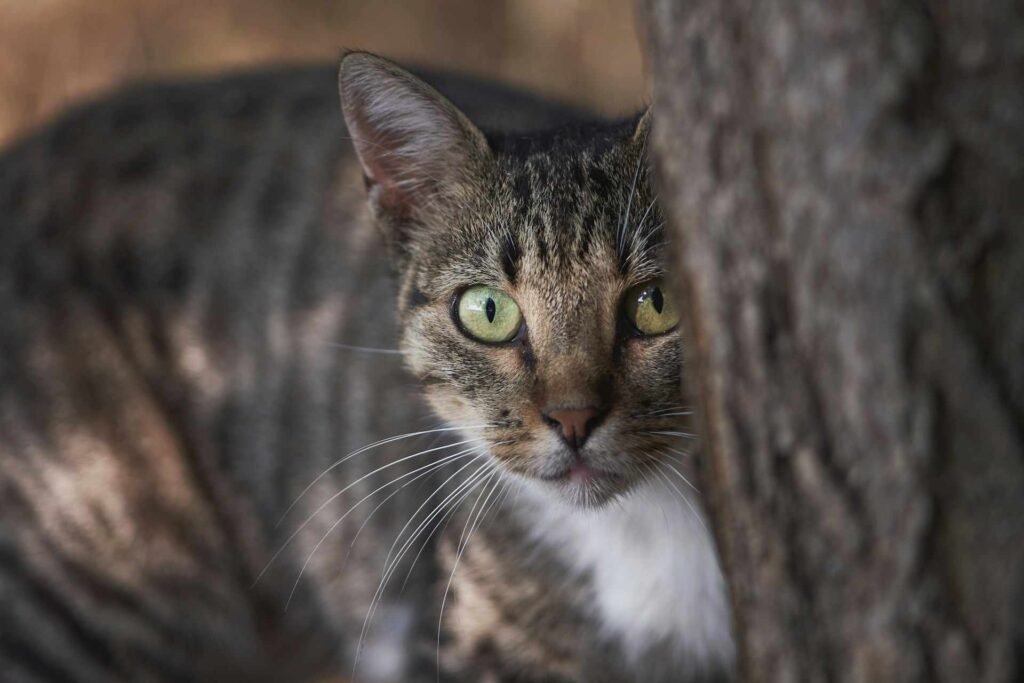
How Cats Feel About Direct Eye Contact
Wild cats use prolonged staring as a threat display. When two feral cats encounter each other in disputed territory, the one who maintains steady, unblinking eye contact signals dominance and readiness to fight. The other cat faces a choice: match the stare and risk confrontation, or break eye contact and submit. This deeply ingrained instinct shapes how domestic cats interpret our gazes.
Your house cat retains these wild instincts despite thousands of years of domestication. When you lock eyes with your cat and refuse to look away, you’re speaking their ancestral language, whether you realize it or not. Some cats tolerate this behavior from trusted humans, but many experience it as mildly stressful. The difference between a cat who seems fine with staring and one who slinks away often comes down to early socialization, individual temperament, and the strength of your relationship.
In applied feline behavior work, prolonged eye contact is rarely evaluated in isolation. What matters is disengagement latency: relaxed cats break eye contact within 0.5–2 seconds without tension elsewhere in the body. When a cat holds a stare longer than three seconds while remaining motionless, professionals treat this as a vigilance behavior rather than social engagement.
Watch your cat’s body language carefully during eye contact. A confident, relaxed cat might hold your gaze briefly before offering a slow blink. This represents feline affection and trust. But if your cat’s pupils dilate, ears flatten, or whiskers pull back during a stare-down, you’re looking at a stressed animal. These subtle shifts reveal their true emotional state, and recognizing them early prevents discomfort.
The Science Behind Staring at Cats
Feline eyes evolved for hunting in low light conditions. Their pupils expand dramatically to capture maximum light, and specialized cells called tapetum lucidum reflect light back through the retina, giving cats that distinctive glow at night. These adaptations make cats incredibly visual creatures, but they also make their eyes sensitive to sustained attention.
In practice, threat evaluation during eye contact happens extremely fast, often before the cat consciously reorients its body. If a stare is interpreted as ambiguous rather than clearly benign, cats default to defensive vigilance. This is why subtle changes, such as a human freezing mid-movement while staring, can trigger avoidance even when no overt threat follows.
Why Cats Respond Differently Than Dogs
Dogs evolved alongside humans for over 30,000 years, developing special adaptations for human communication. They read our faces naturally and often interpret eye contact as positive attention. Cats domesticated themselves much more recently, perhaps 10,000 years ago, and they did so while maintaining their solitary hunting lifestyle. They never needed to develop the same human-focused social skills.
This evolutionary difference explains why your dog might gaze lovingly into your eyes for minutes while your cat seems uncomfortable after just seconds. Neither response is better or worse; they simply reflect different evolutionary paths. Understanding these differences prevents us from applying dog rules to cat behavior, which often leads to misunderstanding and frustration.
The mistake isn’t that people treat cats like dogs, it’s that they assume eye contact always signals social interest. In cats, eye contact is primarily informational, not affiliative. Bonding happens through proximity and predictability, not visual fixation.
When Staring Becomes Aggression
Not all eye contact qualifies as friendly curiosity. Cats distinguish between casual glances and aggressive stares through intensity, duration, and accompanying body language. An aggressive stare typically involves unblinking fixation, dilated pupils despite bright light, forward-pointing whiskers, and a tense, still body posture.
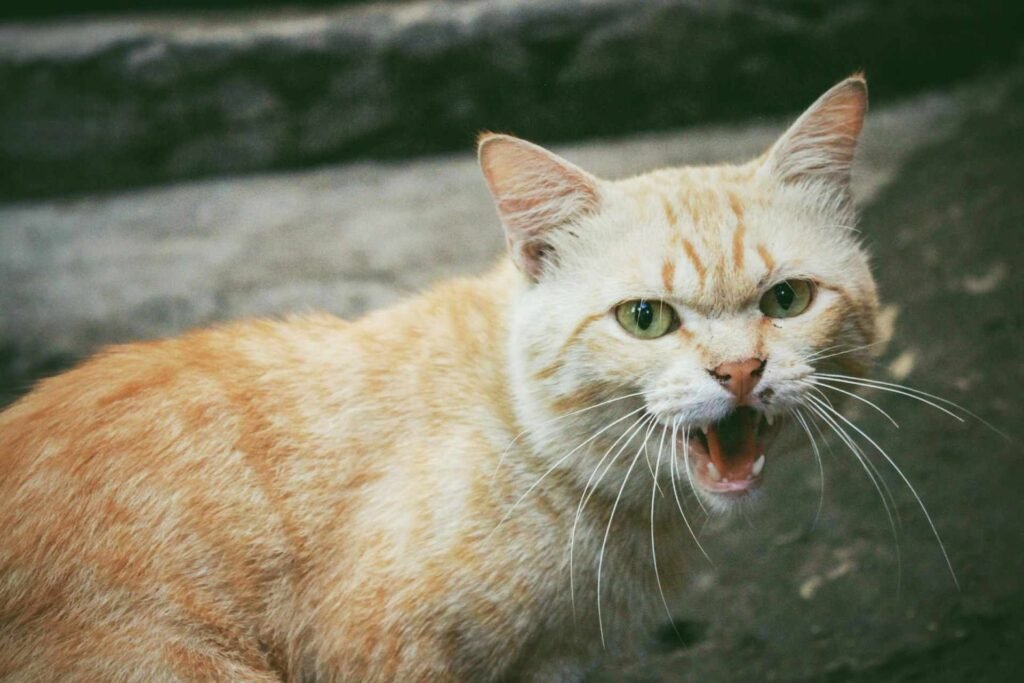
Multiple cats in one household sometimes engage in staring contests to establish hierarchy. The subordinate cat usually breaks eye contact first, acknowledging the other’s social dominance. If you notice two cats locked in a prolonged stare, watch for escalation signs like tail lashing, ear positioning, or low growling. These conflicts can erupt into fights without warning.
In real conflict cases, staring rarely leads directly to a strike. It typically follows a predictable escalation pattern: fixation → freeze → pupil dilation → whisker protraction → explosive movement. The freeze is the most overlooked stage; once a cat goes still during eye contact, de-escalation must happen immediately.
Signs Your Cat Feels Threatened by Eye Contact
Learning to read discomfort signals prevents negative associations with you. When a cat feels threatened during eye contact, they might exhibit several warning behaviors. First, watch the tail. A cat with a slowly swishing tail feels irritated or conflicted. If that swish accelerates into aggressive thrashing, the cat has moved beyond discomfort into active stress.
Ear position provides another reliable indicator. Ears that swivel sideways or flatten against the head signal defensive readiness. The cat prepares to protect those vulnerable ear flaps from potential injury. Pair flattened ears with direct eye contact, and you have a cat on the edge of aggression or fear.
Pupil dilation deserves special attention. Cats’ pupils naturally adjust to light levels, but extreme dilation in normal lighting indicates strong emotion, either fear or excitement. During a staring contest, suddenly dilating pupils often precede a defensive strike or panicked flight. Breaking eye contact at this point de-escalates the situation before it turns unpleasant.
The Slow Blink: A Cat’s Love Language
The slow blink stands out as one of the most beautiful aspects of cat communication. When your cat looks at you and deliberately closes their eyes in a long, leisurely blink, they’re expressing trust and affection. This behavior has deep evolutionary roots: closing your eyes in the presence of another creature makes you vulnerable. Only a relaxed, comfortable cat would voluntarily reduce their visual awareness around you.
You can return this gesture to communicate your own peaceful intentions. Make eye contact with your cat, then slowly close your eyes for a full second or two before reopening them. Many cats will respond with their own slow blink, creating a moment of genuine connection. This simple exchange can reduce stress, build trust, and strengthen your bond without words.

The slow blink works particularly well with shy or anxious cats. Rather than forcing proximity or physical interaction they might not want, you can communicate from across the room. Over time, these calm exchanges teach the cat that you respect their boundaries and pose no threat. Some previously skittish cats gradually become more social through consistent slow blinking.
Making Proper Eye Contact With Your Cat
Building positive eye contact habits takes awareness and practice. Start by observing your natural tendencies around your cat. Do you stare intently when calling them? Lock eyes during play?
The ideal approach involves brief glances rather than sustained stares. Look at your cat for a second or two, then casually glance away. This mimics how cats naturally interact with each other in neutral or positive contexts. Neither cat maintains constant eye contact; instead, they exchange intermittent looks punctuated by attention to other things.
The Right Way vs. The Wrong Way
Several common mistakes undermine positive eye contact. Walking directly toward a cat while maintaining unbroken eye contact combines two threatening behaviors. The cat interprets this as predatory approach behavior, triggering defensive responses. Instead, approach at an angle while periodically looking away, giving the cat time to assess your intentions without feeling cornered.
Similarly, leaning forward during eye contact appears confrontational. This posture makes you loom over the cat, which amplifies any stress they already feel. Maintain a neutral or slightly reclined posture when making eye contact, especially with cats who already seem nervous. A comfortable cat tower or elevated bed gives your cat the option to be at eye level with you, reducing the intimidation factor.
Context matters enormously. Eye contact during play carries different implications than eye contact during feeding or rest. During active play, brief direct looks can actually enhance excitement and engagement. But attempting intense eye contact when your cat seems tired or irritable often backfires. Read the room before initiating any sustained visual interaction.
Meeting Unfamiliar Cats: Eye Contact Etiquette
Encountering a new cat requires extra caution around eye contact. Without an established relationship, the cat has no context for interpreting your gaze. They don’t know whether you’re a threat or a friend, so they err on the side of caution. Overwhelming an unfamiliar cat with direct stares creates negative first impressions that last.
When meeting a new cat, let them control the interaction pace. Sit or crouch at their level without staring directly at them. Instead, focus your gaze slightly past them or at their body rather than their face. This reduces perceived threat while still acknowledging their presence. Patient cats will approach when they feel comfortable, often after several minutes of this non-threatening behavior.
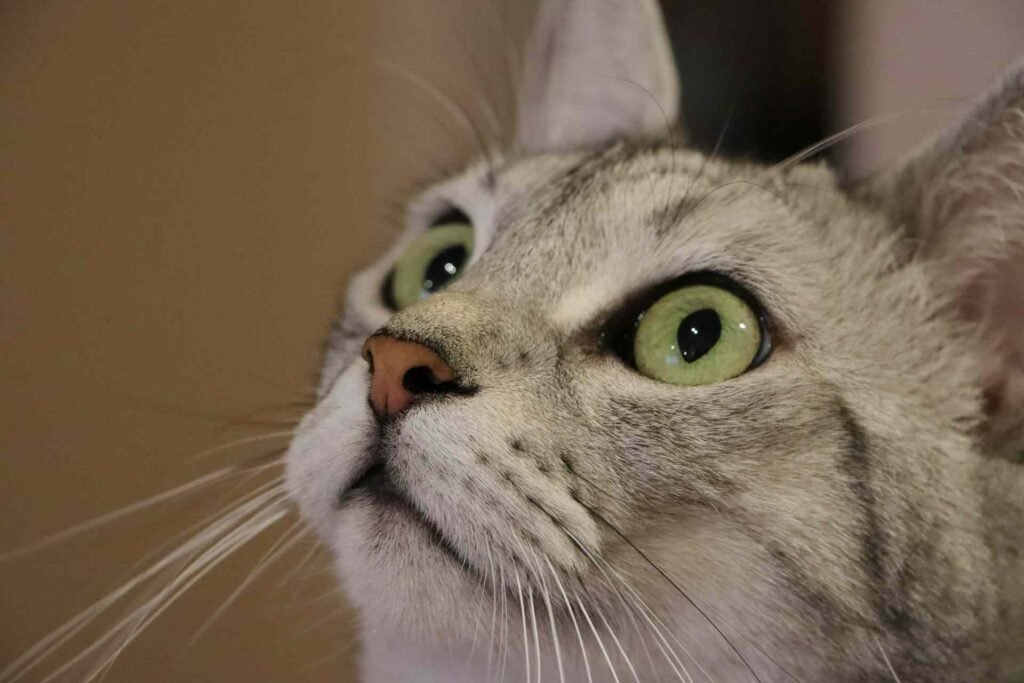
The slow blink works particularly well during first meetings. If the cat looks at you, offer a gentle slow blink and then look away. This demonstrates peaceful intentions in the cat’s own language. Some cats warm up immediately to humans who communicate this way, while others need multiple interactions before they trust someone new.
Your Cat’s Staring Patterns
Cats don’t just respond to our stares, they initiate plenty of eye contact themselves. Sometimes the stare simply means they want something: food, play, or access to a closed room. The request becomes obvious when you notice the context clues around their staring.
Cats often stare during routine transitions, before meals, before owners stand up, before doors open. This is anticipatory monitoring, not affection. The stare functions as a timing mechanism: the cat is predicting your next move, not emotionally engaging.
Cats who seem particularly focused on watching you might also be showing signs of understimulation. A bored cat often fixates on their owner hoping for interaction or entertainment.
Occasionally, cats stare during illness or discomfort. A cat who suddenly begins staring more than usual while exhibiting other behavioral changes might need veterinary attention. This type of staring often appears different from normal attention-seeking, more vacant or fixed, accompanied by lethargy or appetite changes.
Eye Contact Comparison: Cats vs. Dogs vs. Humans
Different species interpret eye contact through dramatically different lenses. Comparing these perspectives reveals just how unusual human-cat eye contact really is.
| Species | Natural Interpretation | Comfort Level | Best Approach |
|---|---|---|---|
| Cats | Threat assessment, dominance challenge | Low to moderate, context-dependent | Brief glances, slow blinks, look away frequently |
| Dogs | Attention, bonding, reading human emotions | High, actively seeks eye contact | Extended gazing welcomed |
| Humans | Communication, intimacy, social connection | Very high with trusted individuals | Sustained contact with trusted others |
This comparison illustrates why applying human or dog expectations to cats often fails. We evolved to use eye contact as a primary bonding mechanism, while cats evolved to use it primarily for threat assessment. Neither approach is superior, they simply serve different survival strategies.
Interestingly, the differences between dog people and cat people may partly stem from how naturally we adapt to each species’ communication style.
Building Trust Through Respectful Eye Contact
Trust develops through consistent, positive interactions over time. Eye contact plays a supporting role in this process, but it never stands alone. Cats evaluate our trustworthiness through dozens of small behaviors: how we move, speak, handle them physically, respect their boundaries, and yes, how we use eye contact.
A newly adopted cat might initially avoid all eye contact with you. This represents self-preservation, not permanent rejection. Give this cat time and space, using brief glances and slow blinks from a distance. As they settle into your home and routine, they’ll gradually become more comfortable with visual interaction.
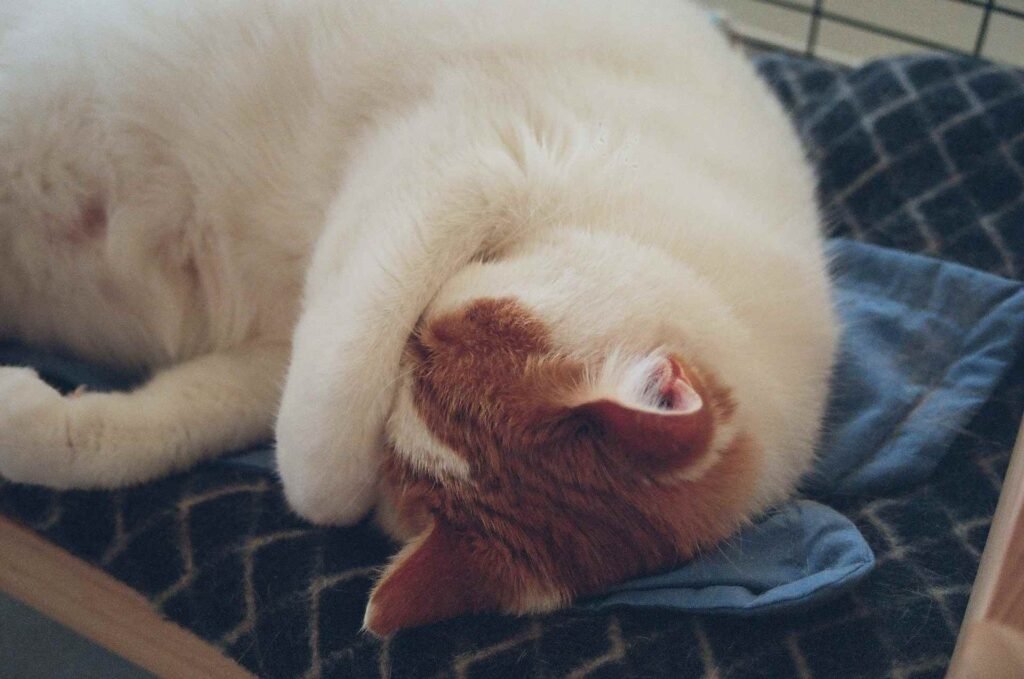
Never force eye contact on a reluctant cat. Cornering an anxious cat and staring insistently teaches them that you ignore their discomfort signals. This erodes trust rather than building it. Instead, let the cat initiate eye contact when they feel ready. Reward their brave attempts at connection with calm acknowledgment and a gentle slow blink.
Common Myths About Cat Eye Contact
Several persistent myths about cats and staring circulate widely despite lacking evidence.
Myth: All cats hate being looked at. Individual personalities vary tremendously. Some confident, well-socialized cats genuinely seem to enjoy extended eye contact with trusted humans. They’ll hold your gaze calmly, purr, and appear relaxed throughout. Other cats consistently dislike direct stares regardless of socialization. Both responses fall within normal feline behavior.
Myth: You can stare down an aggressive cat to establish dominance. This dangerous misconception stems from outdated ideas about animal behavior. Attempting to dominate an aggressive cat through prolonged staring escalates rather than resolves conflict. The cat experiences increased threat, which may trigger defensive aggression. Professional animal behaviorists uniformly recommend avoiding staring contests with upset cats.
Frequently Asked Questions
Brief eye contact with your cat is perfectly fine and even beneficial for bonding. The key lies in duration and intensity. Look at your cat for a second or two, then glance away casually. This mimics natural feline communication patterns without triggering stress. Avoid prolonged, unblinking stares, which cats interpret as threatening. If your cat slow blinks at you during eye contact, return the gesture to strengthen your bond.
Direct, sustained staring can signal aggression in cat language, though context matters significantly. An intense, unblinking stare accompanied by dilated pupils, forward-pointing whiskers, and still posture definitely communicates threat. However, a relaxed gaze with slow blinks carries no aggressive intent. Your cat evaluates the complete picture, your body language, tone of voice, and recent interactions, not just the eye contact alone. Most cats tolerate brief glances from trusted humans without perceiving aggression.
Cats stare for numerous reasons beyond aggression. Your cat might want food, attention, or access to a closed room. They could be studying your behavior patterns to predict your next action. Sometimes cats simply zone out while looking in your general direction, not actively focusing on you at all. If the stare seems friendly, with relaxed whiskers, normal pupils, and calm body language, your cat probably just feels connected to you or wants something. A tense, rigid stare with other stress signals suggests discomfort or potential confrontation.
Ideal eye contact with cats lasts just one to three seconds before you look away. This brief duration feels non-threatening while still acknowledging the cat’s presence. If your cat seems comfortable and initiated the eye contact, you might extend it slightly, but watch their body language carefully. Flattened ears, dilated pupils, or tail swishing indicate you’ve held the gaze too long. When in doubt, shorter is safer. You can always exchange multiple brief glances rather than one extended stare.
The slow blink represents one of the highest compliments a cat can give. When your cat looks at you and slowly closes their eyes before reopening them, they’re expressing trust, affection, and contentment. Closing their eyes makes them momentarily vulnerable, so they only do this around individuals they feel completely safe with. You can return the gesture by making eye contact with your cat and slowly blinking back. Many cats will respond with another slow blink, creating a sweet moment of mutual trust and connection.
Conclusion
Eye contact between humans and cats bridges two completely different communication systems. Cats evolved to use staring as threat assessment, while we developed it as a bonding mechanism. This fundamental difference explains why your attempts at loving gazes sometimes result in your cat scooting away or seeming uncomfortable.
The good news? Once you understand feline visual communication, adapting becomes straightforward. Keep your gazes brief and casual. Master the slow blink. Watch your cat’s body language for stress signals. These small adjustments dramatically improve your relationship without sacrificing the connection eye contact provides.
Every cat has their own comfort level with eye contact. Some confident cats seem to genuinely enjoy prolonged mutual gazing with their favorite humans. Others prefer peripheral vision acknowledgment with minimal direct looks. Neither preference makes your cat more or less bonded to you. They simply express affection through their own preferred communication style.
So the next time you lock eyes with your cat across the living room, remember you’re participating in an ancient interspecies conversation. You’re speaking human, they’re speaking cat, and somehow you’re managing to understand each other. Just maybe throw in a slow blink to let them know you come in peace. Your cat will appreciate the effort, even if they pretend otherwise by immediately grooming themselves and acting like the whole interaction never happened.
Looking for more? Visit our Blog for more fun and insightful reads, or browse our full Cat Category for everything feline-related, from care to comfort.
Disclaimer: This article is for informational purposes only and does not substitute for professional veterinary advice. Always consult your veterinarian for diagnosis and treatment tailored to your cat’s individual needs. Please verify current product information directly on the retailer’s site before purchasing.
References
- de Mouzon, Charlotte & di Stasi, Romain & Leboucher, Gérard. (2023). Human perception of cats’ communicative cues: human-cat communication goes multimodal. Applied Animal Behaviour Science. 270. https://doi.org/10.1016/j.applanim.2023.106137
- Humphrey T, Proops L, Forman J, Spooner R, McComb K. The role of cat eye narrowing movements in cat-human communication. Sci Rep. 2020 Oct 5;10(1):16503. https://doi.org/10.1038/s41598-020-73426-0
- Humphrey T, Stringer F, Proops L, McComb K. Slow Blink Eye Closure in Shelter Cats is Related to Quicker Adoption. Animals (Basel). 2020 Nov 30;10(12):2256. https://doi.org/10.3390/ani10122256
- Koyasu H, Kikusui T, Takagi S and Nagasawa M (2020) The Gaze Communications Between Dogs/Cats and Humans: Recent Research Review and Future Directions. Front. Psychol. 11:613512. https://doi.org/10.3389/fpsyg.2020.613512
- 5 things you do that your cat secretly hates. https://www.pdsa.org.uk/pet-help-and-advice/looking-after-your-pet/kittens-cats/5-things-you-do-that-your-cat-secretly-hates
Check out our most recent articles!
- Why Do Cats Push Things Off Tables? Solving Your Cat’s Destructive Habit
 Cats knock things off tables due to hunting instincts, boredom, and attention-seeking behavior. Discover the science behind this maddening habit and learn practical prevention strategies that actually work.
 - Can Cats Eat Green Peas? Safe, Healthy, or Just a Skip?A pea rolling across the kitchen floor is basically a free cat toy and a snack in one. But before it becomes a habit, here’s what you should know about what those little green things actually do for (or to) your cat.
- Are Spray Bottles Bad for Cats? Reasons & AlternativesA spray bottle might stop your cat’s counter-surfing today, but it’s teaching them something much more troubling: that you’re unpredictable and potentially dangerous. Discover what really happens when you spray your cat and the alternatives that actually create lasting change.
- How Are Cats so Flexible? Your Cat’s Anatomy ExplainedBetween their 53 vertebrae, muscular shoulders connected only by soft tissue, and elastic joints, cats possess anatomical superpowers that blur the line between solid and liquid, letting them navigate spaces you’d swear were too small.
- Do Cats Copy Their Owners Voice, Personality and Actions?The independent cat stereotype is crumbling. Science reveals that cats engage in intentional mimicry, learning from their owners and adapting their personalities to match the humans they live with.
- Are Newborn Cats Born With Teeth? Everything About Kitten Dental GrowthEver wondered what’s happening inside a newborn kitten’s mouth? The answer might surprise you. Discover the complete timeline of feline dental development and learn what to expect as your kitten grows from gummy grins to a full set of adult teeth.
- Keeping Your Indoor Cat Warm in Winter: The Complete GuideEven indoor cats feel the winter chill more than you might think. Cold floors, dry air, and sneaky drafts can leave your feline less comfortable than they should be. Discover the simple adjustments that make all the difference in helping your cat stay genuinely cozy through the coldest months.
- Should You Look Your Cat in the Eyes? Is Staring Really Aggressive?Your cat’s eyes tell a story you’ve been misreading. While prolonged staring means one thing in human communication, cats interpret it completely differently. Discover why that loving gaze might actually be stressing out your feline friend and what to do instead.
- Choosing the Best Blanket for Your Cat: A Blanket Buyer’s GuideFinding the best blanket for your cat means considering more than just softness. Temperature regulation, durability, washability, and even behavioral quirks all play a role in choosing the perfect cozy spot for your feline friend. Discover which blanket types match your cat’s lifestyle.
- How to Get Your Kitten to Eat More: Simple Solutions for Picky EatersWatching your tiny kitten turn up their nose at perfectly good food can be heart-wrenching. This comprehensive guide reveals why kittens become picky eaters and shares practical solutions that transform mealtime battles into successful feeding routines.
- Can Cats Eat Fried Rice? Why This Takeout Favorite Is a No-GoThat irresistible takeout aroma might have your cat begging, but fried rice contains ingredients that can harm felines. Discover why even small amounts aren’t worth the risk and what treats truly suit your cat’s carnivorous nature.
- Why Do Cats Vibrate Their Tail? From Happy to HuntingYour cat’s vibrating tail is like a mood ring with fur. Whether they’re thrilled to see you or preparing to mark territory, decoding these rapid shakes reveals what’s really going on in their mind.
- Is Asparagus Bad for Cats? Risks, Benefits, and AlternativesYour cat’s eyeing your asparagus dinner, but should they have any? While this green veggie isn’t toxic to cats, there are surprising reasons why it’s not the treat you might think it is.
- How Cats Express Sadness: Reading Your Feline’s Emotional LanguageCats don’t cry emotional tears or mope around like dogs, but they absolutely experience sadness. The trick is learning to read their subtle language, the withdrawn behavior, the changed routines, the slight shifts in body posture that reveal their inner emotional world.
- Can Cats and Rabbits Live Together? Multi-Species Harmony GuideCats are predators, rabbits are prey, but that doesn’t mean they can’t coexist peacefully. Success comes down to understanding each animal’s instincts, respecting their boundaries, and taking introductions at the right pace.















Written by Solara Bergmeier (Technical Writer and Content Manger)
Last reviewed and edited on 14.02.2026