
Christmas tree water is not just harmless runoff. In toxicology discussions, it is treated as a mixed exposure source: organic plant resins, microbial growth, agricultural residues, and sometimes chemical preservatives. I have seen otherwise healthy indoor cats develop acute vomiting within hours of drinking from tree stands that owners assumed contained only clean water.
Preventing access is not about decoration protection. It is about eliminating a predictable ingestion risk. The strategy must combine environmental control, behavioral redirection, and removal of reinforcement. When those three elements are addressed together, the problem usually resolves quickly.
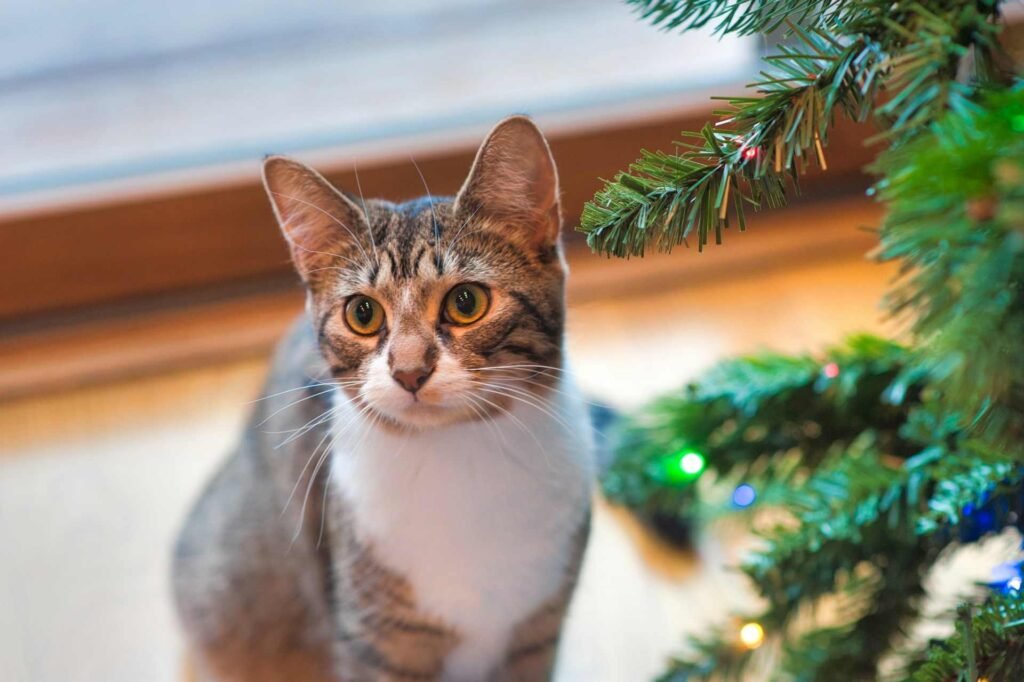
What Makes Christmas Tree Water So Dangerous for Cats?
When your cat drinks water from the Christmas tree stand, they’re not just getting a refreshing sip of H2O.
Fresh-cut Christmas trees release sap and resins into the water, creating a sticky, contaminated mixture. These natural tree substances can irritate your cat’s digestive system, leading to vomiting, excessive drooling, or diarrhea. The longer the water sits there, the worse it gets. Conifer resins contain terpenes and phenolic compounds that can irritate mucosal tissue when ingested.
Stagnant water allows rapid bacterial proliferation, particularly gram-negative organisms that produce endotoxins when ingested. Within 24 to 72 hours at room temperature, bacterial counts in untreated standing water can increase exponentially.
Many Christmas trees are also treated with pesticides, preservatives, or fire retardants before they reach your home. These chemicals leach into the water over time, creating a genuinely toxic soup. Some tree lots even spray their trees with artificial snow or other decorative chemicals that definitely weren’t meant for consumption.
And if you’ve added any commercial tree preservatives, fertilizers, or aspirin to keep your tree looking fresh? Those substances can be downright poisonous to cats. Even small amounts can cause serious health problems, from kidney damage to neurological issues.
Why Cats Are So Obsessed With Tree Water in the First Place
Now that we’ve covered the dangers, you’re probably wondering: why on earth would my cat choose gross tree water over their perfectly clean bowl?
Some domestic cats show a preference for running water over stagnant water, likely due to evolutionary avoidance of microbial contamination in wild settings. This preference explains why a tree stand reservoir, hidden and novel, competes successfully with a static bowl.
Some cats also prefer cooler water, and tree stands tend to stay chillier than room-temperature water bowls. If your cat seems particularly drawn to cold water, you might notice they also enjoy drinking from places like the toilet or sink, which tend to have cooler temperatures.
Christmas trees are often placed in living rooms or other high-traffic areas where the family spends most of their time. Your cat might simply prefer drinking water where the action is, rather than trekking to their bowl in the kitchen or bathroom. It’s the feline equivalent of grabbing a drink from the coffee table instead of walking to the fridge.
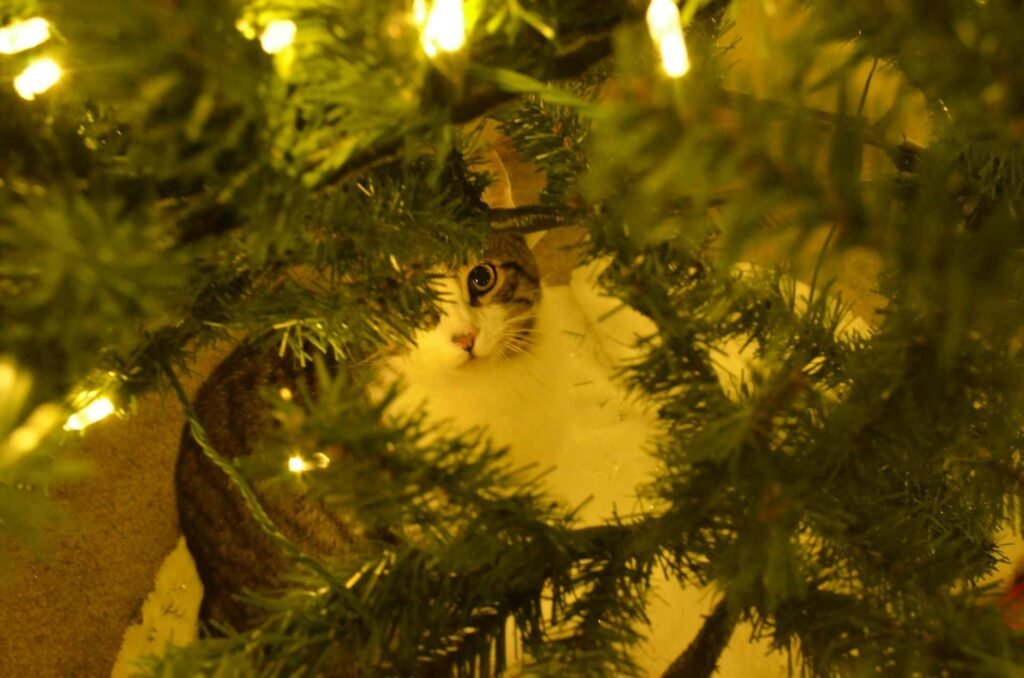
Proven Strategies to Keep Your Cat Away From Tree Water
How do you actually stop a determined cat from treating your Christmas tree like their personal drinking fountain? Here are the most effective methods we’ve found that work in homes with cats.
Cover the Tree Stand Completely
The simplest solution is often the best one. If your cat physically cannot access the water, they can’t drink it. The barrier must withstand lateral paw pressure. Many cats test covers by hooking claws under edges. Secure materials using compression rather than loose draping. Rigid plastic collars or custom-cut polycarbonate sheets fitted tightly around the trunk opening perform better than fabric skirts alone. If using cardboard, reinforce the central cutout to prevent widening from repeated clawing.
Some people wrap aluminum foil around the base of the tree stand. Cats generally dislike the texture and sound of foil, so it serves double duty as both a physical barrier and a deterrent. You can also use large pieces of cardboard cut to fit around the trunk, securing them with tape or string.
Tree stand covers specifically designed for pet safety are available online and at most pet supply stores. These typically wrap around the entire base, leaving just enough room for the tree trunk while completely blocking access to the water reservoir. They’re worth the investment if you plan on having real trees year after year.
For a more decorative approach, arrange a tree skirt tightly around the base, then weight it down with heavy packages or decorative boxes. This creates a barrier that’s both functional and festive. Just make sure there are no gaps where a persistent cat might squeeze through.
Create a Physical Barrier Around the Entire Tree
Sometimes you need to think bigger. Instead of just covering the stand, block off the entire tree area so your cat can’t get close enough to even attempt a drink.
Pet gates work surprisingly well for this purpose, especially the freestanding variety that don’t require wall mounting. Position the gate in a circle around your tree, creating a no-cat zone. This approach has the added benefit of protecting your ornaments from curious paws too.
Exercise pens designed for puppies are another excellent option. These portable fencing systems are adjustable and can be configured to fit around trees of various sizes. They’re tall enough that most cats won’t attempt to jump them, especially if you make the enclosure wide enough that there’s no convenient launching point.
For a less obtrusive barrier, try placing larger pieces of furniture strategically around the tree. Moving a couch, bookshelf, or console table to block easy access can be surprisingly effective. The key is making the journey to the tree water so inconvenient that your cat decides it’s not worth the effort.
Make the Water Unappealing (Safely)
If you can’t keep your cat away from the water entirely, the next best thing is making that water something they’d never want to drink. The trick is doing this without using anything harmful.
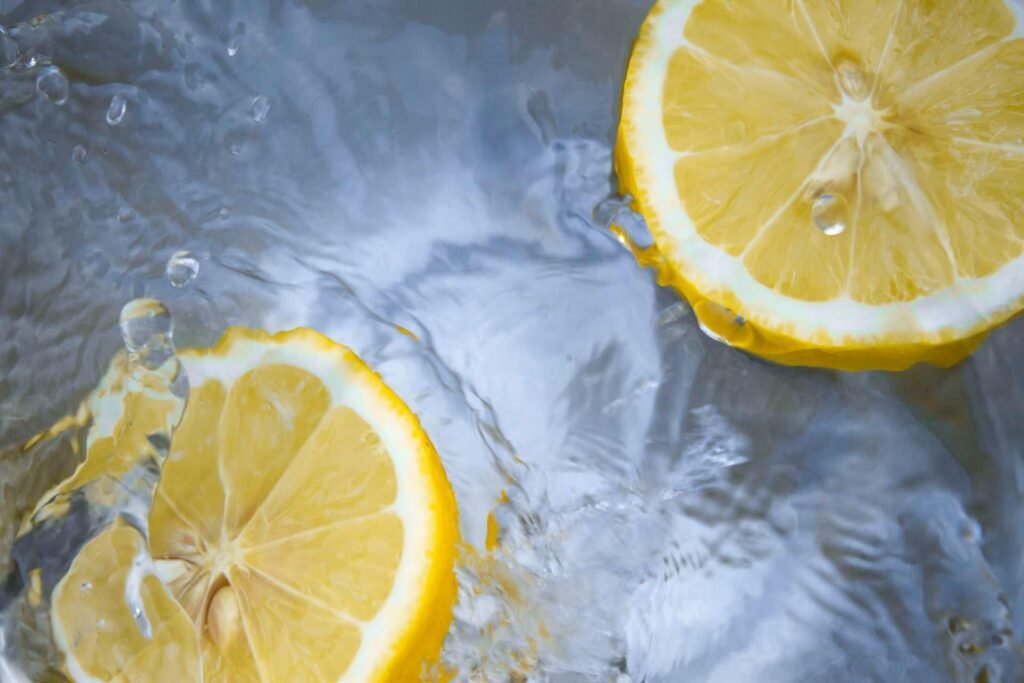
Citrus is your friend here. Cats absolutely detest citrus scents, so adding orange or lemon peels to the tree water can work wonders. The smell will permeate the area around the stand, turning your cat’s drinking fountain into their least favorite spot in the house. Just toss a few peels into the water every couple of days and refresh them as needed.
Some cat owners swear by adding a small amount of bitter apple spray to the water. This non-toxic product is specifically designed to deter cats and dogs from chewing or licking things they shouldn’t. A few sprays around the rim of the tree stand might be enough to send your cat running in the opposite direction.
Here’s a crucial warning though: never add anything to the tree water that could harm your cat if they do manage to take a sip. Never use essential oils. The American Society for the Prevention of Cruelty to Animals warns that many essential oils can cause toxicity in cats.
Upgrade Your Cat’s Regular Water Situation
If your cat is drinking from the Christmas tree because their regular water setup is boring or unappealing, fixing that problem might solve your tree water issue entirely.
Cat water fountains are game-changers for picky drinkers. The flowing water appeals to cats’ natural instincts and stays fresher longer than standing water. Many cats who previously showed little interest in their water bowls become enthusiastic drinkers once they have access to a fountain.
Related article: Are Cat Water Fountains Worth It?
Placement matters tremendously. Try positioning water bowls in multiple locations throughout your home, including near the Christmas tree. If your cat has easy access to clean, fresh water right next to the tree, they might not bother investigating the stand.
Consider the type of bowl you’re using too. Some cats are sensitive to whisker fatigue, which occurs when their whiskers constantly brush against the sides of deep or narrow bowls. Switching to wider, shallower dishes might make drinking more comfortable and appealing.
Cleanliness is non-negotiable. Cats have incredibly sensitive senses of smell, and even slightly stale water can turn them off. Wash and refill their bowls at least once daily, and consider doing it twice a day during the holiday season when you’re trying to keep them away from alternative water sources.
Use Safe Deterrents Around the Tree Base
Beyond making the water itself unappealing, you can create an unwelcoming environment around the entire tree area. The goal is to make approaching the tree stand so unpleasant that your cat gives up before they even get close.
Double-sided tape is surprisingly effective. Cats hate the sticky feeling on their paws, and a few strips of tape placed strategically around the tree stand can create an invisible force field. You can buy specialized pet deterrent tape that’s designed specifically for this purpose, or use regular double-sided tape in a pinch.
Motion-activated deterrents take things up a notch. These devices use sensors to detect when your cat approaches, then release a harmless puff of air or emit an unpleasant sound. The surprise factor teaches your cat to associate the tree area with unexpected consequences, and most cats learn to avoid the spot after just a few encounters.
Texture matters to cats. Placing aluminum foil, plastic carpet runners (nubby side up), or even pine cones around the base of the tree creates an uncomfortable walking surface. Cats prefer soft, pleasant textures under their paws, so they’ll often avoid areas that feel weird or prickly.
What to Do If Your Cat Already Drank Christmas Tree Water
Despite your best efforts, accidents happen. Maybe you caught your cat red-handed mid-drink, or perhaps you just noticed the water level is suspiciously low. Here’s what you need to know about handling this situation.
While Christmas tree water definitely isn’t good for cats, a few sips usually won’t cause catastrophic problems. The severity of the reaction depends on several factors: how much they drank, what contaminants were in the water, and your individual cat’s sensitivity.
Watch for symptoms over the next 24 to 48 hours. Mild gastrointestinal upset is the most common reaction. Your cat might vomit, have diarrhea, or seem less interested in food than usual. Excessive drooling or pawing at the mouth can indicate irritation from tree sap or chemicals.
More concerning signs require immediate veterinary attention. If your cat seems lethargic, has difficulty breathing, experiences severe or bloody diarrhea, or shows signs of neurological problems like disorientation or seizures, don’t wait to see if things improve. These symptoms could indicate serious poisoning and need professional treatment right away.
Contact your veterinarian even for mild symptoms if you know your tree water contained chemical preservatives or if your cat is very young, elderly, or has existing health issues. These factors increase the risk of complications, and it’s always better to err on the side of caution.
Keep your cat hydrated by offering fresh, clean water frequently. This helps flush their system and can reduce the concentration of any toxins they ingested. Some cats will naturally drink more when they’re not feeling well, while others might need gentle encouragement.
Alternative Holiday Tree Options for Cat-Owning Households
If you’re finding that keeping your cat away from a real Christmas tree feels like a full-time job, you might want to consider some alternatives that eliminate the problem entirely.
Artificial trees are the obvious solution, and modern versions look remarkably realistic. Without any water reservoir to maintain, you’ve instantly removed the primary temptation. Artificial trees also don’t drop needles that your cat might ingest, and they don’t release sap or harbor the same bacterial concerns.

Wall-mounted or half trees have become increasingly popular in recent years, partly because they’re perfect for homes with pets. These space-saving designs attach directly to the wall, eliminating the floor-level base entirely. Your cat can’t drink water that isn’t there, and as a bonus, they also can’t knock the whole tree over.
Tabletop trees offer another creative compromise. By placing a smaller tree on a table, counter, or other elevated surface, you keep it completely out of your cat’s reach. Make sure wherever you place it is stable and won’t become a launching pad for an ambitious climber.
Some people embrace the chaos and go for a cat-proof Christmas corner instead of a traditional tree. Think wall decals, hanging garlands, or a creative arrangement of festive decorations that don’t involve any standing water or climbable structures. It’s different, sure, but it’s also stress-free.
Comparing Prevention Methods: What Actually Works?
With so many different strategies out there, how do you know which ones are worth your time? Let’s break down the most popular approaches based on effectiveness, cost, and ease of implementation.
| Prevention Method | Effectiveness | Cost | Ease of Use | Best For |
|---|---|---|---|---|
| Covered Tree Stand | Very High | Medium | Easy | Most cats; permanent solution |
| Physical Barrier (gate/pen) | Very High | Medium-High | Moderate | Persistent cats; protects ornaments too |
| Citrus Peels in Water | Medium | Very Low | Very Easy | Mild interest; supplement to other methods |
| Cat Water Fountain | High | Medium | Easy | Cats who prefer moving water |
| Double-Sided Tape | Medium-High | Low | Easy | Cats who dislike sticky textures |
| Motion-Activated Deterrent | High | High | Moderate | Determined cats; tech-savvy owners |
| Artificial Tree | Very High | Medium-High | Easy | Long-term solution; eliminates problem |
The most successful approach usually involves layering multiple strategies. For example, covering your tree stand plus upgrading your cat’s water bowl is far more effective than either method alone.
Your individual cat’s personality matters enormously. A timid cat might be deterred by simple aluminum foil, while a bold, curious feline might require the full arsenal of barriers, deterrents, and alternative attractions. Pay attention to what motivates your specific cat and adjust your strategy accordingly.
Teaching Boundaries Through Positive Reinforcement
While barriers and deterrents are effective, teaching your cat that the tree area is off-limits can provide long-lasting results that extend beyond the holiday season.
Reward your cat every time you catch them ignoring the tree. Keep treats handy near the Christmas tree area, and offer praise and rewards whenever your cat walks past without investigating. This positive reinforcement builds an association between leaving the tree alone and receiving something wonderful.
Never punish your cat for approaching the tree. Yelling, spraying with water, or physically removing them might work in the moment, but it creates negative associations and stress without actually teaching them what you want. Cats don’t understand punishment the way dogs sometimes do, and harsh corrections often backfire.
Redirect unwanted behavior immediately and calmly. If you catch your cat approaching the tree stand, interrupt them with a gentle sound or by tossing a toy in a different direction. Once they’ve moved away from the tree, reward them for being in the right place. You’re essentially making being away from the tree more rewarding than investigating it.
Consistency is everything. If you sometimes allow your cat near the tree and sometimes don’t, you’re sending mixed signals that will confuse them. Everyone in your household needs to follow the same rules and respond to the cat’s behavior in the same way.
FAQ
While a few laps might not cause immediate catastrophe, Christmas tree water contains bacteria, tree sap, potential pesticides, and chemical additives that can genuinely harm your cat. Even small amounts can cause vomiting, diarrhea, and mouth irritation. Repeated exposure increases the risk of more serious problems like kidney issues or bacterial infections. It’s definitely something worth preventing rather than dismissing as harmless.
The quickest solution is physically covering the tree stand with a barrier your cat cannot penetrate. Aluminum foil wrapped tightly around the base, a commercial tree stand cover, or even a large piece of cardboard secured around the trunk will immediately eliminate access. Combine this with placing a fresh water fountain near the tree to provide an appealing alternative, and most cats will give up within a day or two.
This is tricky territory. While cats often dislike strong scents, artificial pine air fresheners or essential oils can actually be toxic to cats if they’re licked off surfaces or inhaled in concentration. Natural citrus peels are a safer bet for creating an unpleasant smell that deters cats without posing health risks. Skip the essential oils and stick with fresh fruit peels instead.
Cats are naturally attracted to novel water sources, and the Christmas tree represents something new and interesting in their environment. The location might be more appealing than where their regular bowl sits, or they might prefer the cooler temperature of the tree water. Sometimes cats are picky about water freshness too. If their bowl isn’t cleaned daily or the water isn’t changed frequently enough, they’ll seek alternatives that seem fresher to them, even if those alternatives are actually more contaminated.
Some cats do lose interest in new things after the novelty wears off, but you shouldn’t count on it. Many cats remain fascinated with Christmas tree water throughout the entire holiday season, drinking from it regularly until the tree comes down. Given the health risks involved, it’s better to implement prevention strategies from day one rather than hoping your cat’s interest will naturally fade.
Monitor your cat closely for the next 24 to 48 hours. Watch for vomiting, diarrhea, lethargy, excessive drooling, or loss of appetite. If any of these symptoms appear, contact your veterinarian. If you know your tree water contained chemical additives or your cat consumed a large amount, call your vet right away even if symptoms haven’t appeared yet. For young kittens, senior cats, or those with existing health conditions, it’s better to err on the side of caution and seek professional advice immediately.
Organic, pesticide-free trees grown without chemical treatments are somewhat safer than conventionally grown trees, but no Christmas tree water is truly safe for cats. The bacteria, sap, and debris present in any tree water pose risks regardless of how the tree was grown. Pine, fir, and spruce trees all release resins and oils into the water that can irritate your cat’s digestive system. The safest option is preventing access entirely rather than trying to choose a “safer” tree variety.
With patience and consistency, you can teach most cats to avoid the Christmas tree area through positive reinforcement. Reward your cat every time they ignore the tree and redirect them calmly when they approach it. However, cats are individuals, and some are more trainable than others. Even well-trained cats might be tempted by the tree water if they’re bored, stressed, or their regular water situation is inadequate. Combining training with physical barriers and environmental enrichment gives you the best chance of success.
Conclusion
Christmas tree water ingestion is a preventable risk. The solution is structural, not reactive. Block physical access, eliminate novelty appeal by improving your cat’s primary water source, and avoid introducing chemical additives into tree reservoirs.
Most cases resolve once access is removed and reinforcement is redirected. If your cat persists, increase environmental management rather than escalating correction. Prevention is simpler than treating toxin exposure, and it protects both your pet and your holiday setup without unnecessary stress.
Looking for more? Explore our Cat Health section for more posts like this, visit the Blog for fun and insightful reads, or browse our full Cat Category for everything feline-related, from care to comfort.
Disclaimer: This article is for informational purposes only and does not substitute for professional veterinary advice. Always consult your veterinarian for diagnosis and treatment tailored to your cat’s individual needs. Please verify current product information directly on the retailer’s site before purchasing.
References
- American Society for the Prevention of Cruelty to Animals (2022). The Essentials of Essential Oils Around Pets. https://www.aspca.org/news/essentials-essential-oils-around-pets
- Garcia-Lemos AM, Gobbi A, Nicolaisen MH, Hansen LH, Roitsch T, Veierskov B, Nybroe O. Under the Christmas Tree: Belowground Bacterial Associations With Abies nordmanniana Across Production Systems and Plant Development. Front Microbiol. 2020 Mar 4;11:198. https://doi.org/10.3389/fmicb.2020.00198
- Rahmatika I, Kurisu F, Furumai H, Kasuga I. Dynamics of the Microbial Community and Opportunistic Pathogens after Water Stagnation in the Premise Plumbing of a Building. Microbes Environ. 2022;37(1):ME21065. https://doi.org/10.1264/jsme2.ME21065
- Rose Ann Gould Soloway. Christmas tree preservatives. https://www.poison.org/articles/christmas-tree-preservatives
- Sharon M. Gwaltney-Brant, Chapter 39 – Christmastime Plants, Editor(s): Michael E. Peterson, Patricia A. Talcott, Small Animal Toxicology (Third Edition), W.B. Saunders, 2013, Pages 499-511, ISBN 9781455707171. https://doi.org/10.1016/B978-1-4557-0717-1.00039-9
- Zhang M, Xu M, Xu S, Zhang L, Lin K, Zhang L, Bai M, Zhang C, Zhou H. Response of the Bacterial Community and Antibiotic Resistance in Overnight Stagnant Water from a Municipal Pipeline. Int J Environ Res Public Health. 2020 Mar 18;17(6):1995. https://doi.org/10.3390/ijerph17061995
Check out our most recent articles!
- Can Cats Eat Green Peas? Safe, Healthy, or Just a Skip?
 A pea rolling across the kitchen floor is basically a free cat toy and a snack in one. But before it becomes a habit, here’s what you should know about what those little green things actually do for (or to) your cat.
 - Are Spray Bottles Bad for Cats? Reasons & AlternativesA spray bottle might stop your cat’s counter-surfing today, but it’s teaching them something much more troubling: that you’re unpredictable and potentially dangerous. Discover what really happens when you spray your cat and the alternatives that actually create lasting change.
- How Are Cats so Flexible? Your Cat’s Anatomy ExplainedBetween their 53 vertebrae, muscular shoulders connected only by soft tissue, and elastic joints, cats possess anatomical superpowers that blur the line between solid and liquid, letting them navigate spaces you’d swear were too small.
- Do Cats Copy Their Owners Voice, Personality and Actions?The independent cat stereotype is crumbling. Science reveals that cats engage in intentional mimicry, learning from their owners and adapting their personalities to match the humans they live with.
- Are Newborn Cats Born With Teeth? Everything About Kitten Dental GrowthEver wondered what’s happening inside a newborn kitten’s mouth? The answer might surprise you. Discover the complete timeline of feline dental development and learn what to expect as your kitten grows from gummy grins to a full set of adult teeth.
- Keeping Your Indoor Cat Warm in Winter: The Complete GuideEven indoor cats feel the winter chill more than you might think. Cold floors, dry air, and sneaky drafts can leave your feline less comfortable than they should be. Discover the simple adjustments that make all the difference in helping your cat stay genuinely cozy through the coldest months.
- Should You Look Your Cat in the Eyes? Is Staring Really Aggressive?Your cat’s eyes tell a story you’ve been misreading. While prolonged staring means one thing in human communication, cats interpret it completely differently. Discover why that loving gaze might actually be stressing out your feline friend and what to do instead.
- Choosing the Best Blanket for Your Cat: A Blanket Buyer’s GuideFinding the best blanket for your cat means considering more than just softness. Temperature regulation, durability, washability, and even behavioral quirks all play a role in choosing the perfect cozy spot for your feline friend. Discover which blanket types match your cat’s lifestyle.
- How to Get Your Kitten to Eat More: Simple Solutions for Picky EatersWatching your tiny kitten turn up their nose at perfectly good food can be heart-wrenching. This comprehensive guide reveals why kittens become picky eaters and shares practical solutions that transform mealtime battles into successful feeding routines.
- Can Cats Eat Fried Rice? Why This Takeout Favorite Is a No-GoThat irresistible takeout aroma might have your cat begging, but fried rice contains ingredients that can harm felines. Discover why even small amounts aren’t worth the risk and what treats truly suit your cat’s carnivorous nature.
- Why Do Cats Vibrate Their Tail? From Happy to HuntingYour cat’s vibrating tail is like a mood ring with fur. Whether they’re thrilled to see you or preparing to mark territory, decoding these rapid shakes reveals what’s really going on in their mind.
- Is Asparagus Bad for Cats? Risks, Benefits, and AlternativesYour cat’s eyeing your asparagus dinner, but should they have any? While this green veggie isn’t toxic to cats, there are surprising reasons why it’s not the treat you might think it is.
- How Cats Express Sadness: Reading Your Feline’s Emotional LanguageCats don’t cry emotional tears or mope around like dogs, but they absolutely experience sadness. The trick is learning to read their subtle language, the withdrawn behavior, the changed routines, the slight shifts in body posture that reveal their inner emotional world.
- Can Cats and Rabbits Live Together? Multi-Species Harmony GuideCats are predators, rabbits are prey, but that doesn’t mean they can’t coexist peacefully. Success comes down to understanding each animal’s instincts, respecting their boundaries, and taking introductions at the right pace.
- Are Space Heaters Safe for Cats? Keeping Your Cat CozySpace heaters can provide cozy warmth for your cat, but only when chosen and positioned with feline safety in mind. Discover which features protect against burns, fires, and electrical hazards.













Written by Fenton Harberson (Scientific Writer and Digital Asset Planner)
Last reviewed and edited on 16.02.2026