
Clients often tell me their cat became unusually attentive before they realized they were sick. In many cases, that timeline holds up. Cats detect physiological changes before we consciously register symptoms.
The direct answer is yes, cats can sense when you are unwell. They do this through scent detection, thermoregulation sensitivity, and pattern recognition of your daily behavior. They are mostly detecting deviation from baseline.
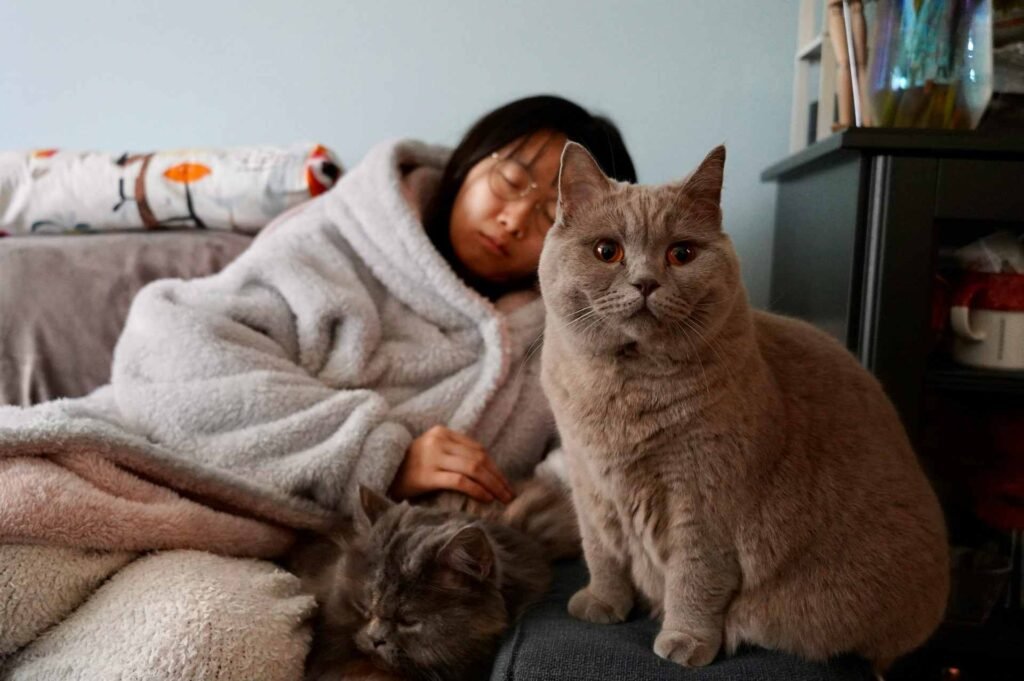
The Connection Between Cats and Human Health
We’ve all heard stories about cats detecting illness in their owners, but can cats really tell when you’re sick? Your cat is picking up on subtle changes in your body that even you might not notice yet.
Cats possess sensory abilities that make our human perception seem rather dull by comparison. While we’re struggling to remember if we took our vitamins this morning, our cats are detecting microscopic changes in our scent, behavior, and even body temperature. It’s like living with a furry, four-legged medical alert system that occasionally knocks things off counters.
How Your Cat’s Super Senses Detect Illness
The Power of Smell: Your Cat’s Secret Weapon
The feline olfactory epithelium contains up to 200 million odor-sensitive receptors. Humans have roughly 5 to 6 million. Illness alters volatile organic compounds in breath and sweat. Viral infections, for example, change metabolic byproducts that are excreted through respiration. These shifts are imperceptible to us but detectable to animals with high olfactory acuity.
I have repeatedly seen cats increase investigatory sniffing of the face and hands 24 hours before owners reported fever or respiratory symptoms. The behavior was not random. It was targeted scent sampling.
Reading Your Behavior Like a Book
Cats are master observers. They’ve spent thousands of years studying humans, figuring out our patterns, and learning what behaviors lead to food, attention, or those dreaded vet visits. Their name recognition shows just how attuned our pets are to human behavior patterns.
When you’re sick, your routine changes. Maybe you’re sleeping more, moving slower, or spending extra time on the couch instead of rushing around. Your cat notices all of this. They can detect when you’re sick through these behavioral shifts, even before visible symptoms appear. That morning you slept through your alarm? Your cat knew something was different the moment you didn’t get up at your usual time.
Temperature Changes and Body Language
Can cats detect when you’re sick through physical changes? Absolutely. Cats are heat-seeking creatures who can sense temperature variations that we’d consider negligible. A slight fever that you might brush off? Your cat knows. The normal human body temperature averages 98°F. Even a mild fever of 100.4°F represents a measurable increase in radiant heat output. Cats possess highly sensitive thermoreceptors in their facial whisker pads and skin. A febrile human becomes a biologically attractive heat source. What feels like affection may partially be thermal preference layered onto social bonding.
Beyond temperature, cats read body language with incredible accuracy. The way you’re sitting, how you’re breathing, even your facial expressions when you’re in discomfort all send signals to your observant companion. They pick up on tension, weakness, and pain through visual cues that most humans would miss entirely.
What Cats Do When They Sense You’re Unwell
Once your cat determines that something’s off with their human, their behavior often shifts in noticeable ways. Here’s what you might observe:
Increased Affection and Proximity: Suddenly your independent cat becomes velcro with fur. They follow you from room to room, settle on your lap without invitation, and might even sleep on your chest or close to your head. This isn’t random. Many cats show protective instincts when their humans are vulnerable.
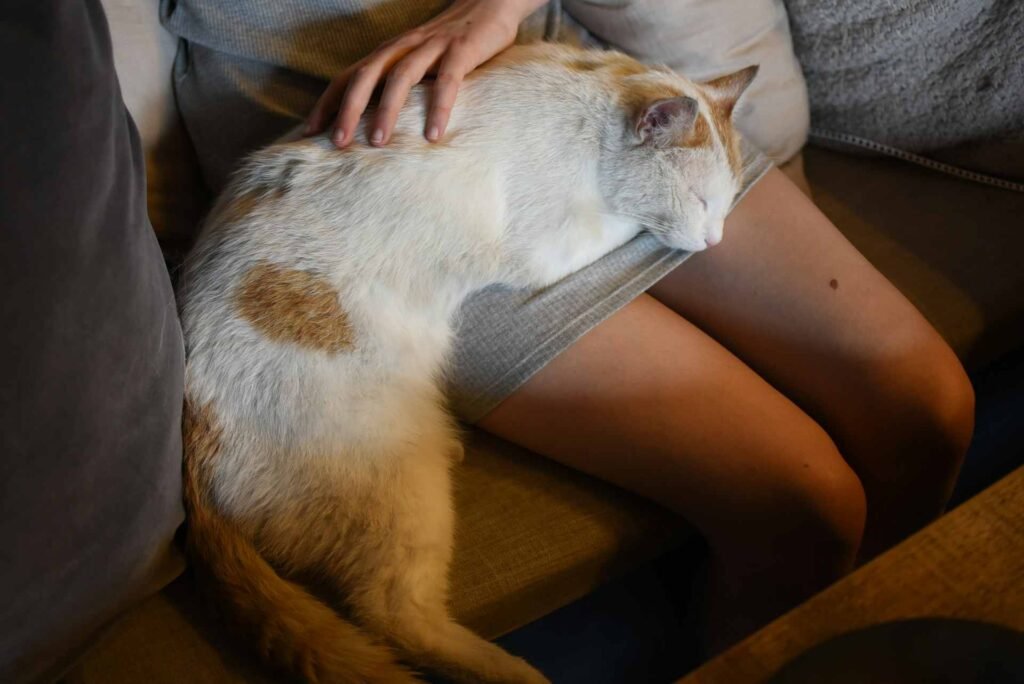
Extra Purring and Comfort Behaviors: Notice your cat purring more loudly and consistently when you’re sick? Purring isn’t just a sign of contentment. Whether your cat knows this consciously or not, they’re offering therapeutic comfort through their natural stress-relief mechanisms that can help you feel better.
Unusual Attentiveness: Cats who can tell when you’re ill might stare at you more than usual, gently paw at you, or position themselves where they can keep constant watch. Some cats will even bring their humans “gifts” (hopefully toys rather than the alternative) as offerings of comfort.
The Science Behind Feline Health Detection
Chemical Signals and Pheromones
During illness, cortisol and inflammatory cytokines increase. These influence sweat composition and sebaceous secretions. Cats have an additional sensory organ called the vomeronasal organ (or Jacobson’s organ) located in the roof of their mouth. This specialized structure allows them to “taste” scents and detect pheromones that are completely invisible to human perception. It’s like they have a sixth sense dedicated specifically to chemical analysis.
The Feline Early Warning System
There’s a reason why cats have historically been valued in healthcare settings. Their ability to detect illness extends beyond their own humans. Therapy cats in nursing homes and hospitals have been observed spending extra time with patients who later required medical attention. While we should be careful not to treat our cats as diagnostic tools, their sensitivity to human health changes is undeniable.
Some cats can sense when you’re sick hours or even days before symptoms become obvious to you. They might become more vocal, trying to alert you to something being wrong. Others become unusually clingy or refuse to leave your side. A few cats show anxiety or stress behaviors, mirroring the distress they sense from their human.
Cats are exceptional baseline trackers. They rely on environmental predictability. When your wake time shifts by 30 minutes, your gait slows, or your voice amplitude drops, that deviation is logged. In one household I observed, a normally independent cat began blocking the hallway each morning when the owner developed early influenza. The cat’s behavior coincided with subtle morning instability that the owner had not consciously noticed.
Personality Matters
Here’s something important to remember: whether cats can know when you’re sick might depend partially on the individual cat’s personality and bond with you. Just like humans have different levels of empathy and awareness, cats vary in their sensitivity and response to human illness.
The Velcro Cat: Some cats are naturally more attuned to their humans’ emotional and physical states. These are the cats who already follow you everywhere, sleep on your pillow, and seem to have separation anxiety when you’re gone. For these felines, detecting illness is just an extension of their already intense focus on their favorite human.
The Independent Observer: Other cats maintain more distance but still notice when something’s wrong. They might not curl up in your sick bed, but you’ll catch them watching you more carefully than usual or lingering nearby. Their concern is quieter but no less real.
The Stoic Companion: Some cats show minimal outward reaction to your illness. This doesn’t mean they can’t detect it. They might simply express their awareness differently or feel less compelled to change their behavior. Remember, cat behavior patterns vary widely, and not every cat is a natural caregiver.
How Cats Help Healing
The Therapeutic Benefits of Cat Companionship
When you’re sick, having a cat around offers more than just illness detection. The presence of a purring cat can lower blood pressure, reduce anxiety, and provide genuine emotional comfort during miserable times. There’s something very soothing about a warm, fuzzy creature choosing to stay close when you feel terrible.
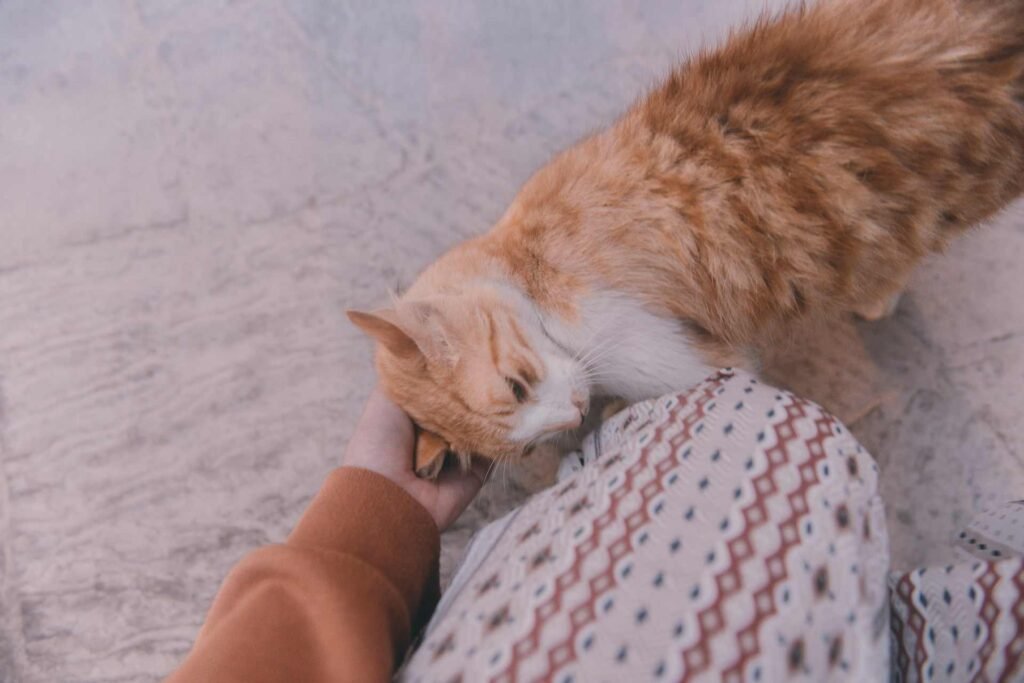
Many pet owners report that their cats seem to instinctively choose the spot where they’re experiencing discomfort. Headache? Cat on your pillow. Stomach ache? Cat across your midsection. Chest cold? Cat pressed against your upper body. Whether this is intentional healing behavior or cats simply seeking the warmest spots is up for debate, but the comfort is real either way.
Supporting Your Cat While You’re Under the Weather
Even when you’re feeling awful, your cat still needs basic care. This is where having the right supplies becomes crucial. Automatic feeders and water fountains can ensure your cat maintains their routine even when you’re too sick to get out of bed on schedule. These tools aren’t just conveniences; they’re lifesavers during illness.
Similarly, low-maintenance litter solutions become extra valuable when you’re operating at half capacity. Your cat can sense when you’re sick, but they still need their bathroom cleaned regularly. Having supplies that make this easier means less stress for both of you.
Common Misconceptions About Cats and Illness Detection
Myth: Cats Can Diagnose Specific Diseases
Let’s be clear: while cats can tell when you’re ill, they’re not performing medical diagnostics. They detect that something is different or wrong, but they can’t identify whether you have the flu versus a bacterial infection. Your cat’s extra attention is a sign to pay attention to your own body, not a replacement for medical care.
Myth: Only Certain Breeds Can Sense Illness
You might wonder if specific breeds are better at detecting illness. The truth is that the ability to sense when you’re sick isn’t breed-specific. Mixed breeds, purebreds, long-haired and short-haired cats all have the same fundamental sensory abilities. Individual personality and bond strength matter more than pedigree.
Myth: Cats Only Stay Close Because They Want Something
This cynical view misunderstands feline behavior. Yes, cats are opportunistic creatures who love food and comfort. But the protective, attentive behavior many cats display during their human’s illness goes beyond simple self-interest. Cats form genuine bonds, and those bonds include protective instincts when their family members are vulnerable.
Feline vs. Canine Illness Detection
| Aspect | Cats | Dogs |
|---|---|---|
| Detection Method | Primarily scent and behavioral observation | Scent-focused with trained alert behaviors |
| Response Style | Quiet companionship and proximity | Active alerting and physical contact |
| Consistency | Variable based on personality | More uniform, especially in trained animals |
| Training Potential | Limited interest in formal training | Highly trainable for medical alert roles |
| Natural Instinct | Strong but expressed subtly | Strong with obvious demonstrations |
Dogs are selectively bred for cooperative alert behavior. Cats are not. A dog detecting hypoglycemia may paw, bark, or retrieve assistance because that response has been reinforced. A cat detecting abnormal scent or behavior typically increases proximity or observation.
The sensory detection capacity overlaps. The expression differs. One species externalizes concern. The other monitors quietly.
The World of Animal Intuition
The question “can cats sense when you’re sick” opens a larger conversation about animal intuition and perception. Cats aren’t unique in their ability to detect illness, but they’re particularly fascinating because of their reputation for independence. When a creature that seems to barely tolerate our existence suddenly becomes a devoted nurse, it reveals the depth of their awareness and attachment.
This sensitivity extends beyond physical illness too. Cats often detect emotional distress, mental health changes, and stress with similar accuracy. They’re reading a complex combination of signals that paint a complete picture of their human’s wellbeing.
As you heal, your cat might remain extra attentive or gradually return to their normal routine. Some cats seem relieved when their human recovers, showing increased playfulness or relaxation. Others maintain their closer proximity for a while, as if making sure you’re really okay.
During recovery, it’s a good time to reestablish healthy routines. Regular play sessions help both of you destress after illness. Mental stimulation through interactive toys can redirect any anxiety your cat might have developed during your sick period.
FAQ
Yes, many cats can detect illness before obvious symptoms appear. They pick up on subtle changes in your scent, body temperature, and behavior that occur in the early stages of illness. Some cats become more attentive 12-24 hours before their humans realize they’re getting sick. However, this shouldn’t replace regular health monitoring or medical care.
Not at all. Cat responses to human illness vary based on personality, bond strength, and individual temperament. Some cats become extremely clingy and affectionate, while others show concern through increased observation from a distance. A few cats might not change their behavior noticeably at all, though they likely still detect the illness.
Cats often gravitate toward your chest when you’re ill because they can hear your heartbeat and breathing more clearly there, allowing them to monitor your condition. Additionally, your chest is warm, and if you have a respiratory illness, the area might be warmer than usual.
There’s anecdotal evidence suggesting some cats can detect serious illnesses, including cancer, through changes in scent caused by chemical compounds the disease produces. However, this isn’t reliable or consistent enough to be medically useful. While fascinating, your cat’s behavior should never be used as a diagnostic tool for serious conditions.
Some cats respond to human illness by becoming more distant rather than more affectionate. This might happen because the changes in your scent or behavior make them anxious, or simply because your illness has disrupted routines they find comforting. As long as your cat is eating, drinking, and behaving normally otherwise, this reaction isn’t cause for concern. However, if your cat seems distressed or develops their own health issues, consulting your veterinarian is important.
Cats stressed by their owner’s illness might show signs like excessive grooming, changes in eating habits, increased vocalization, hiding more than usual, or becoming unusually aggressive or skittish. If your cat seems disturbed by your illness, maintaining their routine as much as possible and ensuring they have quiet, safe spaces can help.
Cats definitely notice when you’re recovering. You might observe your cat becoming less attentive, resuming their normal activities, or seeming more relaxed as you improve. They’re responding to your scent returning to normal, your energy levels increasing, and your routine stabilizing. Some cats even seem noticeably happier when their humans are well again.
Your Cat’s Caring Side
Cats detect deviation. They register altered scent chemistry, heat shifts, movement irregularities, and behavioral disruption. But they do not understand pathology.
Increased proximity during illness is often a composite response. Part thermoregulation. Part environmental monitoring. Part social bond.
If your cat becomes unusually attentive, interpret it as data. Pay attention to your body. Seek medical care when appropriate. At minimum, recognize that the animal sharing your home is continuously mapping your patterns. When those patterns shift, they notice.
Looking for more? Visit our Blog for more fun and insightful reads, or browse our full Cat Category for everything feline-related, from care to comfort.
Disclaimer: This article is for informational purposes only and does not substitute for professional veterinary advice. Always consult your veterinarian for diagnosis and treatment tailored to your cat’s individual needs. Please verify current product information directly on the retailer’s site before purchasing.
References
- Geneva II, Cuzzo B, Fazili T, Javaid W. Normal Body Temperature: A Systematic Review. Open Forum Infect Dis. 2019 Apr 9;6(4):ofz032. https://doi.org/10.1093/ofid/ofz032
- Hankyeol Jeong et al., Genomic evidence for behavioral adaptation of herding dogs.Sci. Adv.11,eadp4591(2025). https://doi.org/10.1126/sciadv.adp4591
- Marlin, D. (2025). Cat’s Sense Of Smell. https://askanimalweb.com/cats-sense-of-smell/
- Salazar I, Sanchez Quinteiro P, Cifuentes JM, Garcia Caballero T. The vomeronasal organ of the cat. J Anat. 1996 Apr;188 ( Pt 2)(Pt 2):445-54. https://pubmed.ncbi.nlm.nih.gov/8621344/
Check out our most recent articles!
- Can Cats Eat Green Peas? Safe, Healthy, or Just a Skip?
 A pea rolling across the kitchen floor is basically a free cat toy and a snack in one. But before it becomes a habit, here’s what you should know about what those little green things actually do for (or to) your cat.
 - Are Spray Bottles Bad for Cats? Reasons & AlternativesA spray bottle might stop your cat’s counter-surfing today, but it’s teaching them something much more troubling: that you’re unpredictable and potentially dangerous. Discover what really happens when you spray your cat and the alternatives that actually create lasting change.
- How Are Cats so Flexible? Your Cat’s Anatomy ExplainedBetween their 53 vertebrae, muscular shoulders connected only by soft tissue, and elastic joints, cats possess anatomical superpowers that blur the line between solid and liquid, letting them navigate spaces you’d swear were too small.
- Do Cats Copy Their Owners Voice, Personality and Actions?The independent cat stereotype is crumbling. Science reveals that cats engage in intentional mimicry, learning from their owners and adapting their personalities to match the humans they live with.
- Are Newborn Cats Born With Teeth? Everything About Kitten Dental GrowthEver wondered what’s happening inside a newborn kitten’s mouth? The answer might surprise you. Discover the complete timeline of feline dental development and learn what to expect as your kitten grows from gummy grins to a full set of adult teeth.
- Keeping Your Indoor Cat Warm in Winter: The Complete GuideEven indoor cats feel the winter chill more than you might think. Cold floors, dry air, and sneaky drafts can leave your feline less comfortable than they should be. Discover the simple adjustments that make all the difference in helping your cat stay genuinely cozy through the coldest months.
- Should You Look Your Cat in the Eyes? Is Staring Really Aggressive?Your cat’s eyes tell a story you’ve been misreading. While prolonged staring means one thing in human communication, cats interpret it completely differently. Discover why that loving gaze might actually be stressing out your feline friend and what to do instead.
- Choosing the Best Blanket for Your Cat: A Blanket Buyer’s GuideFinding the best blanket for your cat means considering more than just softness. Temperature regulation, durability, washability, and even behavioral quirks all play a role in choosing the perfect cozy spot for your feline friend. Discover which blanket types match your cat’s lifestyle.
- How to Get Your Kitten to Eat More: Simple Solutions for Picky EatersWatching your tiny kitten turn up their nose at perfectly good food can be heart-wrenching. This comprehensive guide reveals why kittens become picky eaters and shares practical solutions that transform mealtime battles into successful feeding routines.
- Can Cats Eat Fried Rice? Why This Takeout Favorite Is a No-GoThat irresistible takeout aroma might have your cat begging, but fried rice contains ingredients that can harm felines. Discover why even small amounts aren’t worth the risk and what treats truly suit your cat’s carnivorous nature.
- Why Do Cats Vibrate Their Tail? From Happy to HuntingYour cat’s vibrating tail is like a mood ring with fur. Whether they’re thrilled to see you or preparing to mark territory, decoding these rapid shakes reveals what’s really going on in their mind.
- Is Asparagus Bad for Cats? Risks, Benefits, and AlternativesYour cat’s eyeing your asparagus dinner, but should they have any? While this green veggie isn’t toxic to cats, there are surprising reasons why it’s not the treat you might think it is.
- How Cats Express Sadness: Reading Your Feline’s Emotional LanguageCats don’t cry emotional tears or mope around like dogs, but they absolutely experience sadness. The trick is learning to read their subtle language, the withdrawn behavior, the changed routines, the slight shifts in body posture that reveal their inner emotional world.
- Can Cats and Rabbits Live Together? Multi-Species Harmony GuideCats are predators, rabbits are prey, but that doesn’t mean they can’t coexist peacefully. Success comes down to understanding each animal’s instincts, respecting their boundaries, and taking introductions at the right pace.
- Are Space Heaters Safe for Cats? Keeping Your Cat CozySpace heaters can provide cozy warmth for your cat, but only when chosen and positioned with feline safety in mind. Discover which features protect against burns, fires, and electrical hazards.















Written by Solara Bergmeier (Technical Writer and Content Manger)
Last reviewed and edited on 24.02.2026