
Every December, veterinary emergency clinics see a spike in foreign body surgeries tied to holiday décor. Tinsel, ornament hooks, ribbon, and artificial tree fragments are common culprits. The American Veterinary Medical Association warns that decorative materials are among the most frequent seasonal ingestion hazards for pets.
Artificial trees remove certain biological risks associated with real evergreens, but they introduce mechanical hazards that are often underestimated. The safety question is whether the setup accounts for feline climbing behavior, oral exploration, and instability risk.
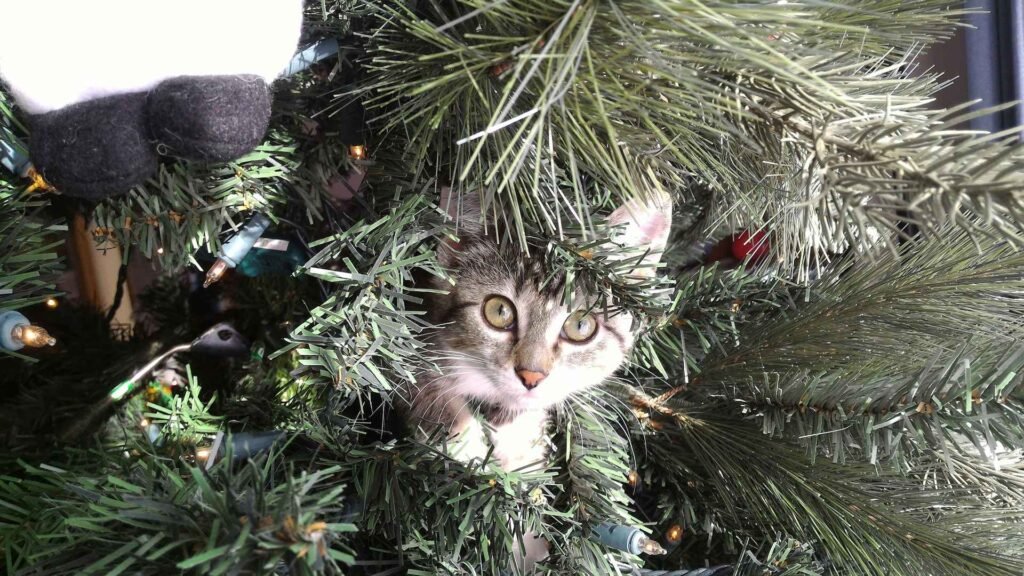
Why Your Cat Is Obsessed With the Christmas Tree
Before diving into safety concerns, it helps to understand why cats find Christmas trees irresistible in the first place. From your perspective, it’s a lovely holiday decoration. From your cat’s perspective? It’s the greatest gift you’ve ever brought home.
Cats are natural climbers who seek elevated vantage points to survey their territory. A tall tree suddenly appearing in the living room represents the ultimate high-rise real estate. Add in dangling ornaments that move with every passing breeze, branches perfect for hiding behind, and lights that flicker just like prey animals, and you’ve installed an amusement park designed specifically for feline entertainment.
The instinct goes deeper than simple play. In the wild, trees offered cats safety from predators, hiding spots for stalking prey, and strategic lookout points. Your domesticated house cat still carries these instincts, which is why that artificial tree speaks to something primal in their nature. Strategic cat furniture placement throughout your home year-round can help satisfy these climbing urges before the holidays even arrive.
Are Artificial Trees Safe for Cats?
Artificial Christmas trees eliminate several hazards associated with real trees, but they introduce different concerns. Unlike real trees, fake versions won’t have toxic oils in their needles, won’t drop sharp pine needles that can puncture intestines, and won’t require a water basin filled with potentially harmful preservatives.
Most artificial trees are made from PVC, polyethylene, or flame-retardant treated plastics. When chewed, these materials can splinter into rigid fragments with sharp edges. In surgical cases I have reviewed, partial obstructions from rigid plastic often lodge in the jejunum, requiring exploratory laparotomy rather than endoscopic removal. Unlike soft foreign material, rigid fragments do not conform to intestinal curvature.
The majority of cats aren’t interested in chewing artificial branches the way they might nibble on real evergreen needles. Real trees smell enticing, reminiscent of the outdoors and nature. Artificial trees lack this appeal, making them less likely to become chew toys. That said, every cat has different quirks, and some felines might still investigate those plastic branches with their teeth.
The Flocking Factor: Are Artificial Flocked Trees Safe for Cats?
Walk into any holiday store, and you’ll find gorgeous flocked trees covered in artificial snow. They look magical, evoking images of winter wonderlands. But are fake flocked trees safe for cats?
Commercial flocking typically consists of cellulose fibers bonded with adhesive polymers and fire retardants. While labeled non-toxic, ingestion still poses two risks: adhesive-based gastric irritation and mass accumulation leading to obstruction. In practice, flocking becomes more hazardous once it begins shedding. Detached clumps are easier for cats to ingest than adhered material. If flocking transfers to your fingers when you touch it, it will transfer to your cat’s mouth during grooming.
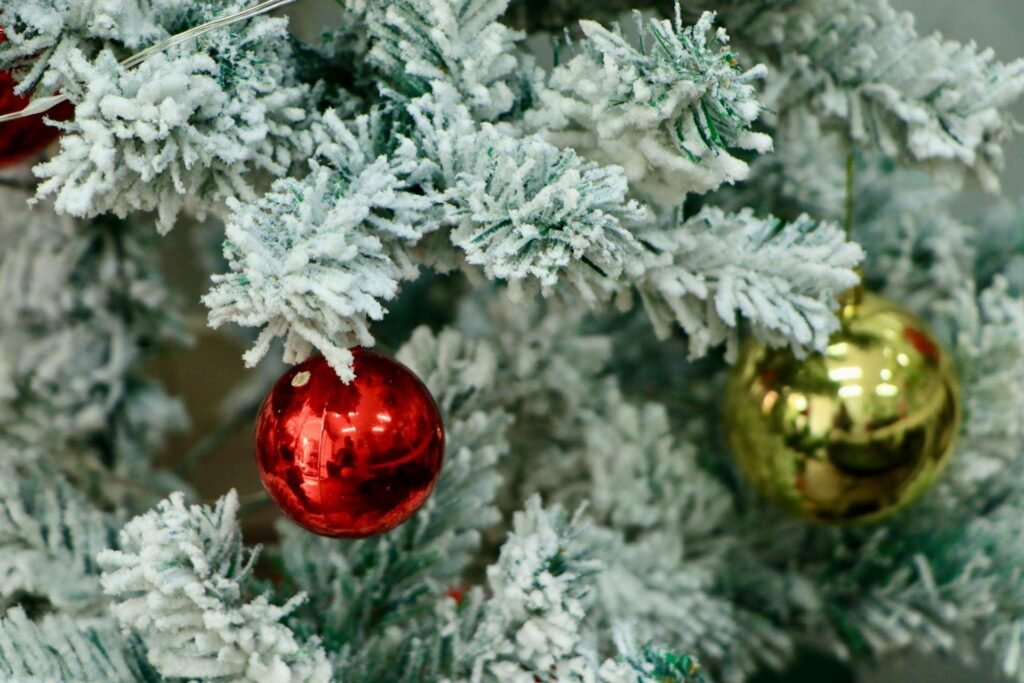
Cats find flocked branches particularly appealing to chew because the texture is different and interesting. The fluffy material might even remind them of prey animals. If you’re committed to having a flocked tree, skip the do-it-yourself flocking spray while your cat is present. Inhaling fresh flocking fumes isn’t safe for pets or humans. Better yet, consider non-flocked alternatives and satisfy your snowy vision through other decorations placed well out of paw’s reach.
Real Trees vs. Fake Trees: Making the Comparison
| Factor | Real Christmas Trees | Artificial Christmas Trees |
|---|---|---|
| Smell & Attraction | Strong pine scent that attracts cats | No natural scent, less appealing |
| Needle Hazards | Sharp needles can puncture digestive tract when swallowed | Plastic pieces may cause choking or blockages if chewed |
| Water Basin | Contains potentially toxic preservatives, fertilizers, or stagnant bacteria | No water needed |
| Oils & Sap | Contains mildly toxic pine oils that irritate stomach and mouth | No natural oils present |
| Maintenance | Constant needle cleanup required | Minimal shedding after initial setup |
| Climbing Risk | Can dry out and become unstable | Typically more stable if properly secured |
| Overall Safety | Multiple toxic elements | Fewer biological hazards, but physical dangers remain |
When weighing your options, artificial trees generally come out ahead for cat households. The elimination of toxic tree water alone is significant. Real tree water can contain fertilizers, preservatives, or even aspirin that owners add to extend freshness. Cats often view this water basin as an alternative drinking source. A covered water basin with a sturdy tree skirt that blocks access helps, but artificial trees remove this hazard entirely.
Hidden Dangers Beyond the Tree Itself
The tree might be your main concern, but the real dangers often come from decorations and accessories. Glass ornaments shatter into sharp shards that can cause serious cuts or, if swallowed, create internal lacerations. Even shatterproof ornaments can be swallowed whole, potentially causing choking or intestinal blockages.
Tinsel ingestion creates what veterinarians classify as a linear foreign body. One end anchors under the tongue or at the pylorus while the remainder advances through the intestines. Peristalsis causes the bowel to pleat along the string, cutting into mesenteric tissue. This condition often requires emergency surgery and carries risk of intestinal resection.
Electric cords and lights present electrocution risks if chewed. Cats might bat at lights or chew on cords out of curiosity or playfulness. Battery packs from LED light strings should be hidden within the tree itself, and any exposed cords need protection with cord covers.
Even the presents under the tree can pose problems. Ribbon and gift wrap string can be ingested, causing the same linear foreign body issues as tinsel. Certain holiday plants displayed near the tree, like lilies, are extremely toxic to cats and can cause kidney failure. Mistletoe and holly berries can cause vomiting, diarrhea, and difficulty breathing.
Decoding Your Cat’s Behavior Around the Tree
Some behaviors are merely annoying, while others signal potential danger. If your cat is simply sitting under the tree watching the lights, they’re relatively safe. Batting at low-hanging ornaments might lead to broken decorations but isn’t immediately dangerous.
Distinguish curiosity from fixation. Curiosity decreases after correction and environmental adjustment. Fixation escalates despite redirection. In behavior consultations involving holiday décor, repeated vertical launching, persistent chewing, or vocalization directed at the tree signals enrichment deficit rather than simple novelty.
When a cat repeatedly targets a tree, the underlying issue is often insufficient vertical territory. A single 5-foot cat tree does not replace a 7-foot climbable structure in the center of the room.
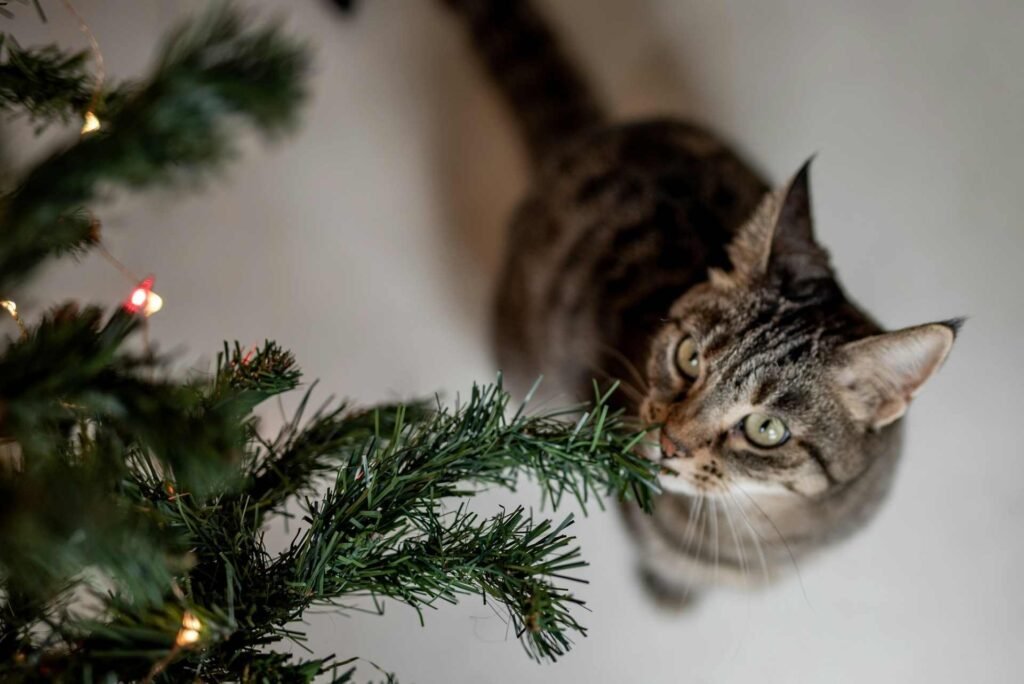
Some cats lose interest in the tree after a few days once the novelty wears off. Others remain committed to conquering that evergreen mountain throughout the entire holiday season. If you’re dealing with a cat who seems perpetually bored, they might be more prone to viewing the tree as entertainment.
Creating a Cat-Safe Christmas Tree Setup
Start with tree placement. Position your tree in a corner rather than the middle of the room, giving cats fewer angles of approach. Avoid placing it near furniture that could serve as a launching pad. A cat tower or couch positioned nearby becomes a convenient stepping stone for an ambitious climber.
Secure the tree properly. Use a sturdy, weighted base designed for your tree’s size. Consider anchoring the tree to the wall using fishing line or clear wire attached to a hook. This prevents toppling if your cat decides to test their rock climbing skills. Tree anchors and stability weights are worth the investment, especially if you have multiple cats or particularly athletic felines. Stability should be tested before decorating. Apply 10–15 pounds of lateral force at mid-trunk height to simulate a jumping cat. If the base shifts, reinforcement is required. Wall anchoring should use a closed screw eye secured into a stud, not drywall anchors alone. In multi-cat households, anchoring is not optional. Momentum from two cats interacting mid-tree significantly increases toppling force.
Start decorating from the middle of the tree upward, leaving the bottom third bare. This reduces temptation and keeps dangerous decorations out of reach. Use shatterproof ornaments exclusively, opting for wood, fabric, felt, or durable plastic versions. Secure ornaments to branches with tight clips rather than easily removed hooks. Avoid anything with dangling elements like bells, tassels, or long ribbons.
Skip the tinsel entirely. No amount of sparkle is worth the potential veterinary emergency. If you crave that shimmery effect, consider garland made from natural materials like popcorn strings or paper chains, though these should also be monitored.
Wrap all electrical cords in cord protectors and secure them to the tree trunk or tape them against walls. Choose battery-operated lights when possible, hiding the battery pack within the tree’s interior branches. Unplug lights when you’re not home or while sleeping.
Create a physical barrier if needed. Baby gates or pet playpens can section off the tree area entirely. This isn’t the most elegant solution, but it’s effective for determined cats. Some creative pet owners have even elevated their trees on platforms or boxes, placing the lowest branches above cat head-height.
Deterrent Strategies That Actually Work
Cats generally dislike citrus scents. Orange and lemon peels scattered around the tree base can discourage approach. Just refresh them daily as the scent fades.
Aluminum foil wrapped around the tree base or tree stand creates an unpleasant texture for cats. They dislike the crinkly sound and the feeling under their paws. Double-sided tape or sticky paws placed around the tree perimeter offers similar deterrent value, though this can be harder to implement on carpet.
Motion-activated pet deterrents emit a harmless burst of air when they detect movement, startling cats away from the tree. These devices take some setup but can be highly effective for persistent climbers. Some even emit ultrasonic sounds that only pets can hear.
Provide alternative entertainment. If your cat’s interest in the tree stems from boredom or lack of enrichment, address those needs. Set up a cat tree near the Christmas tree to offer an approved climbing spot. Introduce new toys that capture their attention during the holiday season. Interactive feeders that require puzzle-solving can redirect hunting instincts away from ornament batting.
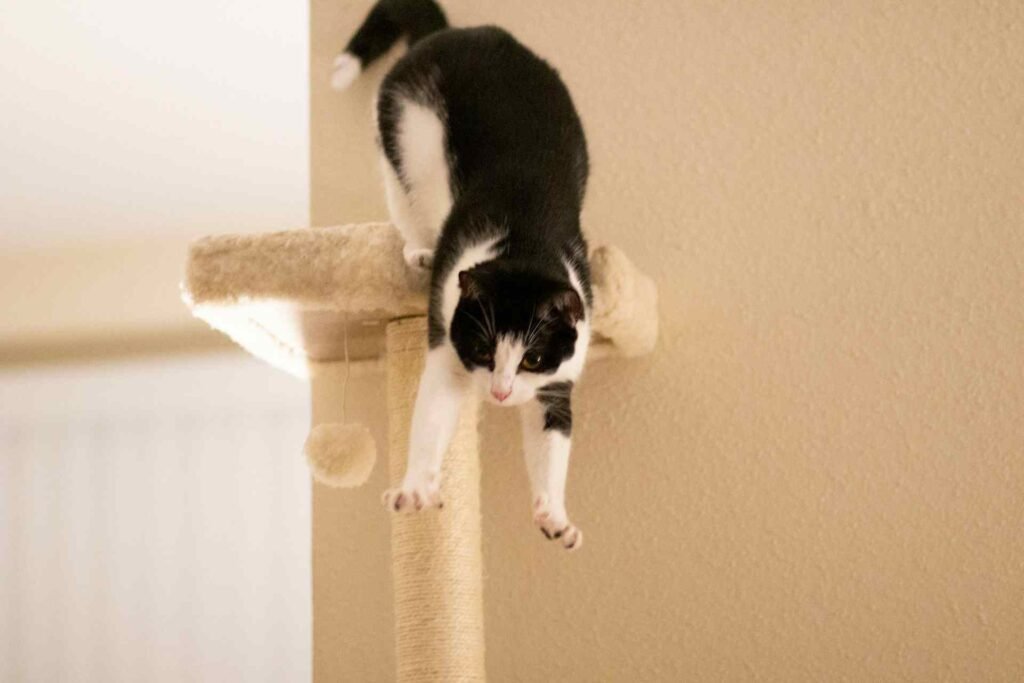
Make sure your cat has plenty of one-on-one attention during this busy season. Sometimes tree obsession is really attention-seeking behavior in disguise. Spending dedicated playtime with your cat, especially in the evening when they’re most active, can significantly reduce their interest in the tree.
Related article: How to Keep Your Cat Entertained While at Work
When to Skip the Tree Entirely
Some situations call for alternative solutions. If your cat has a history of eating non-food items (a condition called pica), a traditional tree might simply be too tempting. Cats with severe anxiety or those who become destructive when their environment changes might find the tree too stimulating.
Consider these alternatives:
- Wall-mounted flat trees or tree decals
- Tabletop miniature trees placed on high shelves
- Hanging trees suspended from the ceiling, well above jumping range
- Decorative branch arrangements in floor vases
- Christmas-themed cat-safe wall decorations
These alternatives let you maintain holiday spirit without the safety risks. A small tabletop tree on a high bookshelf gives you a decorated centerpiece while remaining completely inaccessible to cats.
What to Do If Your Cat Eats Something They Shouldn’t
If ingestion is suspected, do not induce vomiting unless directed by a veterinarian. Sharp plastic, ornament hooks, or rigid fragments can cause esophageal injury during regurgitation.
Monitor for these clinical signs:
- Repeated unproductive vomiting
- Abdominal guarding
- Resting respiratory rate above 40 breaths per minute
- Lethargy or hiding behavior
- Refusal of food for 24 hours
Contact your veterinarian or ASPCA Animal Poison Control at 888-426-4435 immediately. Time to intervention strongly influences outcome in obstruction cases.
Create a holiday first aid plan before you need it. Know where the closest emergency vet is located, have pet poison control numbers saved in your phone, and keep a pet carrier accessible in case you need to transport your cat quickly. Prevention is ideal, but preparation for emergencies is wise.
Frequently Asked Questions
Artificial trees can be safer than real ones since they eliminate toxic oils, pine needles, and hazardous tree water. However, they still present risks if cats chew plastic branches, as pieces can cause choking or intestinal blockages. The key is proper setup, deterrents, and close monitoring of your cat’s behavior around the tree.
If a cat ingests small pieces of plastic from artificial tree branches, they may experience mouth irritation, vomiting, or digestive upset. Larger pieces can cause serious intestinal blockages requiring surgical intervention. Watch for symptoms like drooling, loss of appetite, vomiting, or lethargy, and contact your veterinarian if these occur.
Fake trees are generally the better choice for cat households. Real trees contain mildly toxic oils, drop sharp needles that can puncture digestive tracts, and require water basins that may contain harmful preservatives. Artificial trees eliminate these biological hazards while still requiring safety precautions against climbing and ornament hazards.
Use multiple strategies: secure the tree firmly to prevent tipping, spray with diluted citrus scents cats dislike, wrap the base in aluminum foil, keep decorations on the upper two-thirds only, provide alternative climbing spots like cat trees, and consider barriers like baby gates. Remove all tinsel and dangly decorations that tempt cats to play.
Flocked trees are coated with material that is mildly toxic if ingested. While not highly poisonous, eating flocking can cause stomach upset, vomiting, and diarrhea. The larger concern is intestinal blockages if cats consume significant amounts. Non-flocked artificial trees are safer choices for homes with cats, or ensure flocked branches are completely out of reach.
Yes, Christmas lights pose electrocution risks if cats chew through cords or bite bulbs. Broken bulbs can cause cuts or be swallowed. Use cord protectors on all wires, opt for battery-operated lights when possible, unplug lights when unsupervised, and secure all cords tightly to the tree or against walls to prevent dangling sections that attract attention.
Some cats lose interest after the initial novelty wears off, typically within a few days to a week. Others remain fascinated throughout the holiday season, especially if they’re naturally curious, active, or experiencing boredom. Providing alternative enrichment and consistently discouraging tree interaction from day one improves the chances your cat will eventually ignore the tree.
Conclusion
Artificial Christmas trees are not inherently unsafe for cats. They are structurally hazardous when unsecured, decorated improperly, or placed without accounting for feline climbing behavior.
If the tree is anchored into a stud, bottom third left undecorated, tinsel eliminated, cords protected, and alternative vertical territory provided, the risk becomes manageable. Without those measures, the tree functions as unstable enrichment with ingestion potential.
The decision is not emotional. If you cannot secure and supervise appropriately, choose a wall-mounted or elevated alternative. Holiday décor should not compete with basic safety.
Looking for more? Explore our Cat Health section for more posts like this, visit the Blog for fun and insightful reads, or browse our full Cat Category for everything feline-related, from care to comfort.
Disclaimer: This article is for informational purposes only and does not substitute for professional veterinary advice. Always consult your veterinarian for diagnosis and treatment tailored to your cat’s individual needs. Please verify current product information directly on the retailer’s site before purchasing.
References
- American Society for the Prevention of Cruelty to Animals. ASPCA Poison Control. https://www.aspca.org/pet-care/aspca-poison-control
- AVMA. Winter holiday pet safety. https://www.avma.org/resources-tools/pet-owners/petcare/holiday-pet-safety
- Gollnick HR, Schmiedt CW, Wallace ML, Sutherland BJ, Grimes JA. Retrospective evaluation of surgical treatment of linear and discrete gastrointestinal foreign bodies in cats: 2009-2021. J Feline Med Surg. 2023 Jun;25(6):1098612X231178140. https://doi.org/10.1177/1098612X231178140
- Keeping your cat safe at Christmas. https://www.bluecross.org.uk/advice/cat/health-and-injuries/keeping-your-cat-safe-at-christmas
Check out our most recent articles!
- Can Cats Eat Green Peas? Safe, Healthy, or Just a Skip?
 A pea rolling across the kitchen floor is basically a free cat toy and a snack in one. But before it becomes a habit, here’s what you should know about what those little green things actually do for (or to) your cat.
 - Are Spray Bottles Bad for Cats? Reasons & AlternativesA spray bottle might stop your cat’s counter-surfing today, but it’s teaching them something much more troubling: that you’re unpredictable and potentially dangerous. Discover what really happens when you spray your cat and the alternatives that actually create lasting change.
- How Are Cats so Flexible? Your Cat’s Anatomy ExplainedBetween their 53 vertebrae, muscular shoulders connected only by soft tissue, and elastic joints, cats possess anatomical superpowers that blur the line between solid and liquid, letting them navigate spaces you’d swear were too small.
- Do Cats Copy Their Owners Voice, Personality and Actions?The independent cat stereotype is crumbling. Science reveals that cats engage in intentional mimicry, learning from their owners and adapting their personalities to match the humans they live with.
- Are Newborn Cats Born With Teeth? Everything About Kitten Dental GrowthEver wondered what’s happening inside a newborn kitten’s mouth? The answer might surprise you. Discover the complete timeline of feline dental development and learn what to expect as your kitten grows from gummy grins to a full set of adult teeth.
- Keeping Your Indoor Cat Warm in Winter: The Complete GuideEven indoor cats feel the winter chill more than you might think. Cold floors, dry air, and sneaky drafts can leave your feline less comfortable than they should be. Discover the simple adjustments that make all the difference in helping your cat stay genuinely cozy through the coldest months.
- Should You Look Your Cat in the Eyes? Is Staring Really Aggressive?Your cat’s eyes tell a story you’ve been misreading. While prolonged staring means one thing in human communication, cats interpret it completely differently. Discover why that loving gaze might actually be stressing out your feline friend and what to do instead.
- Choosing the Best Blanket for Your Cat: A Blanket Buyer’s GuideFinding the best blanket for your cat means considering more than just softness. Temperature regulation, durability, washability, and even behavioral quirks all play a role in choosing the perfect cozy spot for your feline friend. Discover which blanket types match your cat’s lifestyle.
- How to Get Your Kitten to Eat More: Simple Solutions for Picky EatersWatching your tiny kitten turn up their nose at perfectly good food can be heart-wrenching. This comprehensive guide reveals why kittens become picky eaters and shares practical solutions that transform mealtime battles into successful feeding routines.
- Can Cats Eat Fried Rice? Why This Takeout Favorite Is a No-GoThat irresistible takeout aroma might have your cat begging, but fried rice contains ingredients that can harm felines. Discover why even small amounts aren’t worth the risk and what treats truly suit your cat’s carnivorous nature.
- Why Do Cats Vibrate Their Tail? From Happy to HuntingYour cat’s vibrating tail is like a mood ring with fur. Whether they’re thrilled to see you or preparing to mark territory, decoding these rapid shakes reveals what’s really going on in their mind.
- Is Asparagus Bad for Cats? Risks, Benefits, and AlternativesYour cat’s eyeing your asparagus dinner, but should they have any? While this green veggie isn’t toxic to cats, there are surprising reasons why it’s not the treat you might think it is.
- How Cats Express Sadness: Reading Your Feline’s Emotional LanguageCats don’t cry emotional tears or mope around like dogs, but they absolutely experience sadness. The trick is learning to read their subtle language, the withdrawn behavior, the changed routines, the slight shifts in body posture that reveal their inner emotional world.
- Can Cats and Rabbits Live Together? Multi-Species Harmony GuideCats are predators, rabbits are prey, but that doesn’t mean they can’t coexist peacefully. Success comes down to understanding each animal’s instincts, respecting their boundaries, and taking introductions at the right pace.
- Are Space Heaters Safe for Cats? Keeping Your Cat CozySpace heaters can provide cozy warmth for your cat, but only when chosen and positioned with feline safety in mind. Discover which features protect against burns, fires, and electrical hazards.













Written by Fenton Harberson (Scientific Writer and Digital Asset Planner)
Last reviewed and edited on 16.02.2026