
Cats and rabbits can coexist, but compatibility is not sentimental. It is biological risk management. One species is a facultative predator with intact prey-motor sequences. The other is a prey animal with a skeletal structure designed for flight, not defense. Whether they live together safely depends less on hope and more on prey drive intensity, rabbit confidence, environmental control, and how introductions are structured.

The Natural Instincts at Play
Domestic cats retain the full predatory motor pattern described in ethology as orient, eye, stalk, chase, grab-bite, kill-bite, dissect. Even well-fed indoor cats exhibit fragments of this sequence during play. A rabbit’s rapid lateral movement can trigger the orient and stalk phases automatically.
Rabbits, in contrast, are prey specialists. Their heart rate can exceed 300 beats per minute under acute stress. Chronic predator proximity elevates cortisol, which suppresses appetite and impairs gastrointestinal motility. Gastrointestinal stasis is one of the most common life-threatening conditions in rabbits.
A large, confident rabbit can actually intimidate a timid cat, while a bold feline might see a small bunny as prey. The dynamic shifts depending on their individual personalities, past experiences, and how carefully you introduce them. Some cats have strong prey drives that make cohabitation risky, while others seem genuinely curious about their long-eared housemates without any hunting instincts kicking in.
Success comes down to understanding both species, recognizing their communication styles, and creating an environment where neither feels threatened. Rabbits thump their hind legs when alarmed, while cats might freeze or puff up their tails. These are two completely different languages, and helping them learn to “speak” to each other takes patience, strategy, and sometimes a bit of creative problem-solving.
The First Meeting: Setting Up for Success
Before introducing your cat and rabbit face-to-face, preparation is everything. Rushing this process increases stress for both animals and can create negative associations that are hard to undo.
Creating Separate Safe Spaces: Before visual contact, establish layered territory. The rabbit enclosure must be physically secure, not a wire pen a cat can climb or reach through. Use solid-sided panels at least 2-3 feet high. The rabbit must have a hide box with only one entrance to prevent cornering.
For the cat, provide elevated observation points at least 5 feet high. Vertical escape routes reduce tension and prevent ground-level stalking behavior.
The Controlled Introduction: When visual exposure begins, use a double-barrier system. A baby gate alone is insufficient because a cat can lunge through. Position two barriers 1 to 2 feet apart to prevent paw contact. Sessions should last 2 to 3 minutes initially. End before either animal escalates.
Look specifically for fixed stare lasting more than three seconds, tail tip twitching, and shoulder lowering in the cat. Those are precursors to chase behavior. In the rabbit, look for freezing followed by explosive movement. That sequence predicts flight.
Short, neutral exposures repeated daily are more effective than prolonged sessions.
Reward calm behavior with treats or attention. If your cat remains relaxed near the barrier, offer a treat. If your rabbit approaches the gate without panic, reward them too. This creates positive associations with being near each other.
Reading the Room: Body Language Matters
Learning to read both species’ body language is essential for managing their relationship safely. Cats and rabbits communicate very differently, and misinterpreting these signals can lead to problems.
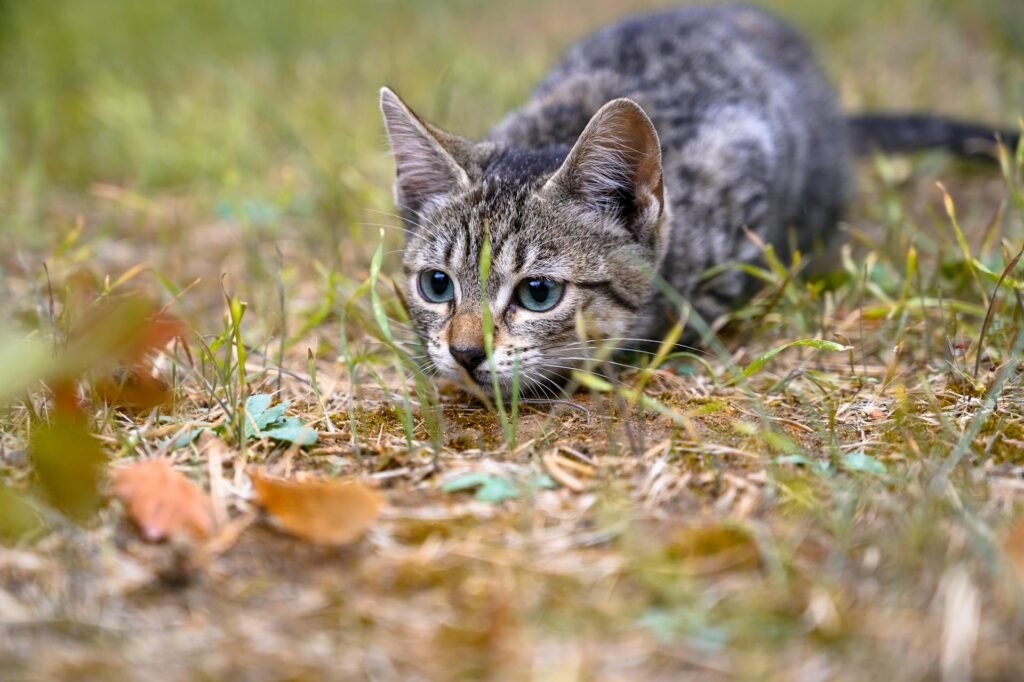
Cat Body Language to Watch: A relaxed cat will have soft eyes, a loosely held tail, and may even blink slowly or turn away from the rabbit. These are signs of a non-threatening demeanor. Conversely, a stalking cat will have a lowered body, focused stare, twitching tail, and possibly flattened ears. If you see these signals, redirect your cat’s attention immediately with a toy or remove them from the situation.
Some cats will show what looks like play behavior, pouncing, batting with paws, or chasing. While this might seem harmless, remember that a rabbit perceives these actions as predatory. Even playful swatting can injure a rabbit’s delicate bones or terrify them. Always intervene if your cat displays any hunting or overly energetic play behavior directed at the rabbit.
Rabbit Body Language to Watch: A comfortable rabbit will have relaxed ears, a calm posture, and may even flop onto their side or groom themselves. These are excellent signs that your bunny feels safe. A scared rabbit, however, will have wide eyes, flattened ears against their back, a hunched body, or may bolt suddenly. Thumping is a clear warning signal, your rabbit is saying they feel threatened.
Interestingly, some confident rabbits will actually approach cats and even groom them, which can be the beginning of a genuine friendship. However, never assume a rabbit’s boldness means they’re safe. Always supervise interactions until you’re absolutely certain both animals have established a peaceful dynamic.
The Stress Threshold Test
One practical assessment I use is controlled movement exposure. While the cat is present behind a barrier, allow the rabbit to move naturally across the enclosure. If the cat tracks every movement with head and shoulder alignment, prey drive remains active. A safe coexistence candidate cat will glance, then disengage.
Similarly, drop a lightweight object near the rabbit while the cat is visible. If the rabbit startles but resumes baseline posture within seconds, stress recovery is adequate. Prolonged immobility or refusal to eat within the next hour indicates elevated stress load.
Stress recovery speed predicts long-term compatibility more reliably than friendliness during initial sessions.
Building Trust Over Time
Once initial introductions have gone well and both animals show tolerance, you can gradually increase their time together. This phase requires patience, don’t rush. Even if things seem to be going smoothly, continue supervising all interactions for several weeks or even months.
Supervised Playtime: During supervised sessions, let both animals roam in the same space but maintain enough distance that neither feels cornered. Keep engaging cat toys nearby to redirect your cat’s attention if needed. Similarly, having areas where your rabbit can hop away freely reduces stress.
Some pairs naturally gravitate toward each other and start sharing space peacefully. Others maintain a respectful distance but coexist without conflict. Both outcomes are perfectly fine. The goal isn’t necessarily to create best friends, it’s to ensure both animals feel safe and comfortable in the same home.
When Things Go Wrong: Not all introductions succeed, and that’s okay. If your cat shows persistent predatory behavior despite training, or if your rabbit remains terrified even after weeks of slow exposure, it might be best to keep them permanently separated. This doesn’t mean you’ve failed, it means you’re respecting each animal’s needs and limitations.
Sometimes the issue isn’t aggression but rather stress. A rabbit that refuses to eat, stops using their litter box, or hides constantly is showing signs of chronic stress. Similarly, a cat that becomes obsessively fixated on the rabbit may develop anxiety or behavioral problems. In these cases, maintaining separate living areas is the kindest option for everyone involved.
Living Together: Long-Term Coexistence
Once your cat and rabbit have established a peaceful relationship, maintaining that harmony requires ongoing attention. Even bonded pairs can have moments of conflict, so never become complacent.
Space and Territory Management: Rabbits should have cat-free rest areas at all times. Even bonded pairs can regress under stress such as illness, relocation, or loud environmental change.
Feed separately with full visual separation. Resource guarding is not limited to food bowls. Rabbits may guard hay piles. Cats may guard elevated perches. Remove competition entirely rather than correcting it after it appears.
Enrichment for Both Species: A bored cat is more likely to view a rabbit as entertainment, which is why providing adequate mental stimulation matters. Interactive toys, puzzle feeders, and regular play sessions keep your cat’s predatory instincts satisfied without involving the rabbit.
Similarly, rabbits need enrichment too. Providing tunnels, chew toys, and foraging opportunities keeps them occupied and less stressed by the cat’s presence. When both animals have their needs met independently, they’re less likely to focus negatively on each other.

Health Considerations: Keeping both animals healthy reduces stress and behavioral problems. Regular veterinary checkups ensure neither animal is dealing with pain or illness that might affect their temperament. For cats, maintaining proper claw trimming reduces the risk of accidental injury during any close encounters.
Rabbit vertebrae are lightweight and prone to fracture under torsional force. Even a single swat can cause spinal trauma if the rabbit twists while bolting. Additionally, Pasteurella multocida is commonly carried in rabbits and can infect cats through bites. Conversely, cat scratches can introduce bacteria leading to abscess formation in rabbits.
Personality Matches: Which Pairs Work Best?
| Cat Personality | Rabbit Personality | Likelihood of Success | Notes |
|---|---|---|---|
| Laid-back, low prey drive | Confident, social | High | Ideal pairing; often become companions |
| Playful but trainable | Bold, curious | Moderate to High | Requires consistent supervision and training |
| High prey drive, hunter | Timid, easily stressed | Low | Not recommended; causes chronic stress |
| Elderly, calm | Young, energetic | Moderate | Age mismatch may work if rabbit respects cat’s space |
| Young kitten | Adult rabbit | Moderate to High | Easier to socialize young cats to rabbits |
| Aggressive or territorial | Any rabbit | Very Low | Dangerous situation; keep separated |
The Laid-Back Cat and Confident Rabbit: This pairing tends to be the most successful. A cat with a naturally calm temperament and low hunting drive won’t stress a rabbit, while a confident bunny is more likely to stand their ground and set boundaries. These pairs sometimes develop genuine friendships, grooming each other and sharing space comfortably.
The Curious Youngster: Kittens are often easier to socialize with rabbits than adult cats because they’re still learning about the world. A young cat raised around rabbits may never develop strong predatory behavior toward them. However, even kittens need supervision because their playful energy can overwhelm a rabbit.
The Prey-Driven Hunter: Some cats have extremely high prey drives and simply cannot coexist safely with rabbits. If your cat has a history of catching wildlife, shows intense stalking behavior, or becomes agitated by the rabbit’s movements, separation is the safest option. No amount of training can override deeply ingrained hunting instincts in every cat.
Multi-Pet Households: Adding More Complexity
If you have dogs in addition to cats and rabbits, the dynamics shift considerably. Dogs add another layer of predator-prey relationships, and managing three different species requires extra vigilance.
Some dogs have strong chasing instincts that make cohabitation with rabbits nearly impossible. Others are gentle and disinterested. When introducing rabbits to homes with both cats and dogs, proceed slowly with each species separately before attempting group interactions.
Interestingly, some households find that dogs and rabbits bond more easily than expected, while the cat remains aloof. Every animal is an individual, and generalizations only go so far.
Common Mistakes to Avoid
Even experienced pet owners sometimes make missteps when introducing cats and rabbits. Learning from others’ mistakes can save you and your pets considerable stress.

Rushing the Introduction Process: The most common error is moving too quickly. Introductions should take weeks, sometimes months. If you’re feeling impatient, that’s normal, but resist the urge to speed things up. Animals need time to adjust emotionally, not just behaviorally.
Assuming All Will Be Fine: Just because your cat is friendly with people or other cats doesn’t mean they’ll automatically accept a rabbit. Species differences matter, and prey drive is instinctual. Always start with the assumption that careful management is necessary and be pleasantly surprised if things go smoothly rather than the reverse.
Leaving Them Unsupervised Too Soon: Even after successful introductions, supervision remains important until you’re certain the relationship is stable. Some cats show perfect behavior when owners are present but revert to hunting mode when left alone. Don’t take risks with your rabbit’s safety.
Ignoring Stress Signals: Both cats and rabbits will communicate discomfort through body language. Ignoring these signals leads to chronic stress, which can cause health problems and behavioral issues. If either animal seems consistently stressed, reassess your approach or accept that they may need to remain separated.
Forgetting About Safety Precautions: Rabbits have fragile skeletons, and even playful swatting from a cat can cause serious injury. Additionally, a frightened rabbit might bite or scratch a cat in self-defense. Taking precautions like having appropriate carriers available for quick separation can prevent emergency situations.
FAQ
Not all cats and rabbits will successfully coexist. While many can learn to live peacefully together, success depends heavily on individual personalities, prey drive in cats, and confidence levels in rabbits. Cats with strong hunting instincts or rabbits that remain chronically fearful may never be comfortable together, and that’s okay. Forcing a relationship that causes ongoing stress isn’t fair to either animal.
The adjustment period varies significantly. Some pairs show acceptance within a few weeks, while others need several months of gradual introduction. Plan for at least four to six weeks of careful, supervised introduction phases before considering unsupervised time together. Rushing this timeline increases the likelihood of negative experiences that are harder to overcome later.
If an attack occurs, immediately separate the animals and check the rabbit for injuries. Rabbits can go into shock from fear alone, even without physical wounds, so contact your veterinarian right away. After this type of incident, you’ll need to restart the introduction process from the beginning, or accept that these particular animals cannot safely live together. Never punish your cat for following natural instincts; instead, focus on better management and supervision.
Generally, breeds known for lower prey drives and calmer temperaments tend to do better with rabbits. Ragdolls, British Shorthairs, and Persians are often more laid-back. However, individual personality matters far more than breed. A mellow mixed-breed cat may be perfect with rabbits, while a high-energy purebred might not be suitable at all.
Yes, rabbits can injure cats, particularly if they feel cornered or threatened. Rabbit hind legs are powerful, and they can deliver strong kicks. Their teeth are sharp and can cause puncture wounds. Additionally, a confident rabbit might chase or charge at a cat, which can be startling. This is another reason why supervision is crucial, protecting both animals from each other matters equally.
Initially, yes. Until you’re absolutely certain both animals have established a peaceful relationship and show no signs of stress or aggression, keep them separated when you can’t supervise. Many owners choose to maintain nighttime separation permanently as an extra safety precaution, giving each animal their own secure space during unsupervised hours.
Conclusion: The Unexpected Friendship
Cats and rabbits can coexist, but only when biology is respected. Success depends on low prey drive, confident rabbit temperament, strict environmental structure, and slow introduction pacing.
The goal is not friendship. It is absence of chronic stress and absence of injury. Some pairs groom each other. Many simply coexist. A few should never share space.
The responsible owner evaluates behavior objectively and chooses safety over sentiment. Harmony in a multi-species household is engineered, not accidental.
Looking for more? Visit our Blog for more fun and insightful reads, or browse our full Cat Category for everything feline-related, from care to comfort.
Disclaimer: This article is for informational purposes only and does not substitute for professional veterinary advice. Always consult your veterinarian for diagnosis and treatment tailored to your cat’s individual needs. Please verify current product information directly on the retailer’s site before purchasing.
References
- Amy Espie. Cats and Rabbits. https://rabbit.org/behavior/cats-and-rabbits/
- Animal Welfare Association. CATS AND RABBITS – INTRODUCTION AND COEXISTENCE. https://www.awanj.org/wp-content/uploads/Rabbit-Handout-09-Cats-and-Rabbits-Introduction.pdf
- Dukes’ Physiology of Domestic Animals, 12th ed., Reece WO, Ed. Copyright 2004, Cornell University Press. https://cuvas.edu.pk/cuvas_libraries/ebooks/Dukes%27%20Physiology%20of%20Domestic%20Animals%20(%20PDFDrive%20)%20(1).pdf
- Martin Maran (2025). Understanding the Rabbit Skeleton. https://redbeck-rabbit-boarding.co.uk/understanding-the-rabbit-skeleton/
- Melissa Witherell (2022). Rabbit Cage Guide. https://www.petmd.com/rabbit/rabbit-cage-guide
Check out our most recent articles!
- Are Newborn Cats Born With Teeth? Everything About Kitten Dental Growth
 Ever wondered what’s happening inside a newborn kitten’s mouth? The answer might surprise you. Discover the complete timeline of feline dental development and learn what to expect as your kitten grows from gummy grins to a full set of adult teeth.
 - Keeping Your Indoor Cat Warm in Winter: The Complete GuideEven indoor cats feel the winter chill more than you might think. Cold floors, dry air, and sneaky drafts can leave your feline less comfortable than they should be. Discover the simple adjustments that make all the difference in helping your cat stay genuinely cozy through the coldest months.
- Should You Look Your Cat in the Eyes? Is Staring Really Aggressive?Your cat’s eyes tell a story you’ve been misreading. While prolonged staring means one thing in human communication, cats interpret it completely differently. Discover why that loving gaze might actually be stressing out your feline friend and what to do instead.
- Choosing the Best Blanket for Your Cat: A Blanket Buyer’s GuideFinding the best blanket for your cat means considering more than just softness. Temperature regulation, durability, washability, and even behavioral quirks all play a role in choosing the perfect cozy spot for your feline friend. Discover which blanket types match your cat’s lifestyle.
- How to Get Your Kitten to Eat More: Simple Solutions for Picky EatersWatching your tiny kitten turn up their nose at perfectly good food can be heart-wrenching. This comprehensive guide reveals why kittens become picky eaters and shares practical solutions that transform mealtime battles into successful feeding routines.
- Can Cats Eat Fried Rice? Why This Takeout Favorite Is a No-GoThat irresistible takeout aroma might have your cat begging, but fried rice contains ingredients that can harm felines. Discover why even small amounts aren’t worth the risk and what treats truly suit your cat’s carnivorous nature.
- Why Do Cats Vibrate Their Tail? From Happy to HuntingYour cat’s vibrating tail is like a mood ring with fur. Whether they’re thrilled to see you or preparing to mark territory, decoding these rapid shakes reveals what’s really going on in their mind.
- Is Asparagus Bad for Cats? Risks, Benefits, and AlternativesYour cat’s eyeing your asparagus dinner, but should they have any? While this green veggie isn’t toxic to cats, there are surprising reasons why it’s not the treat you might think it is.
- How Cats Express Sadness: Reading Your Feline’s Emotional LanguageCats don’t cry emotional tears or mope around like dogs, but they absolutely experience sadness. The trick is learning to read their subtle language, the withdrawn behavior, the changed routines, the slight shifts in body posture that reveal their inner emotional world.
- Can Cats and Rabbits Live Together? Multi-Species Harmony GuideCats are predators, rabbits are prey, but that doesn’t mean they can’t coexist peacefully. Success comes down to understanding each animal’s instincts, respecting their boundaries, and taking introductions at the right pace.
- Are Space Heaters Safe for Cats? Keeping Your Cat CozySpace heaters can provide cozy warmth for your cat, but only when chosen and positioned with feline safety in mind. Discover which features protect against burns, fires, and electrical hazards.
- Cat Bed Placement 101: Finding the Perfect Spot Your Cat Will Actually UseCats spend up to 16 hours sleeping daily, yet many reject their designated beds completely. The problem isn’t pickiness, it’s placement. Learn where cats naturally feel safe and comfortable, and how to position beds they’ll genuinely use.
- Can a Kitten Be Left Alone at Night? What You Need to KnowThose first nights with a new kitten rarely match the peaceful scene you imagined. Learn why most kittens can sleep alone once they reach a certain age, and discover the setup secrets that make nighttime independence work for everyone.
- A Cat’s New Year’s Resolutions: What Your Cat Would Promise (If They Could Write)Cats worldwide are drafting their own new year’s resolutions, and they’re refreshingly honest. From mastering the art of selective hearing to expanding their forbidden food sampling program, discover what your feline friend would promise if they could hold a pen (before knocking it off the desk).
- Cats and Snow: Why Some Love It and Others Don’tSnow isn’t just uncomfortable for many cats, it’s a complete sensory overload. From cold paw pads to wet fur and changed landscapes, winter challenges feline comfort in unexpected ways. Learn how to recognize stress signals and create cozy alternatives for snow-averse cats.















Written by Jazzlyn T. Mearkle (Lifestyle and Creative Writer)
Last reviewed and edited on 15.02.2026