
We have tested more than 60 commercial cat toys over the past five years in multi-cat households ranging from high-drive Bengals to sedentary senior domestic shorthairs. The pattern is consistent. Cats do not ignore gifts randomly. They ignore gifts that fail to trigger the predatory motor sequence: orient, stalk, chase, pounce, grab, and dissect.
This holiday season doesn’t have to end with your cat giving you that signature look of feline indifference. Whether your kitty is a curious climber, a cozy napper, or a midnight zoomie enthusiast, there’s a perfect gift waiting to spark genuine excitement.
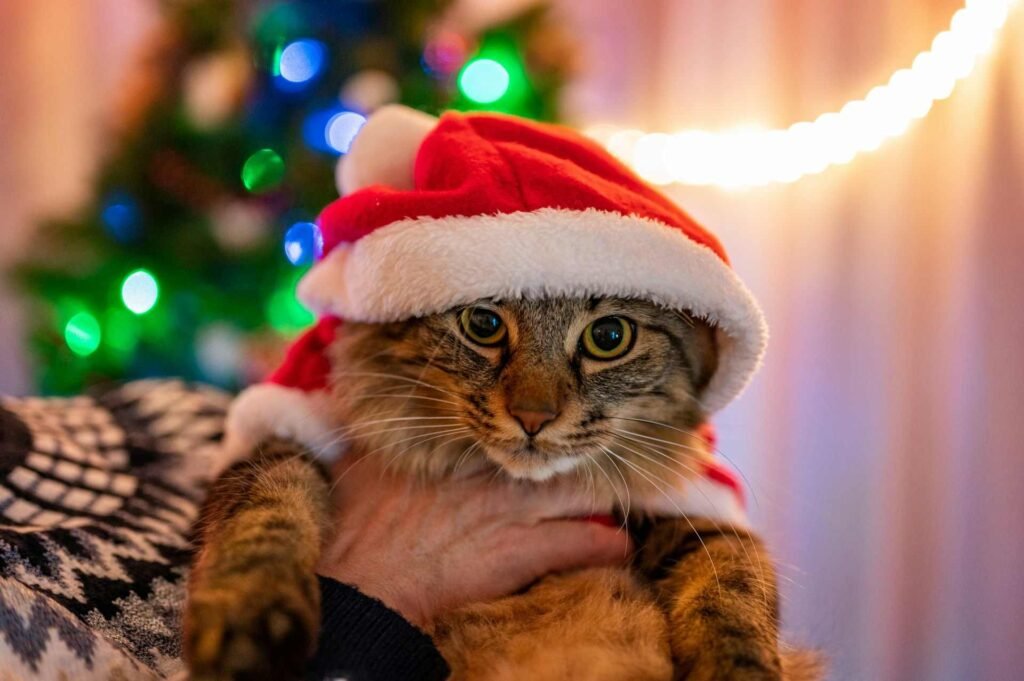
Interactive Toys That Satisfy the Hunter Within
Even the most pampered house cat carries hunting instincts from their wild ancestors. These instincts don’t just disappear because dinner comes from a can, they need an outlet. Interactive toys tap into this primal drive, offering mental stimulation and physical exercise wrapped up in play. The right toy doesn’t just entertain; it fulfills a deep-seated need to stalk, pounce, and capture.
A common mistake I see is selecting toys based on appearance rather than movement pattern. Cats respond to erratic lateral motion more strongly than vertical bouncing. Ground-level skittering that mimics a rodent triggers stalking behavior. High aerial fluttering mimics birds and works best for agile jumpers.
Electronic toys with unpredictable movements rank high on the list of best gifts for cats at Christmas, especially for those felines who seem perpetually understimulated. These gadgets mimic prey behavior, darting, hiding, changing direction, which triggers that chase response hardwired into feline DNA. Unlike static toys, they create genuine surprise, keeping cats engaged far longer than a basic ball.
Feather wands and teaser toys deserve a spot under the tree too, particularly for multi-cat households or cats who crave interaction. These manual toys create bonding opportunities while providing exercise, and they’re fantastic for cats who need to burn off excess energy. Rotating through different wand attachments keeps the game fresh, preventing that dreaded moment when your cat decides they’ve “mastered” a particular toy.
Puzzle feeders activate foraging behavior, which is neurologically distinct from bowl feeding. Domestic cats naturally spend several hours per day hunting in short bursts. A stationary bowl compresses feeding into under two minutes. In overweight indoor cats, transitioning 50 percent of daily calories into food puzzles has reduced boredom-driven vocalization and nighttime activity in my experience. Introduce puzzles at beginner difficulty for 3 to 5 days before increasing complexity. Frustration reduces compliance.
Choosing the Right Interactive Toy for Your Cat’s Age
Kittens need toys that can withstand aggressive play sessions and satisfy their boundless energy. Look for durable materials and options that encourage healthy predatory behavior without reinforcing bad habits like attacking hands or feet. Younger cats often prefer fast-moving toys that challenge their developing coordination.
Adult cats benefit from variety in their toy rotation. What captivated them last month might bore them this week. Having several interactive options on hand means you can switch things up when interest wanes. Some cats develop strong preferences for certain textures or movement patterns, so paying attention to what gets the most enthusiastic response pays off.
Senior cats still have hunting instincts, but they might not want to leap three feet in the air anymore. Lower-intensity interactive toys work beautifully here, think slow-moving automated mice or toys that roll across the floor rather than bounce wildly. The goal is engagement without exhaustion.
Cozy Spaces and Festive Beds for the Professional Napper
If your cat spends more time sleeping than doing anything else (which, let’s face it, describes most cats), a luxurious new bed makes an excellent Christmas present. But not just any bed will do. Cats are particular about their sleeping spots, and the best Christmas presents for cats take these preferences seriously.
Thermoregulation is often overlooked in gift selection. The thermoneutral zone for cats is approximately 86 to 97 degrees Fahrenheit. Most homes are kept between 68 and 72 degrees in winter, which is below their preferred ambient range. This explains why many cats gravitate toward laptops, radiators, and sunny windows.
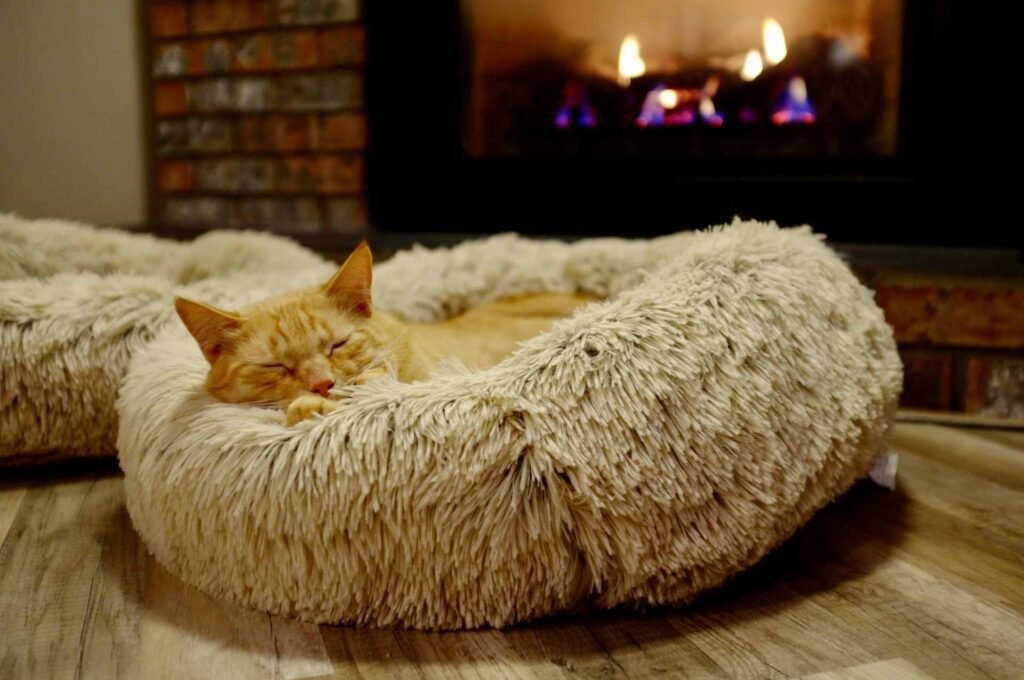
Heated beds appeal to cats who constantly seek out warm spots, whether that’s a sunny windowsill or your laptop keyboard. These beds provide consistent warmth without the fire hazard of a space heater or the inconvenience of a cat parking themselves on important documents. For cats who always seem cold, especially seniors or those with thin coats, a heated bed isn’t just luxury, it’s genuine comfort.
Cave-style beds suit cats who prefer privacy when they sleep. These enclosed spaces trigger that instinctive desire for a safe den, offering security and darkness. Cats who regularly tuck themselves away in hidden spots often gravitate toward these designs immediately. They’re perfect for nervous cats or those who just value their alone time.
Elevated beds and window perches combine comfort with entertainment. Cats love height, it makes them feel secure and gives them a vantage point to survey their domain. A window perch with a soft cushion lets your cat indulge their favorite pastime of bird-watching while lounging in ultimate comfort. Thoughtful placement of these elevated spots can transform how your cat experiences their environment.
For the holidays, festive-themed cat beds add a touch of seasonal cheer without sacrificing functionality. Santa-themed beds, Christmas-colored cushions, or beds designed to look like wrapped presents can be adorable photo opportunities while still serving as cozy retreats. Just make sure the novelty design doesn’t compromise comfort, your cat won’t care how Instagram-worthy the bed is if it’s not actually pleasant to sleep in.
Bed Features That Matter Most
Cats who like to sprawl need different dimensions than those who curl into tight balls. Measure your cat’s favorite sleeping position (yes, really) to get a sense of the space they prefer. A bed that’s too small will be ignored, while one that’s too large might feel insecure to cats who like cozy confines.
Washable materials are non-negotiable. Cats shed, they track litter, and occasionally they have accidents. Being able to toss a bed cover in the washing machine extends the life of your purchase and keeps things hygienic. Look for removable covers or beds that can withstand regular cleaning without falling apart.
Related article: Choosing the Best Fabric for Your Cat’s Bed: A Complete Guide to Comfort and Durability
Location flexibility gives you options. Some beds work great on the floor, others need to be mounted to windows, and some attach to radiators. Consider where your cat already likes to sleep and choose a bed that fits those spots. Fighting against established preferences rarely ends well.
Climbing Structures and Cat Trees for the Vertical Explorer
Vertical territory is not enrichment. It is a behavioral necessity. In multi-cat homes, elevation reduces social tension by allowing spatial separation. Cats use height to regulate access to resources and to monitor movement within shared territory.
In homes where vertical space is insufficient, I frequently see redirected aggression or excessive nighttime activity. Adding even one 6-foot climbing structure with multiple perches can reduce hallway chasing and food guarding behaviors within two weeks.
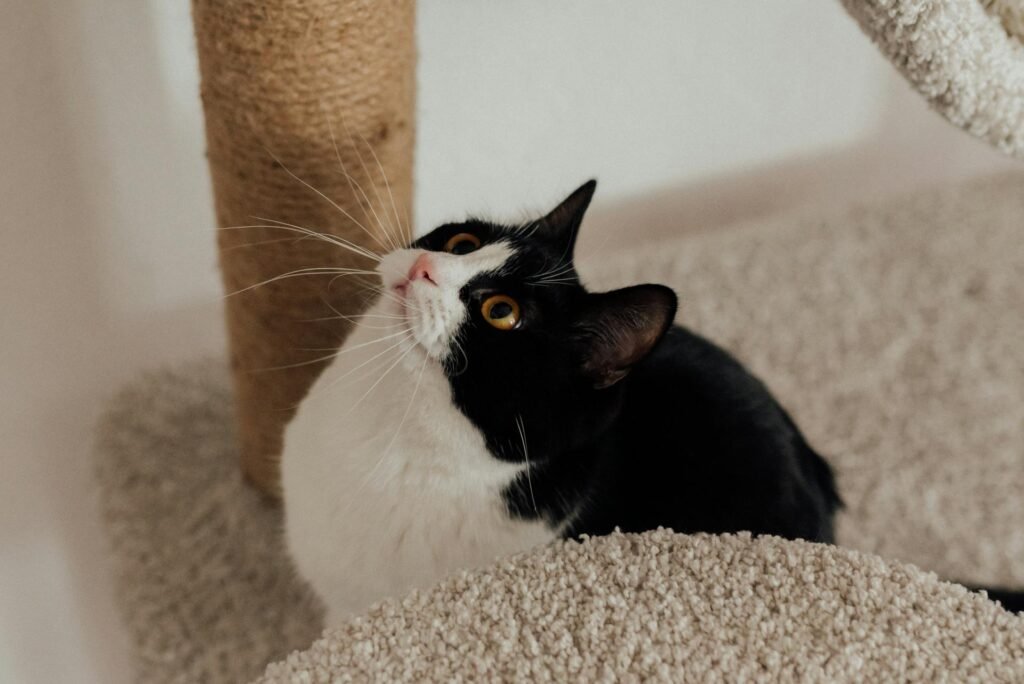
Wall-mounted climbing systems appeal to modern aesthetics while giving cats extensive vertical territory without consuming floor space. These modular systems can be customized to fit your walls and your cat’s abilities. They’re particularly great for homes where a traditional cat tree would feel too bulky or out of place. Plus, they can be expanded over time as budget allows.
Cat trees with built-in scratching posts serve double duty, giving cats a place to climb and an appropriate outlet for scratching. Since cats naturally scratch after waking up and before play, having scratching surfaces integrated into climbing structures just makes sense. This is especially valuable for cats who might otherwise damage carpets or furniture.
Christmas-themed cat trees or towers dressed up with festive decorations can become part of your holiday decor while delighting your cat. Some companies offer seasonal accessories for existing cat furniture, or you can DIY with cat-safe decorations. Just avoid anything with small parts that could be swallowed or tinsel that poses serious health risks if ingested.
Matching Cat Trees to Your Space
Height considerations depend partly on your ceiling height and partly on your cat’s confidence level. Super tall trees appeal to bold, confident cats but might intimidate shyer felines. Start with moderate heights if you’re unsure, or choose a tree with varied platform heights so every cat can find their comfort zone.
Stability is critical and often overlooked. A wobbly cat tree won’t get used, and worse, it could become dangerous if it tips over. Heavier bases, wall anchors, and quality construction all contribute to stability. This is one area where spending a bit more often pays dividends in safety and longevity.
Material quality affects both durability and appeal. Cats prefer sisal rope for scratching over carpeted surfaces in many cases. Plush platforms are lovely for napping, but they need to be securely attached. Wood platforms are durable but might need cushions for comfort. Consider your cat’s existing preferences when evaluating materials.
Scratching Posts and Surfaces That Save Your Furniture
Every cat needs to scratch, it’s how they maintain their claws, mark territory, and stretch their muscles. Good Christmas presents for cats include appropriate scratching surfaces that redirect this behavior away from your couch.
Scratching has three primary functions: claw sheath removal, scent marking through interdigital glands, and spinal extension. If a cat scratches a sofa corner, the issue is usually substrate preference, not defiance. Match the damaged surface. If the sofa is tightly woven fabric, avoid plush carpeted posts and offer dense sisal or woven material instead.
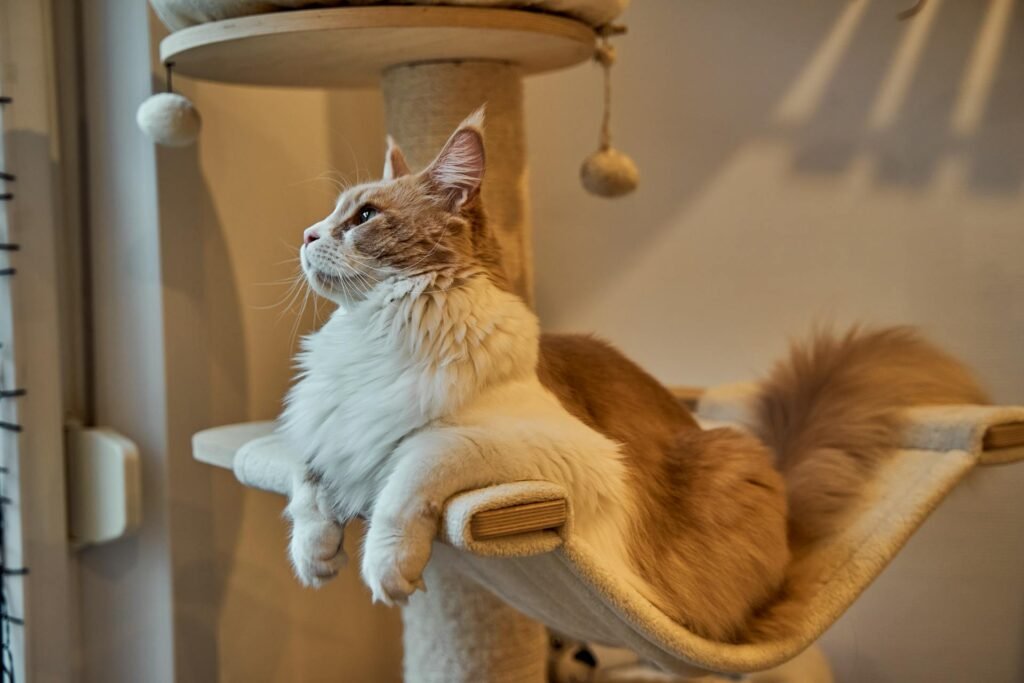
Vertical scratching posts satisfy cats who like to stretch upward while they scratch. These posts need to be tall enough for a full stretch and stable enough not to wobble. Cats won’t use a post that moves or tips when they put their weight into a good scratch. Look for posts that are at least as tall as your cat when they’re fully stretched out on their hind legs.
Horizontal scratching pads appeal to cats who prefer to scratch while lying down. These often come in corrugated cardboard or sisal materials and can be placed strategically near sleeping areas or high-traffic zones. Many cats have strong preferences for either vertical or horizontal scratching, and offering both types ensures you’re meeting their needs.
Scratching Preferences
Texture matters enormously. Some cats love sisal rope, others prefer corrugated cardboard, and still others go for carpet or wood. If your cat is currently scratching something inappropriate, note the texture and try to match it with an appropriate alternative. They’re giving you valuable information about their preferences.
Location often determines whether a scratching post gets used. Cats typically scratch after waking up, so placing a post near their favorite sleeping spot makes sense. They also scratch to mark territory in high-traffic areas, so entrances to rooms or near windows might be strategic spots. Don’t just put the post in an out-of-the-way corner and expect miracles.
Regular claw maintenance complements good scratching posts but doesn’t replace them. Even if you trim your cat’s claws regularly, they still need to scratch for stretching and marking purposes. The two practices work together to keep both cats and furniture happy.
Treat Dispensers and Holiday Food Gifts
Food-motivated cats light up at the sight of special treats, and Christmas is a perfect excuse to indulge them (within reason). Treat dispensers, puzzle feeders, and specially formulated holiday treats can make mealtime more exciting while providing enrichment. The trick is balancing indulgence with health.
Interactive treat dispensers turn snack time into a game, engaging both mind and body. These toys dispense treats as cats bat them around, satisfying hunting instincts while providing tasty rewards. They’re excellent for cats who need mental stimulation and can be especially helpful for keeping cats entertained during work hours.
Freeze-dried meat treats appeal to cats’ carnivorous nature without the additives found in many commercial treats. Pure meat treats are basically impossible for cats to resist, and the freeze-drying process preserves nutrients while creating a satisfying crunch. These make excellent high-value rewards for training or bonding sessions.
Safe Holiday Treats vs. Human Food Hazards
While it’s tempting to share Christmas dinner with your cat, many holiday foods are dangerous for felines. Human foods that should never be shared include chocolate, onions, garlic, grapes, and anything with artificial sweeteners. Even seemingly safe foods like turkey skin can cause digestive upset due to high fat content.
Portion control prevents holiday weight gain that plagues pets as much as people. Treats should make up no more than 10% of your cat’s daily caloric intake. During the holidays, when extra treats are flowing, consider slightly reducing regular meals to compensate. Your cat might give you grief about smaller dinners, but their waistline will thank you.
Special dietary needs require extra attention during holiday gifting. Cats with sensitive stomachs, food allergies, or health conditions need treats that fit their dietary restrictions. Fortunately, many companies now offer limited-ingredient and prescription-compatible treats. When in doubt, check with your veterinarian before introducing new foods.
Festive Wearables and Holiday Costumes
Most cats do not enjoy clothing. Tolerance should not be confused with consent. I recommend testing garment acceptance in 30-second increments with high-value treats before any holiday event.
Indicators of stress include pupil dilation, tail flicking, crouched posture, and attempts to freeze in place. If these occur, remove the garment immediately. Apparel should allow full shoulder extension and unrestricted tail movement. Anything that interferes with balance increases fall risk.
Santa hats and reindeer antlers designed for cats are classic holiday accessories. These typically attach with elastic bands and can make for fantastic holiday photos if your cat doesn’t mind wearing them briefly. The emphasis is on “briefly”, forcing a cat to wear something they hate isn’t fun for anyone and can damage the trust between you.
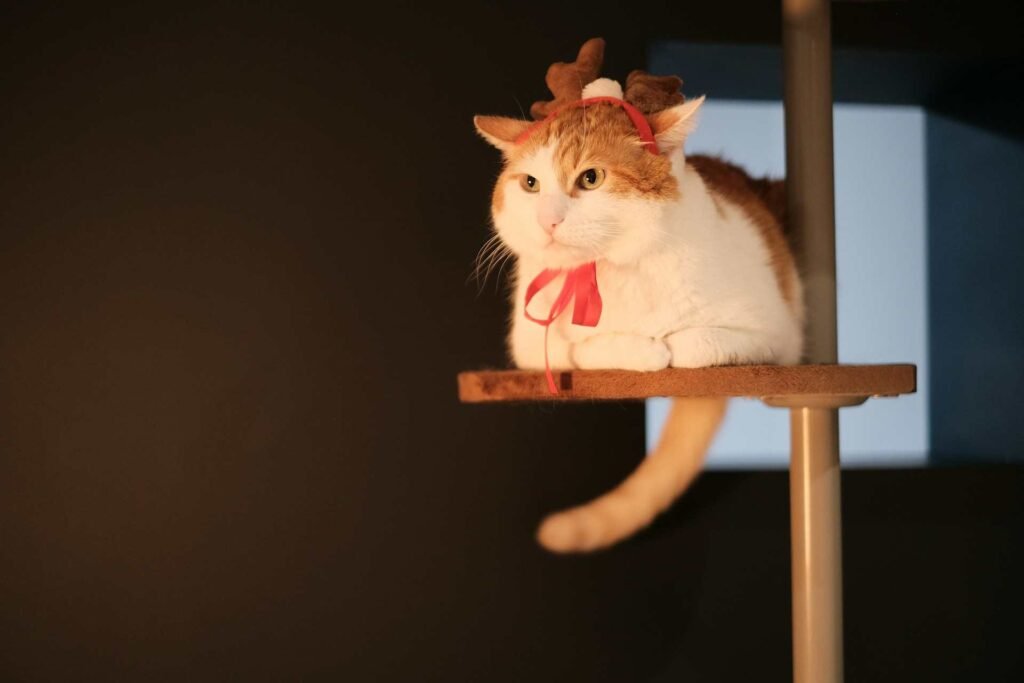
Christmas-themed collars and bow ties offer a less intrusive option. Many cats who won’t tolerate a full costume don’t mind a festive collar, especially if it’s similar in weight and feel to their regular collar. These accessories let cats participate in holiday festivities without the discomfort of full outfits.
Cozy sweaters work well for hairless breeds or cats who get cold easily, serving both practical and festive purposes. A holiday-patterned sweater keeps a Sphynx cat warm while adding to the seasonal atmosphere.
Bandanas and scarves in holiday colors provide minimal interference while maximum festiveness. These lightweight accessories won’t impede movement or cause overheating, and most cats adjust to them quickly. They’re perfect for cats who tolerate accessories but would stage a protest against anything more substantial.
Recognizing When Your Cat Isn’t Having Fun
Body language tells you everything you need to know about how your cat feels about wearing something. Flattened ears, a tucked tail, freezing in place, or attempting to remove the item are all clear signs that the costume needs to come off immediately. Some cats will tolerate wearables for treats or attention, but genuine distress should never be ignored.
Safety concerns with costumes include choking hazards from loose parts, restricted movement that could cause falls, and overheating from thick fabrics. Never leave a costumed cat unsupervised, and always ensure they can move, jump, and use their litter box normally. If the costume interferes with natural behaviors, it’s not worth the photo opportunity.
Duration matters enormously. Even cats who don’t mind costumes shouldn’t wear them for extended periods. A quick photo session is fine; wearing an uncomfortable outfit for hours is not.
FAQ
Start by observing your cat’s daily behavior patterns. Note what they already do enthusiastically, climbing, scratching, playing, sleeping, watching birds, and select gifts that enhance those natural preferences. A cat who spends hours at the window will appreciate a window perch more than a cat who rarely leaves their favorite floor spot. When in doubt, choose versatility over specialization; a multi-level cat tree offers more options than a single-purpose item.
Don’t take it personally, cats have strong individual preferences that aren’t always predictable. Try these tactics: place the item near where they already spend time, add catnip or treats to create positive associations, demonstrate the toy yourself to show how it works, or simply leave it out and give them time to investigate on their own terms. Some cats need days or weeks to warm up to something new. If all else fails, store it away and reintroduce it later when novelty might help.
Absolutely, especially if they loved it. If your cat destroyed their favorite toy through enthusiastic use, replacing it is a gift they’ll definitely appreciate. Consumable items like treats or catnip are obviously fine to repeat. Even durable goods can be gifted again if the original is worn out or if your cat could benefit from multiples (like having beds in different rooms). Knowing what your cat likes and providing it is thoughtful, not lazy.
If you want a photo opportunity, go ahead and wrap them, but be prepared for your cat to be more interested in the paper than what’s inside. Some cats love ripping through wrapping paper, which can be entertaining. Just ensure there’s no tape, ribbon, or string they could ingest, as these pose serious health risks. For safety and practicality, you might wrap gifts loosely in paper without tape, or skip wrapping altogether and go straight to the good stuff.
Quality over quantity applies to cat gifts. One or two well-chosen items that match your cat’s preferences will provide more value than a pile of random products. Consider your budget and your cat’s actual needs rather than getting swept up in holiday consumerism. If you want to spread things out, save some gifts for later in the season rather than overwhelming your cat with everything at once. Cats can only pay attention to so many new things simultaneously.
Focus on experiences rather than objects. Consider gifts that benefit both of you, like scheduled play sessions you commit to daily. Upgrade existing items that might be worn, a newer cat tree, a plusher bed, fresher scratching posts. Consumables like premium treats or catnip always work. You might also consider donations to animal shelters in your cat’s name, helping less fortunate felines while acknowledging your cat’s privileged position.
Homemade gifts can be equally effective and often more cost-effective. Many cats enjoy simple DIY toys like paper bags, cardboard boxes, or homemade wand toys. The caveat is ensuring safety, avoid small parts that could be swallowed, toxic materials, or anything that could cause injury. If you’re crafty and have time, DIY gifts can be customized to your specific cat’s preferences in ways store-bought items can’t match.
Wrapping Up (Without Actually Wrapping Anything)
The best Christmas gifts for cats align with biology, not trends. Observe how your cat spends time when no one is watching. Do they patrol windows, climb door frames, shred cardboard, or nap in heat sources. That data determines the right gift.
One well-chosen item that activates instinct or improves environmental comfort outperforms five novelty products. Focus on movement pattern, substrate preference, vertical access, and thermoregulation.
When a cat repeatedly returns to a gift without prompting, you selected correctly. That is the only metric that matters.
Looking for more? Explore our Cat Accessories section for more posts like this, visit the Blog for fun and insightful reads, or browse our full Cat Category for everything feline-related, from care to comfort.
Disclaimer: This article is for informational purposes only and does not substitute for professional veterinary advice. Always consult your veterinarian for diagnosis and treatment tailored to your cat’s individual needs. Please verify current product information directly on the retailer’s site before purchasing.
References
- Association for Pet Obesity Prevention. 2022 Pet Obesity U.S. Prevalence Survey. https://www.petobesityprevention.org/2022
- Cisneros A, Litwin D, Niel L, Stellato AC. Unwanted Scratching Behavior in Cats: Influence of Management Strategies and Cat and Owner Characteristics. Animals (Basel). 2022 Sep 24;12(19):2551. https://doi.org/10.3390/ani12192551
- DePorter TL, Elzerman AL. Common feline problem behaviors: Destructive scratching. Journal of Feline Medicine and Surgery. 2019;21(3):235-243. https://doi.org/10.1177/1098612X19831205
Check out our most recent articles!
- Can Cats Eat Green Peas? Safe, Healthy, or Just a Skip?
 A pea rolling across the kitchen floor is basically a free cat toy and a snack in one. But before it becomes a habit, here’s what you should know about what those little green things actually do for (or to) your cat.
 - Are Spray Bottles Bad for Cats? Reasons & AlternativesA spray bottle might stop your cat’s counter-surfing today, but it’s teaching them something much more troubling: that you’re unpredictable and potentially dangerous. Discover what really happens when you spray your cat and the alternatives that actually create lasting change.
- How Are Cats so Flexible? Your Cat’s Anatomy ExplainedBetween their 53 vertebrae, muscular shoulders connected only by soft tissue, and elastic joints, cats possess anatomical superpowers that blur the line between solid and liquid, letting them navigate spaces you’d swear were too small.
- Do Cats Copy Their Owners Voice, Personality and Actions?The independent cat stereotype is crumbling. Science reveals that cats engage in intentional mimicry, learning from their owners and adapting their personalities to match the humans they live with.
- Are Newborn Cats Born With Teeth? Everything About Kitten Dental GrowthEver wondered what’s happening inside a newborn kitten’s mouth? The answer might surprise you. Discover the complete timeline of feline dental development and learn what to expect as your kitten grows from gummy grins to a full set of adult teeth.
- Keeping Your Indoor Cat Warm in Winter: The Complete GuideEven indoor cats feel the winter chill more than you might think. Cold floors, dry air, and sneaky drafts can leave your feline less comfortable than they should be. Discover the simple adjustments that make all the difference in helping your cat stay genuinely cozy through the coldest months.
- Should You Look Your Cat in the Eyes? Is Staring Really Aggressive?Your cat’s eyes tell a story you’ve been misreading. While prolonged staring means one thing in human communication, cats interpret it completely differently. Discover why that loving gaze might actually be stressing out your feline friend and what to do instead.
- Choosing the Best Blanket for Your Cat: A Blanket Buyer’s GuideFinding the best blanket for your cat means considering more than just softness. Temperature regulation, durability, washability, and even behavioral quirks all play a role in choosing the perfect cozy spot for your feline friend. Discover which blanket types match your cat’s lifestyle.
- How to Get Your Kitten to Eat More: Simple Solutions for Picky EatersWatching your tiny kitten turn up their nose at perfectly good food can be heart-wrenching. This comprehensive guide reveals why kittens become picky eaters and shares practical solutions that transform mealtime battles into successful feeding routines.
- Can Cats Eat Fried Rice? Why This Takeout Favorite Is a No-GoThat irresistible takeout aroma might have your cat begging, but fried rice contains ingredients that can harm felines. Discover why even small amounts aren’t worth the risk and what treats truly suit your cat’s carnivorous nature.
- Why Do Cats Vibrate Their Tail? From Happy to HuntingYour cat’s vibrating tail is like a mood ring with fur. Whether they’re thrilled to see you or preparing to mark territory, decoding these rapid shakes reveals what’s really going on in their mind.
- Is Asparagus Bad for Cats? Risks, Benefits, and AlternativesYour cat’s eyeing your asparagus dinner, but should they have any? While this green veggie isn’t toxic to cats, there are surprising reasons why it’s not the treat you might think it is.
- How Cats Express Sadness: Reading Your Feline’s Emotional LanguageCats don’t cry emotional tears or mope around like dogs, but they absolutely experience sadness. The trick is learning to read their subtle language, the withdrawn behavior, the changed routines, the slight shifts in body posture that reveal their inner emotional world.
- Can Cats and Rabbits Live Together? Multi-Species Harmony GuideCats are predators, rabbits are prey, but that doesn’t mean they can’t coexist peacefully. Success comes down to understanding each animal’s instincts, respecting their boundaries, and taking introductions at the right pace.
- Are Space Heaters Safe for Cats? Keeping Your Cat CozySpace heaters can provide cozy warmth for your cat, but only when chosen and positioned with feline safety in mind. Discover which features protect against burns, fires, and electrical hazards.















Written by Jazzlyn T. Mearkle (Lifestyle and Creative Writer) and Vesper Mayerson (Editorial Assistant)
Last reviewed and edited on 16.02.2026