
Most owners notice their cat’s flexibility long before they understand it. A 10-pound animal folds into a shoebox, threads through a 4-inch gap behind an appliance, or rotates midair and lands cleanly on all four feet. These movements look impossible because we are comparing them to human biomechanics, which are structurally far more restricted.
Cats are not “stretchy” in a vague sense. Their flexibility is engineered at multiple anatomical levels. The vertebral architecture, intervertebral disc composition, scapular suspension system, and muscular firing patterns are all optimized for rotational range and controlled spinal flexion. This article breaks down exactly how that system works.
The Skeletal Blueprint That Makes Cats Bendy
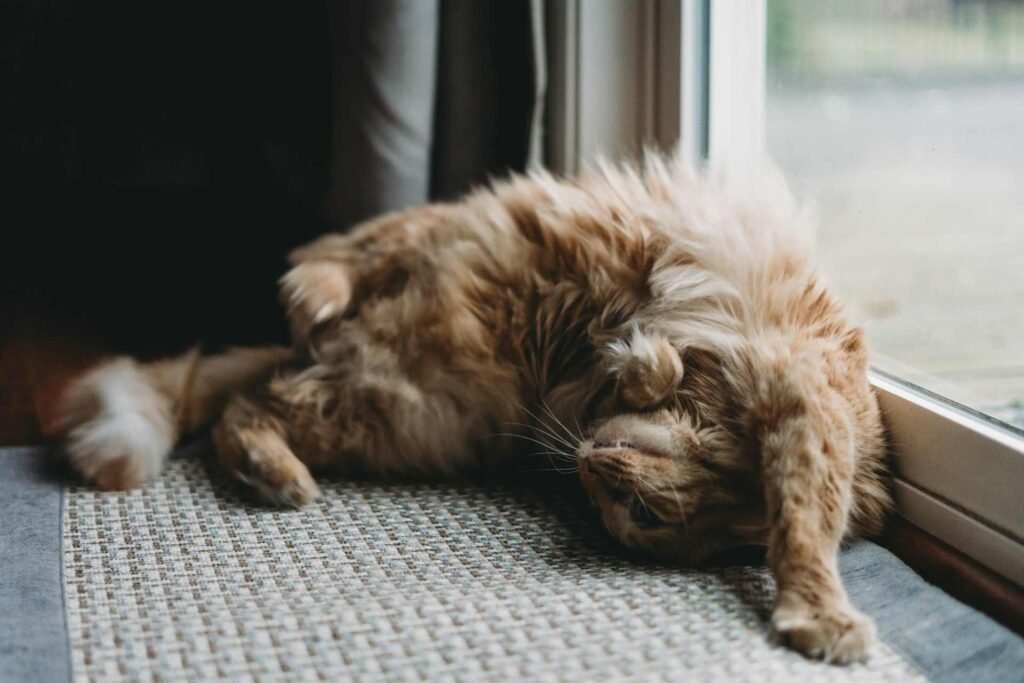
The foundation of feline flexibility starts with their skeleton, which differs dramatically from ours. While humans have fused vertebrae in certain sections of our spine, cats maintain exceptional mobility throughout nearly their entire vertebral column.
A cat’s spine contains approximately 53 vertebrae (compared to our 33), and these bones are connected by elastic cushioning discs that allow for extraordinary rotational movement. Between each vertebra sits a specialized disc made of cartilage that acts like a biological shock absorber. These discs permit the spine to twist, compress, and extend far beyond what our rigid human spines can manage.
The vertebrae themselves are shaped differently too. Each one has a unique structure that permits rotation in multiple directions without bone-on-bone grinding. The gaps between these vertebrae are proportionally larger in cats, giving them the freedom to arch their backs into that classic Halloween cat silhouette or compress down into a flat pancake shape.
But here’s what makes the whole system work: cats lack a functional clavicle (collarbone). Ours connects our arms to our torso in a fixed position, limiting shoulder movement. Cat shoulders, however, are attached to the rest of their skeleton only by muscles. This means their shoulder blades can move independently, allowing them to narrow their body profile when squeezing through tight spaces. If their head fits, their whole body can follow; a survival trait that served their wild ancestors well when navigating through dense brush or rocky crevices.
Muscles That Move Like Coiled Springs
Skeletal structure alone doesn’t explain why cats are so flexible. Their muscular system deserves equal credit for their liquid-like movements.
Cats possess over 500 individual muscles (we humans have around 650, but we’re also considerably larger). What matters more than quantity is how these muscles are arranged and how they function. Feline muscles are exceptionally elastic, containing a higher proportion of fast-twitch muscle fibers that can contract and release rapidly. This composition allows for explosive movements, the kind you see when a cat leaps from the floor to the top of the refrigerator in a single bound.
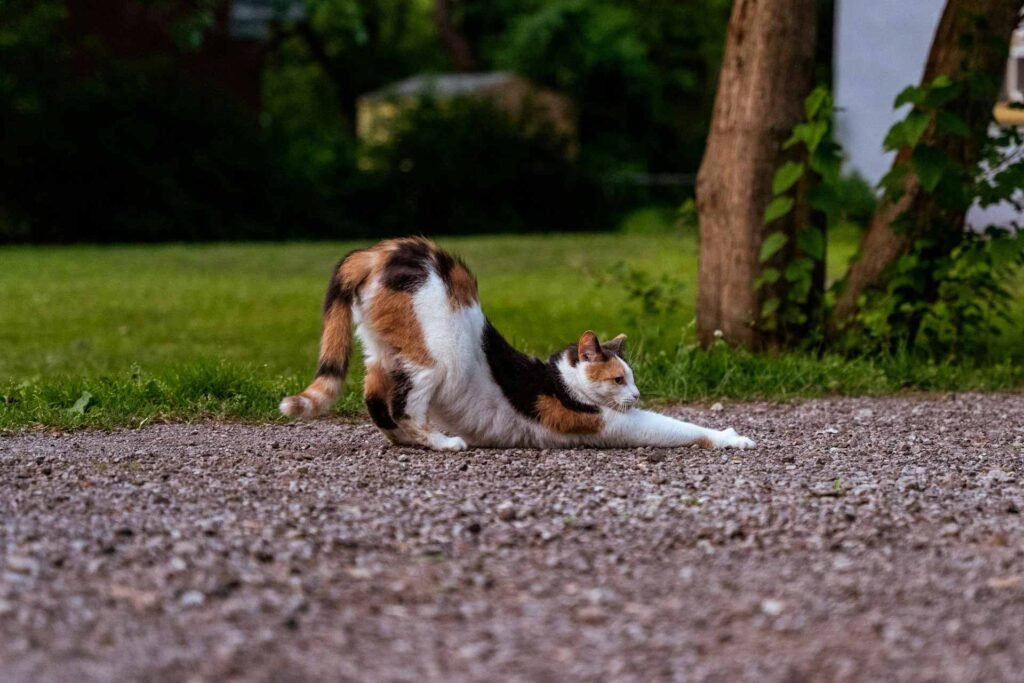
The paraspinal muscles running along their vertebral column work in coordinated waves rather than as rigid supports. When a cat walks, these muscles fire in sequence, creating that characteristic fluid gait that looks more like flowing water than mechanical movement. This differs from how dogs and horses move, and it contributes to their famously stealthy, silent approach.
The abdominal muscles deserve special mention. These core muscles can stretch and contract with remarkable range, allowing cats to flatten themselves substantially when needed. We’ve seen cats squeeze under doors with gaps of just two inches by engaging these muscles to compress their rib cage and organs temporarily.
The Physics of Being “Liquid”
The internet phenomenon of cats appearing liquid isn’t just a meme. Scientists have studied this, applying principles of fluid dynamics to feline behavior.
Cats demonstrate properties of both solids and liquids depending on the situation. When relaxed, they can “flow” into and conform to the shape of their container (a box, a sink, your laptop keyboard). This ability evokes something called the Deborah number in physics, which describes whether a material behaves more like a solid or a liquid over a given timeframe. For cats, the relevant timeframe is how long they choose to remain in a space. Give them enough time, and they’ll settle into whatever shape fits.
Their flexibility also relates to surface area and pressure distribution. When a cat squeezes through a narrow opening, they’re not compressing their bones (that would be anatomically impossible). Instead, they’re rotating their flexible spine, pulling in their elastic rib cage, and using those free-floating shoulders to minimize their profile. The pressure exerted on their body during this process is distributed across those elastic tissues rather than concentrated on rigid structures.
Cat Comparison: Spine Flexibility by the Numbers
| Feature | Cats | Dogs | Humans |
|---|---|---|---|
| Vertebrae Count | ~53 | ~50 | 33 |
| Spinal Rotation Degree | Up to 180° | Up to 90° | Up to 90° |
| Functional Clavicle | No | Yes | Yes |
| Shoulder Independence | Complete | Limited | Fixed |
| Back Arch Capability | Extreme | Moderate | Minimal |
This table shows why your cat can twist themselves into positions that would send your dog (or you) straight to the emergency room.
Evolution Favored Flexible Felines
Cats didn’t develop this flexibility for our entertainment (though that’s certainly a bonus). Their ancestors needed these abilities for survival.
Wild cats hunt by stalking and ambushing prey rather than running them down over long distances like canines do. This hunting style requires the ability to move silently through varied terrain, hide in small spaces while waiting for prey to approach, and then explode into action with a powerful pounce. Every aspect of their flexible anatomy serves these needs.
The ability to fit through tight spaces provided escape routes from larger predators. If a wildcat could squeeze into a rock crevice or hollow tree trunk, they could evade threats that couldn’t follow. Modern house cats retain this instinct, which explains why they’re so drawn to boxes, bags, and any confined space.
That spine also functions as a shock absorber during falls. Cats can rotate their spine mid-air to reorient themselves, a phenomenon known as the “righting reflex.” Combined with their flexible spine acting like a spring, this allows them to absorb landing impacts that would injure less flexible animals. A well-padded cat bed can provide similar shock absorption for older cats whose joints might appreciate the extra support.
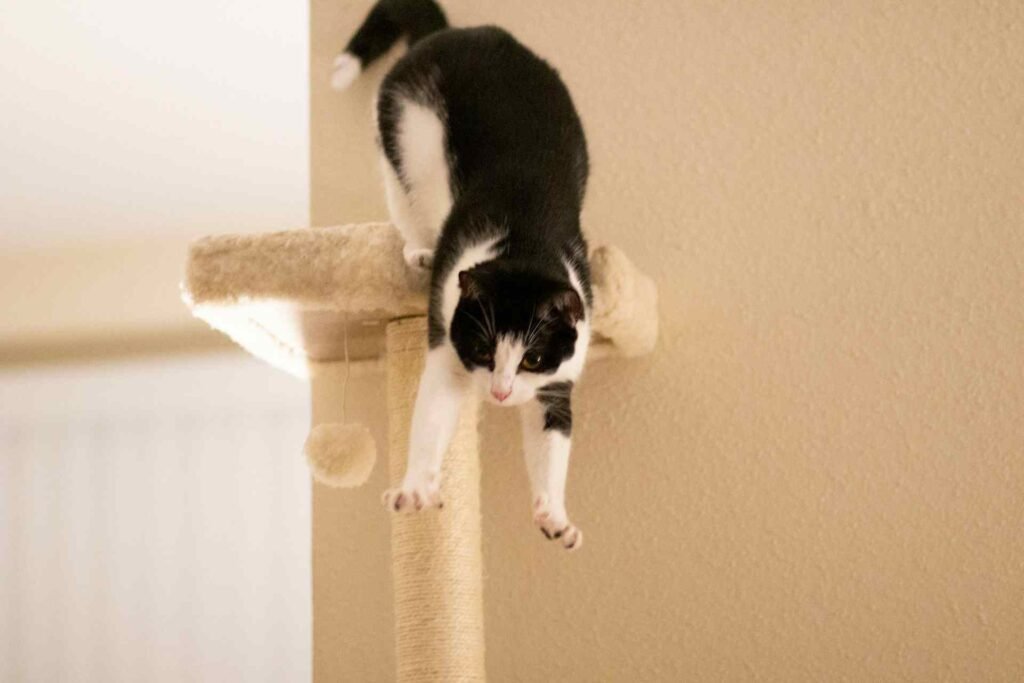
Tree climbing ability also depends heavily on spinal flexibility. Cats can arch their backs to adjust their center of gravity while scaling vertical surfaces, and their flexible spine allows them to descend trees headfirst by rotating their rear legs 180 degrees.
The Joint Connections
Beyond vertebrae and muscles, the actual joints connecting bones throughout a cat’s body have unique properties.
Feline joint capsules boast exceptional elasticity, wrapped in connective tissue that stretches remarkably to enable smoother, more extensive ranges of motion. This biological design, aided by efficient synovial lubrication, minimizes friction between moving parts far beyond typical constraints.
The hip and shoulder joints particularly demonstrate unusual range. Cat hips are ball-and-socket joints, but the socket is shallower than in most mammals, permitting rotation through a wider arc. This is why cats can kick with their rear legs during play or defensive maneuvers while lying on their sides, a position that would be nearly impossible with human hip joint structure.
Their front legs attach to the shoulder blade with what’s a floating joint stabilized entirely by muscle. No rigid bone connection means no limitation on the range of motion. Watch a cat clean behind their ear, and you’re seeing shoulder rotation that would dislocate in most other species.
Even the tiny joints in their paws demonstrate this flexibility principle. Each toe can move independently, and the whole paw can splay outward or contract inward to adjust grip on various surfaces. When cats knead with their paws, they’re exercising these small joints through their full range of motion. Some cats appreciate having a textured scratching post that allows them to stretch these small paw joints while maintaining their claws.
How Age and Health Affect Feline Flexibility
Not all cats maintain the same flexibility throughout their lives, and certain conditions can reduce their remarkable range of motion.
Kittens are especially flexible because their bones haven’t fully hardened yet, and their connective tissues retain maximum elasticity. This explains why young cats seem to have rubber bones, they’re still developing their full skeletal structure. As cats mature, their bones calcify completely, and while they remain impressively flexible by mammalian standards, they do lose some of that extreme kitten bendiness.
Arthritis affects cats just as it affects us, though cats hide pain exceptionally well. An arthritic cat may stop jumping to high surfaces, avoid grooming certain body parts, or show reluctance to use a litter box with high sides. Their spine remains structurally capable of flexibility, but inflammation in the joints makes movement painful. Regular veterinary check-ups become increasingly important for senior cats.
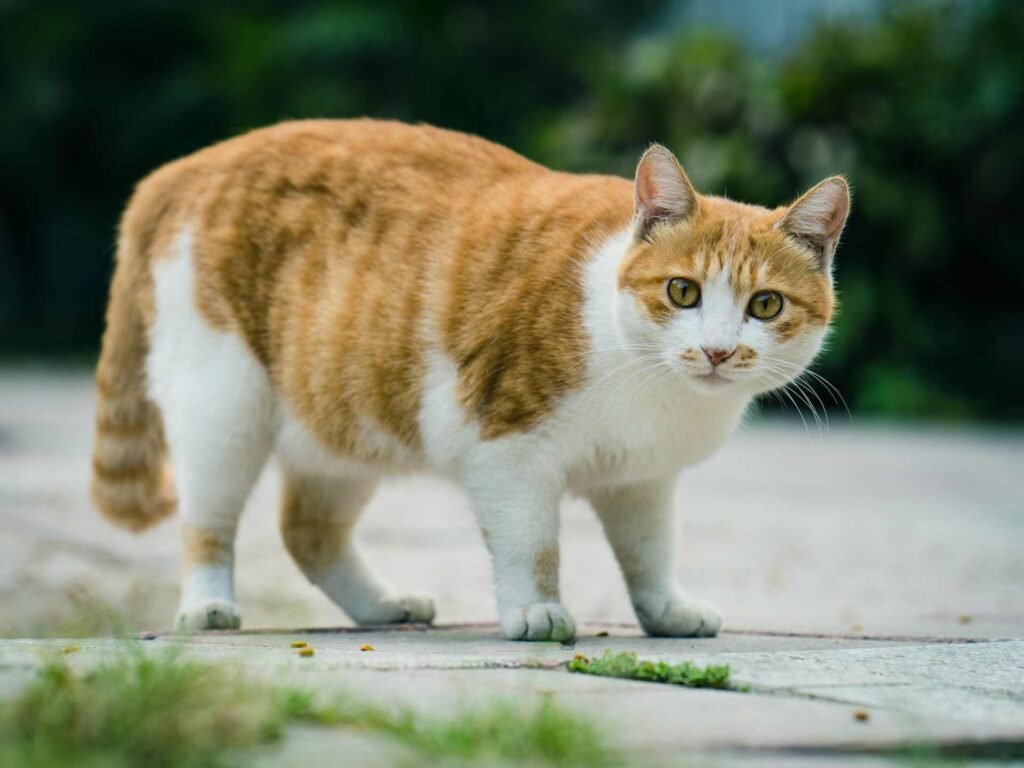
Obesity significantly restricts flexibility. Excess weight stresses joints, reduces muscle function, and physically prevents the same range of motion a lean cat enjoys. An overweight cat may struggle to groom their hindquarters or have difficulty navigating through spaces they once moved through easily.
Training and Activities That Showcase Flexibility
While cats don’t need training to be flexible, certain activities can help maintain and showcase their natural range of motion.
Interactive play sessions encourage cats to use their full physical capabilities. A feather wand toy that moves unpredictably prompts cats to twist, leap, and contort themselves in pursuit, a gymnastics routine disguised as fun. These sessions provide mental stimulation while keeping joints mobile and muscles toned.
Climbing structures serve multiple purposes for feline flexibility. Vertical territory allows cats to stretch their entire spine length when scaling upward, engages those independent shoulder joints, and encourages the kind of full-body movement that maintains flexibility. A multi-level cat tree with various platform heights creates opportunities for this beneficial stretching throughout the day.
Some cat owners have successfully trained their felines in agility courses. While less common than dog agility, cat agility utilizes their natural flexibility and can provide excellent physical exercise. Weaving through poles, jumping through hoops, and navigating tunnels all require the kind of spinal flexibility and body control that cats possess in abundance.
Even simple environmental enrichment helps. Placing food or treats in locations that require stretching or climbing encourages cats to move through their full range of motion regularly. Rather than feeding from a bowl on the floor, occasionally placing small amounts of food on slightly elevated surfaces (always safely accessible) prompts natural stretching behaviors.
FAQ
Cat spines can rotate approximately 180 degrees, which means they can twist their front and rear ends in nearly opposite directions. This exceeds the spinal rotation of dogs (roughly 90 degrees) and far surpasses human capability. Their spine functions almost like a biological Slinky, with each vertebra contributing small degrees of rotation that add up to extreme flexibility.
Mostly yes, with some caveats. Because cat shoulders are attached only by muscle rather than a rigid collarbone, they can compress their body profile to match their skull width. However, pregnant or obese cats have less ability to compress their midsection. Adult cats also can’t compress quite as much as kittens, whose bones and cartilage retain more flexibility. The rule generally holds true for healthy, normal-weight adult cats though.
No, normal contortions don’t cause pain in healthy cats. Their anatomy is designed for these positions, with joints and connective tissues built to handle extreme ranges of motion. If a cat appears painful when bending or moving, that signals an underlying health issue like arthritis, injury, or illness rather than normal discomfort from flexibility.
Age-related flexibility loss stems from multiple factors: cartilage in joints wears down, reducing cushioning and causing inflammation; muscles lose some elasticity and mass; ligaments become less pliable; and conditions like arthritis become more common. Additionally, older cats may exercise less, which leads to decreased range of motion through simple disuse.
All cats share the same basic skeletal structure that provides flexibility, but some breeds demonstrate slight variations. Long, lean breeds like Siamese or Oriental Shorthairs often appear more flexible due to their body proportions. However, this is mostly visual, their flexibility isn’t meaningfully greater than stockier breeds. The main exceptions are breeds with genetic mutations affecting cartilage or bone structure, which may reduce normal feline flexibility.
True hypermobility disorders are rare in cats but do exist. Some genetic conditions cause excessive joint laxity, leading to instability rather than healthy flexibility. These conditions typically cause problems like joint dislocations or chronic pain rather than being beneficial. Normal feline flexibility, even when it looks extreme to us, falls within healthy parameters and doesn’t indicate hypermobility disorder.
Cats instinctively stretch regularly, and these behaviors do help maintain range of motion. The classic front-leg stretch with rear end raised (sometimes called the “play bow”) lengthens the spine, engages core muscles, and moves joints through their full range. Rear leg kicks during play serve similar purposes. However, cats don’t need formal stretching routines, their natural behaviors provide sufficient flexibility maintenance.
The tail contains vertebrae similar to those in the spine, but the range of motion differs between segments. The base of the tail where it connects to the spine can move quite freely, but flexibility decreases toward the tip. The tail vertebrae are smaller and have less spacing between them than spinal vertebrae, which limits rotation. Additionally, the tail serves specific communication functions that require more controlled, precise movements rather than extreme flexibility.
This depends more on activity level than location. An indoor cat with ample climbing opportunities, interactive toys, and space to run can maintain excellent flexibility. Conversely, an outdoor cat that spends most time sleeping under a porch might become less flexible. What matters is regular movement through full ranges of motion, regardless of whether that happens inside or outside.
Conclusion
A cat’s flexibility is the product of a highly specialized axial skeleton, elastic intervertebral discs, a muscle-suspended scapula, and coordinated neuromuscular sequencing. When a cat twists 180 degrees, compresses through a narrow space, or arches into a defensive curve, each movement is mechanically supported by specific anatomical adaptations.
When flexibility declines due to arthritis, obesity, or disc degeneration, the behavioral changes are measurable. Reduced jump height, incomplete grooming, shortened stride length, and hesitation before climbing are early indicators. Understanding how feline flexibility works allows you to recognize when it is functioning optimally and when it is beginning to fail. What looks like effortless grace is precise structural engineering. Once you see it that way, every fluid movement carries a deeper appreciation for how intentionally the feline body is built.
Looking for more? Visit our Blog for more fun and insightful reads, or browse our full Cat Category for everything feline-related, from care to comfort.
Disclaimer: This article is for informational purposes only and does not substitute for professional veterinary advice. Always consult your veterinarian for diagnosis and treatment tailored to your cat’s individual needs. Please verify current product information directly on the retailer’s site before purchasing.
References
- Cao DY, Pickar JG, Ge W, Ianuzzi A, Khalsa PS. Position sensitivity of feline paraspinal muscle spindles to vertebral movement in the lumbar spine. J Neurophysiol. 2009 Apr;101(4):1722-9. https://doi.org/10.1152/jn.90976.2008
- Charbonneau, M. (2016). 15 Remarkable Feline Facts for National Cat Day. https://news.cvm.ncsu.edu/15-facts-for-national-cat-day/
- Cremieux J, Veraart C, Wanet MC. Development of the air righting reflex in cats visually deprived since birth. Exp Brain Res. 1984;54(3):564-6. https://doi.org/10.1007/bf00235481
- Grimm, D. (2024). Yes, cats are liquids—but only in one dimension. https://www.science.org/content/article/yes-cats-are-liquids-only-one-dimension
- Hansen N, Foster SF, Burrows AK, Mackie J, Malik R. Cutaneous asthenia (Ehlers-Danlos-like syndrome) of Burmese cats. J Feline Med Surg. 2015 Nov;17(11):954-63. https://doi.org/10.1177/1098612X15610683
- Ianuzzi A, Pickar JG, Khalsa PS. Validation of the cat as a model for the human lumbar spine during simulated high-velocity, low-amplitude spinal manipulation. J Biomech Eng. 2010 Jul;132(7):071008. https://doi.org/10.1115/1.4001030
- International Cat Care (2025). Arthritis in cats. https://icatcare.org/articles/arthritis-in-cats
- Pacchiana PD, Gilley RS, Wallace LJ, Hayden DW, Feeney DA, Jessen CR, Aird B. Absolute and relative cell counts for synovial fluid from clinically normal shoulder and stifle joints in cats. J Am Vet Med Assoc. 2004 Dec 15;225(12):1866-70. https://doi.org/10.2460/javma.2004.225.1866
- Pongrácz P. Cats are (almost) liquid!-Cats selectively rely on body size awareness when negotiating short openings. iScience. 2024 Sep 17;27(10):110799. https://doi.org/10.1016/j.isci.2024.110799
- Reighard, Jacob; Jennings, H. S. (1901). Anatomy of the cat. New York: Henry Holt and Company. https://doi.org/10.5962/bhl.title.54000
- Spivack, E. (2024). Why Are Cats So Flexible? This Body Part Is Key. https://www.inverse.com/science/cats-so-flexible-vertebrae
- Wikipedia. Deborah number. https://en.wikipedia.org/wiki/Deborah_number
- Wu X, Pei B, Pei Y, Hao Y, Zhou K, Wang W. Comprehensive Biomechanism of Impact Resistance in the Cat’s Paw Pad. Biomed Res Int. 2019 Jul 31;2019:2183712. https://doi.org/10.1155/2019/2183712
- Wu X, Pei B, Pei Y, Wu N, Zhou K, Hao Y, Wang W. Contributions of Limb Joints to Energy Absorption during Landing in Cats. Appl Bionics Biomech. 2019 Aug 18;2019:3815612. https://doi.org/10.1155/2019/3815612
- Zhang, Z., Yang, J. & Yu, H. Effect of Flexible Back on Energy Absorption during Landing in Cats: A Biomechanical Investigation. J Bionic Eng 11, 506–516 (2014). https://doi.org/10.1016/S1672-6529(14)60063-9
Check out our most recent articles!
- How Are Cats so Flexible? Your Cat’s Anatomy Explained
 Between their 53 vertebrae, muscular shoulders connected only by soft tissue, and elastic joints, cats possess anatomical superpowers that blur the line between solid and liquid, letting them navigate spaces you’d swear were too small.
 - Do Cats Copy Their Owners Voice, Personality and Actions?The independent cat stereotype is crumbling. Science reveals that cats engage in intentional mimicry, learning from their owners and adapting their personalities to match the humans they live with.
- Are Newborn Cats Born With Teeth? Everything About Kitten Dental GrowthEver wondered what’s happening inside a newborn kitten’s mouth? The answer might surprise you. Discover the complete timeline of feline dental development and learn what to expect as your kitten grows from gummy grins to a full set of adult teeth.
- Keeping Your Indoor Cat Warm in Winter: The Complete GuideEven indoor cats feel the winter chill more than you might think. Cold floors, dry air, and sneaky drafts can leave your feline less comfortable than they should be. Discover the simple adjustments that make all the difference in helping your cat stay genuinely cozy through the coldest months.
- Should You Look Your Cat in the Eyes? Is Staring Really Aggressive?Your cat’s eyes tell a story you’ve been misreading. While prolonged staring means one thing in human communication, cats interpret it completely differently. Discover why that loving gaze might actually be stressing out your feline friend and what to do instead.
- Choosing the Best Blanket for Your Cat: A Blanket Buyer’s GuideFinding the best blanket for your cat means considering more than just softness. Temperature regulation, durability, washability, and even behavioral quirks all play a role in choosing the perfect cozy spot for your feline friend. Discover which blanket types match your cat’s lifestyle.
- How to Get Your Kitten to Eat More: Simple Solutions for Picky EatersWatching your tiny kitten turn up their nose at perfectly good food can be heart-wrenching. This comprehensive guide reveals why kittens become picky eaters and shares practical solutions that transform mealtime battles into successful feeding routines.
- Can Cats Eat Fried Rice? Why This Takeout Favorite Is a No-GoThat irresistible takeout aroma might have your cat begging, but fried rice contains ingredients that can harm felines. Discover why even small amounts aren’t worth the risk and what treats truly suit your cat’s carnivorous nature.
- Why Do Cats Vibrate Their Tail? From Happy to HuntingYour cat’s vibrating tail is like a mood ring with fur. Whether they’re thrilled to see you or preparing to mark territory, decoding these rapid shakes reveals what’s really going on in their mind.
- Is Asparagus Bad for Cats? Risks, Benefits, and AlternativesYour cat’s eyeing your asparagus dinner, but should they have any? While this green veggie isn’t toxic to cats, there are surprising reasons why it’s not the treat you might think it is.
- How Cats Express Sadness: Reading Your Feline’s Emotional LanguageCats don’t cry emotional tears or mope around like dogs, but they absolutely experience sadness. The trick is learning to read their subtle language, the withdrawn behavior, the changed routines, the slight shifts in body posture that reveal their inner emotional world.
- Can Cats and Rabbits Live Together? Multi-Species Harmony GuideCats are predators, rabbits are prey, but that doesn’t mean they can’t coexist peacefully. Success comes down to understanding each animal’s instincts, respecting their boundaries, and taking introductions at the right pace.
- Are Space Heaters Safe for Cats? Keeping Your Cat CozySpace heaters can provide cozy warmth for your cat, but only when chosen and positioned with feline safety in mind. Discover which features protect against burns, fires, and electrical hazards.
- Cat Bed Placement 101: Finding the Perfect Spot Your Cat Will Actually UseCats spend up to 16 hours sleeping daily, yet many reject their designated beds completely. The problem isn’t pickiness, it’s placement. Learn where cats naturally feel safe and comfortable, and how to position beds they’ll genuinely use.
- Can a Kitten Be Left Alone at Night? What You Need to KnowThose first nights with a new kitten rarely match the peaceful scene you imagined. Learn why most kittens can sleep alone once they reach a certain age, and discover the setup secrets that make nighttime independence work for everyone.















Written by Fenton Harberson (Scientific Writer and Digital Asset Planner)
Last reviewed and edited on 10.03.2026