
Most cats ignore new beds not because the bed is wrong, but because the location violates one of three core feline priorities: thermal comfort, escape access, or visual control of the environment. In home consultations, I rarely see a “bad bed.” I see beds placed in exposed traffic lanes, cold convection drafts, or dead corners with no escape route.
Bed placement is an environmental design decision. Cats evaluate resting sites based on temperature gradients, vertical escape options, line of sight, and scent familiarity. If those variables are wrong, the bed will remain unused regardless of price or aesthetics. The goal is not to guess where your cat might sleep. It is reverse engineering how cats select resting sites.
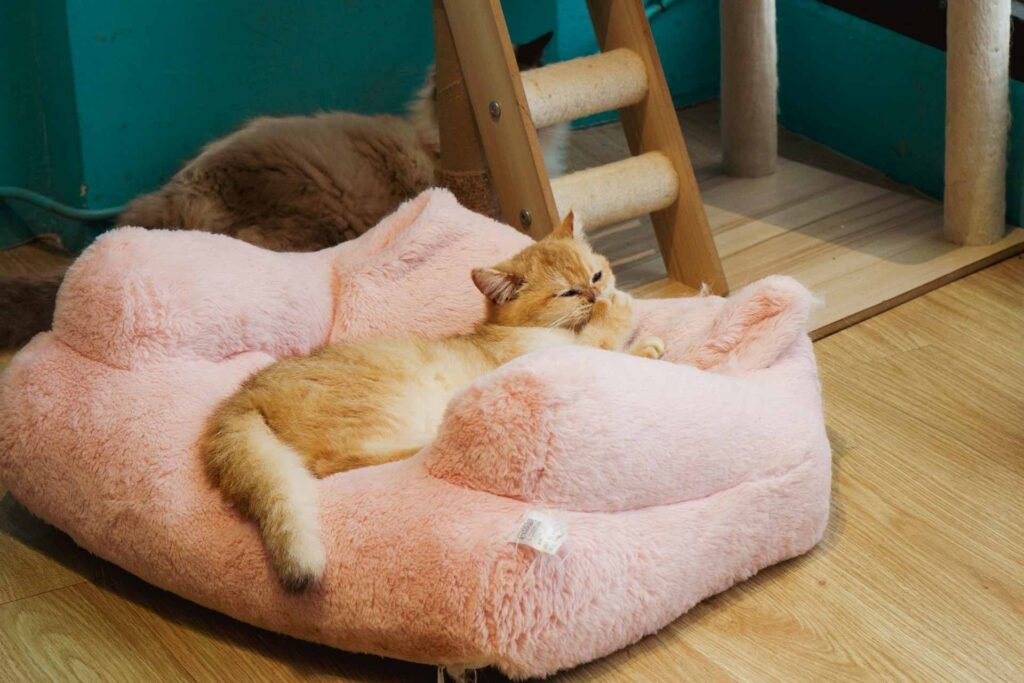
Why Location Matters
Adult cats sleep an average of 15 hours per day, with sleep architecture consisting of light sleep punctuated by brief REM cycles. During light sleep, auditory processing remains active. A resting site is not only for comfort. It must allow rapid arousal and exit if necessary.
Cats evolved as both predator and prey. A sleeping location must provide concealment or elevation plus at least one unobstructed escape path. If a bed is placed in a corner with only one exit and high foot traffic, many cats will reject it instinctively.
Your home environment plays a massive role too. Temperature, noise levels, and even the presence of other pets all factor into whether your cat will embrace or reject a sleeping spot. A location that works perfectly in summer might become too cold in winter, and a quiet corner during weekdays could turn chaotic on weekends when the whole family is home.
Cats also crave variety in their sleeping arrangements. Most cats rotate between several favorite spots throughout the day, choosing different locations based on temperature, mood, and the position of that perfect patch of sunlight streaming through the window. This means you might actually need multiple beds in different locations rather than expecting one spot to serve all purposes.
The Golden Rules of Cat Bed Placement
Some principles apply regardless of your specific home layout or your cat’s individual quirks. These foundational guidelines will set you up for success no matter which room you’re working with.
Quiet Over Busy Every Time
Cats need their beauty sleep to be undisturbed. Placing a bed in high-traffic areas like hallways or right next to the front door practically guarantees it’ll go unused. Your cat wants to relax without worrying about being stepped on or startled awake by sudden movements. Think about the flow of your household, where do people naturally walk less frequently?
The exception here is if you have a particularly social cat who suffers from separation anxiety. Some cats actually prefer being near the action as long as they have the option to retreat if things get too hectic. This brings us to an important point: observation trumps assumption. Watch where your cat naturally gravitates toward during different times of day.
Warmth Is Non-Negotiable
The thermoneutral zone for cats is approximately 86 to 100°F. Below that range, metabolic energy expenditure increases to maintain core temperature. In practical terms, a bed placed against an exterior wall in winter may sit 5 to 10 degrees cooler than the center of a room due to conductive heat loss. I often measure these differences with an infrared thermometer during consultations. Moving a bed two feet inward from a cold wall can dramatically increase usage. Some cat owners invest in heated beds or warming pads to make less naturally warm locations more attractive.
Height Provides Security
Many cats feel more secure when they can survey their domain from above. This doesn’t mean every bed needs to be at ceiling height, but consider elevated options like cat trees or furniture-mounted beds alongside floor-level choices. The elevated perspective helps cats feel in control of their environment while resting.

Interestingly, older cats or those with mobility issues might prefer lower options as climbing becomes more challenging. A kitten might adore that top perch on the cat tree, while an arthritic senior would appreciate a well-cushioned bed right on the floor.
Height preference correlates with social confidence. In multi-cat households, higher resting positions are typically claimed by more socially secure individuals. Subordinate cats often avoid elevated beds if dominant cats patrol vertical routes. When elevated beds go unused, the issue may not be mobility. It may be social pressure.
Away From Food and Litter
This one’s critical yet often overlooked. Cats don’t want to sleep where they eat or eliminate. It’s a basic hygiene instinct that makes perfect sense when you think about it. Keep beds well separated from food and water bowl areas and definitely away from the litter box. Ideally, these zones should be in different rooms entirely.
Room-by-Room Placement Strategy
Now that we’ve covered the basics, let’s get specific about which rooms work best and why.
The Bedroom: The Ultimate Sleep Sanctuary
Bedrooms offer two advantages: stable scent saturation and predictable nighttime routine. Human bedding carries high concentrations of familiar scent markers, which lowers vigilance thresholds in bonded cats. In behavioral cases involving mild nighttime anxiety, relocating a cat bed into the bedroom often reduces restlessness within one to two weeks.
However, do not place the bed in direct line with the doorway. Many cats enjoy a spot near the bed at floor level, on a dresser, or even on a dedicated bedside table. Window perches in bedrooms work wonderfully too, especially if your cat enjoys watching the neighborhood nightlife.
One caveat: if your cat tends to be hyperactive at dawn or enjoys waking you up for early breakfast, you might reconsider bedroom placement. Some cats interpret bedroom access as an invitation to play on your face at 4 AM.
Living Rooms: Social Yet Secure
Living rooms offer a nice middle ground for cats who want to be near their people without being in the thick of constant activity. Look for corners or spots alongside furniture where your cat can observe the room without being in the direct pathway. Behind or beside the couch often works well, creating a den-like feeling of enclosure.
If you have cat furniture like scratching posts or trees, positioning a bed nearby creates a complete cat zone where all your feline’s needs are met in one area. Just make sure this zone isn’t right in front of the TV or near speakers, as sudden loud noises can startle resting cats.
Related article: What Do Cats Like to Watch on TV?
Window spots in living rooms deserve special consideration. Cats are natural observers, and many find watching outdoor activity endlessly entertaining. A bed positioned where your cat can see outside, whether at a window or on a piece of furniture with a view, often becomes a favorite daytime napping spot.
Home Offices: Working From Home Companions
The rise of remote work has created a new dynamic in cat bed placement. Many cats have become accustomed to having their humans home all day and want to be near them while they work. A cat bed in your home office can satisfy your cat’s need for companionship while keeping them from commandeering your desk space.

Position the bed where you can occasionally reach over for pets without disrupting your workflow. Some cats appreciate being at desk level on a side table or shelf, while others prefer a floor bed near your feet. Just avoid placing it directly under your chair where rolling wheels could pose a hazard.
The home office works especially well if your cat tends toward boredom during the day. Providing engaging environments even while you’re working from home helps prevent behavior issues.
Spare Rooms and Quiet Zones
If you have a spare bedroom, study, or other low-traffic room, these can be excellent locations for cat beds. The consistent quietness makes them ideal for cats who are easily stressed or simply prefer solitude. This placement works particularly well in multi-pet households where your cat might want a retreat from other animals.
These rooms also work well for multiple beds at different heights and in different corners, giving your cat several options within one peaceful space. Consider making a spare room into a proper cat sanctuary with various types of beds and resting options.
Special Considerations for Multi-Cat Households
In multi-cat households, resting sites function as social resources. Resource distribution should follow the N+1 rule. Provide one resting site per cat plus one additional site, distributed across separate vertical and horizontal zones.
Do not cluster beds within the same visual field. Cats assess ownership through line of sight. If one cat can visually monitor all beds from a single vantage point, that individual may control access without overt aggression. Distribute beds across rooms or behind partial visual barriers to reduce silent resource guarding.
Vertical space becomes particularly important with multiple cats. Higher perches and elevated beds allow cats to claim different levels, reducing competition. Some cats naturally prefer ground level while others favor heights, and these preferences can coexist peacefully when you accommodate both.
Watch for subtle signs of territorial tension around sleeping spots. If one cat consistently blocks access to a bed location or another cat seems anxious approaching certain areas, redistribute the beds.
Comparing Different Placement Approaches
Different placement strategies work for different situations. Here’s how various approaches stack up:
| Placement Strategy | Best For | Advantages | Potential Drawbacks |
|---|---|---|---|
| Multiple beds throughout home | Active cats, large homes | Accommodates different moods and temperature preferences | Requires more investment, more cleaning |
| Single bedroom placement | Bonded pet-owner pairs | Maximum security and bonding | May not work for independent cats |
| High-traffic room corners | Social cats | Cat stays engaged with family | Can be too stimulating for anxious cats |
| Dedicated cat room | Multi-cat homes, stressed cats | Complete control of environment | Less human interaction |
| Seasonal rotation | Energy-conscious owners | Always optimal temperature | Requires remembering to swap locations |
The reality is that most cat owners end up using a combination approach. You might have a primary bed in the bedroom, a window perch in the living room, and a quiet spot in a spare room. Cats appreciate having choices, and different beds serve different purposes throughout their day.
Troubleshooting: When Your Cat Won’t Use the Bed
When a cat rejects a bed, evaluate four variables in order: microclimate, escape geometry, scent profile, and surface preference.
Microclimate includes draft direction, floor temperature, and radiant heat exposure. Escape geometry refers to how many exit paths are available and whether the cat can see approaching movement. Scent profile includes chemical residue from manufacturing. Surface preference involves texture firmness and enclosure level.
Change one variable at a time. Moving a bed and replacing it simultaneously prevents you from identifying the true cause of rejection. Some cats dislike certain fabrics or prefer more enclosed spaces. Covered beds might work better than open beds for cats who like feeling concealed. Other cats hate restriction and prefer flat surfaces where they can sprawl out completely.

A brand-new bed smells unfamiliar and possibly chemical. Place an unwashed shirt of yours in the bed or rub a towel on your cat’s cheeks and then on the bed to transfer familiar pheromones. Give the bed time to air out if it has a strong “new product” smell.
Sometimes location isn’t wrong, it’s just not established yet. Cats are creatures of habit and might need gentle encouragement to try something new. Place treats in or near the bed, engage in play sessions nearby, or simply sit near the bed yourself while reading. Your cat’s attraction to your presence can help them associate the bed with positive experiences.
The Seasonal Shift: Adjusting Throughout the Year
Your cat’s ideal sleeping location changes with the seasons, and successful cat owners adapt their bed placement accordingly. This doesn’t mean constantly moving beds around, but rather understanding why your cat abandons certain spots at different times of year.
Winter brings the quest for warmth. Cats naturally gravitate toward heat sources, so beds near radiators, heating vents, or naturally sunny spots become premium real estate. If you notice your cat sleeping in unusual spots during cold months, they’re probably just chasing warmth. Consider temporary bed placement near heat sources or investing in a heated bed for their favorite location.
Summer sees cats seeking cooler spots. That south-facing window bed that was perfect in February might become unbearably hot in July. Cats often prefer lower positions in summer since heat rises, and they’ll gravitate toward tiled floors or basement areas if accessible. Cooling mats or elevated mesh beds that allow air circulation become more appealing than plush, insulated options.
Related article: How to Keep Feral Cats Cool in Summer
Spring and fall transitions can confuse both cats and owners. Your cat might seem restless and dissatisfied with their usual spots during these periods. This is normal, they’re seeking the right temperature balance as weather fluctuates. Having beds in multiple locations gives them options to self-regulate their comfort.
FAQ
Most cats benefit from having at least two to three beds in different locations around your home. This allows them to choose sleeping spots based on temperature, mood, and time of day. In multi-cat households, the general rule is one bed per cat plus one extra to prevent territorial conflicts. However, don’t be surprised if cats still prefer sharing certain favorite spots while ignoring others entirely.
Both options work, and ideal homes offer both. Floor-level beds are easier for older cats with arthritis or mobility issues to access, while elevated beds satisfy many cats’ instinctive preference for height and the security of surveying their territory from above. Younger, more agile cats often prefer elevated options during the day but might choose floor beds for deeper nighttime sleep. Watch your cat’s natural preferences, do they jump on furniture frequently or prefer staying grounded?
Yes, but do so gradually. Cats are creatures of habit and sudden changes can be stressful. If you need to relocate a bed, move it a few feet at a time over several days rather than completely changing its location overnight. Alternatively, introduce a new bed in the desired location while keeping the original bed available, then remove the old one once your cat regularly uses the new spot.
Location is usually the culprit. The bed might be in a spot that’s too noisy, too cold, too warm, or simply doesn’t appeal to your cat’s instincts. Cats also reject beds that smell wrong (too new, chemically treated, or lacking familiar scents). Try relocating the bed to where your cat naturally sleeps, that sunny chair or behind the couch. Sometimes the bed style itself doesn’t suit your cat’s preference for open versus enclosed spaces.
Absolutely, if you’re both comfortable with the arrangement. Many cats prefer sleeping with their humans, and this bonding time can strengthen your relationship. However, if your sleep quality suffers or you have allergies, it’s perfectly reasonable to train your cat to use their own bed. The key is providing appealing alternatives in locations your cat naturally finds comfortable and secure.
Small spaces can actually work to your advantage since every room naturally becomes multi-functional. Focus on corners and edges where the bed won’t interfere with daily activities. Window sills, the top of a bookshelf, or even the space between furniture pieces can work well. Vertical space matters even more in small apartments, so consider wall-mounted shelves with integrated bed platforms. The bedroom often becomes the best choice in tight quarters since it’s quieter during the day while you’re away.
Generally, cats prefer warm sleeping spots, typically seeking out temperatures slightly higher than what’s comfortable for humans. Their ideal temperature range is around 85-90°F, which explains their attraction to sunny patches, radiators, and even your laptop. However, in hot weather or after active play, cats will seek cooler spots temporarily. Individual preferences vary, and some breeds with thick coats might prefer cooler spots year-round. Providing options in different temperature zones lets your cat self-regulate their comfort.
Conclusion: Your Cat’s Bed Is Their Castle (If It’s in the Right Spot)
A cat bed is accepted when it satisfies environmental control, thermal comfort, and predictable safety. Placement determines all three. Most unused beds fail because they sit in exposed, cold, or socially pressured locations.
Observe where your cat already rests. Measure temperature differences if necessary. Map traffic flow. Adjust for vertical access and escape lines. When you approach bed placement as environmental design rather than decoration, usage improves quickly.
Cats do not ignore beds out of stubbornness. They select resting sites using criteria that are consistent and biologically rational. Align the environment with those criteria and the bed will be used.
Looking for more? Explore our Cat Furniture section for more posts like this, visit the Blog for fun and insightful reads, or browse our full Cat Category for everything feline-related, from care to comfort.
Disclaimer: This article is for informational purposes only and does not substitute for professional veterinary advice. Always consult your veterinarian for diagnosis and treatment tailored to your cat’s individual needs. Please verify current product information directly on the retailer’s site before purchasing.
References
- Blue Cross (2024). Cats and sleep: FAQ. https://www.bluecross.org.uk/advice/cat/behaviour-and-training/why-do-cats-sleep-so-much
- Crowell-Davis SL, Curtis TM, Knowles RJ. Social organization in the cat: a modern understanding. J Feline Med Surg. 2004 Feb;6(1):19-28. https://doi.org/10.1016/j.jfms.2003.09.013
- Elzerman AL, DePorter TL, Beck A, Collin J-F. Conflict and affiliative behavior frequency between cats in multi-cat households: a survey-based study. Journal of Feline Medicine and Surgery. 2019;22(8):705-717. https://doi.org/10.1177/1098612X19877988
- Finka LR, Foreman-Worsley R. Are multi-cat homes more stressful? A critical review of the evidence associated with cat group size and wellbeing. Journal of Feline Medicine and Surgery. 2021;24(2):65-76. https://doi.org/10.1177/1098612X211013741
- National Research Council. 2006. Nutrient Requirements of Dogs and Cats. Washington, DC: The National Academies Press. https://doi.org/10.17226/10668
Check out our most recent articles!
- Are Newborn Cats Born With Teeth? Everything About Kitten Dental Growth
 Ever wondered what’s happening inside a newborn kitten’s mouth? The answer might surprise you. Discover the complete timeline of feline dental development and learn what to expect as your kitten grows from gummy grins to a full set of adult teeth.
 - Keeping Your Indoor Cat Warm in Winter: The Complete GuideEven indoor cats feel the winter chill more than you might think. Cold floors, dry air, and sneaky drafts can leave your feline less comfortable than they should be. Discover the simple adjustments that make all the difference in helping your cat stay genuinely cozy through the coldest months.
- Should You Look Your Cat in the Eyes? Is Staring Really Aggressive?Your cat’s eyes tell a story you’ve been misreading. While prolonged staring means one thing in human communication, cats interpret it completely differently. Discover why that loving gaze might actually be stressing out your feline friend and what to do instead.
- Choosing the Best Blanket for Your Cat: A Blanket Buyer’s GuideFinding the best blanket for your cat means considering more than just softness. Temperature regulation, durability, washability, and even behavioral quirks all play a role in choosing the perfect cozy spot for your feline friend. Discover which blanket types match your cat’s lifestyle.
- How to Get Your Kitten to Eat More: Simple Solutions for Picky EatersWatching your tiny kitten turn up their nose at perfectly good food can be heart-wrenching. This comprehensive guide reveals why kittens become picky eaters and shares practical solutions that transform mealtime battles into successful feeding routines.
- Can Cats Eat Fried Rice? Why This Takeout Favorite Is a No-GoThat irresistible takeout aroma might have your cat begging, but fried rice contains ingredients that can harm felines. Discover why even small amounts aren’t worth the risk and what treats truly suit your cat’s carnivorous nature.
- Why Do Cats Vibrate Their Tail? From Happy to HuntingYour cat’s vibrating tail is like a mood ring with fur. Whether they’re thrilled to see you or preparing to mark territory, decoding these rapid shakes reveals what’s really going on in their mind.
- Is Asparagus Bad for Cats? Risks, Benefits, and AlternativesYour cat’s eyeing your asparagus dinner, but should they have any? While this green veggie isn’t toxic to cats, there are surprising reasons why it’s not the treat you might think it is.
- How Cats Express Sadness: Reading Your Feline’s Emotional LanguageCats don’t cry emotional tears or mope around like dogs, but they absolutely experience sadness. The trick is learning to read their subtle language, the withdrawn behavior, the changed routines, the slight shifts in body posture that reveal their inner emotional world.
- Can Cats and Rabbits Live Together? Multi-Species Harmony GuideCats are predators, rabbits are prey, but that doesn’t mean they can’t coexist peacefully. Success comes down to understanding each animal’s instincts, respecting their boundaries, and taking introductions at the right pace.
- Are Space Heaters Safe for Cats? Keeping Your Cat CozySpace heaters can provide cozy warmth for your cat, but only when chosen and positioned with feline safety in mind. Discover which features protect against burns, fires, and electrical hazards.
- Cat Bed Placement 101: Finding the Perfect Spot Your Cat Will Actually UseCats spend up to 16 hours sleeping daily, yet many reject their designated beds completely. The problem isn’t pickiness, it’s placement. Learn where cats naturally feel safe and comfortable, and how to position beds they’ll genuinely use.
- Can a Kitten Be Left Alone at Night? What You Need to KnowThose first nights with a new kitten rarely match the peaceful scene you imagined. Learn why most kittens can sleep alone once they reach a certain age, and discover the setup secrets that make nighttime independence work for everyone.
- A Cat’s New Year’s Resolutions: What Your Cat Would Promise (If They Could Write)Cats worldwide are drafting their own new year’s resolutions, and they’re refreshingly honest. From mastering the art of selective hearing to expanding their forbidden food sampling program, discover what your feline friend would promise if they could hold a pen (before knocking it off the desk).
- Cats and Snow: Why Some Love It and Others Don’tSnow isn’t just uncomfortable for many cats, it’s a complete sensory overload. From cold paw pads to wet fur and changed landscapes, winter challenges feline comfort in unexpected ways. Learn how to recognize stress signals and create cozy alternatives for snow-averse cats.















Written by Solara Bergmeier (Technical Writer and Content Manger)
Last reviewed and edited on 16.02.2026