
Foot attacks are one of the most common behavior complaints I see in indoor cats under three years old. In most cases, the behavior is not aggression. It is predatory motor pattern rehearsal triggered by movement. When you walk away, you activate the chase phase of that sequence.
The direct answer is this: your cat attacks your feet because retreating movement triggers prey drive, and because the behavior has been reinforced by your reaction. In some cases, attention seeking, anxiety, or redirected arousal also contribute.
The goal is identifying which motivational system is active in your cat, because each requires a different intervention.

The Instinct Behind the Attack
Cats are hardwired hunters, plain and simple. Even your pampered indoor companion who’s never seen a mouse in their life carries the genetic blueprint of a skilled predator. Those adorable paws? They’re actually precision instruments designed for catching prey. When your feet shuffle across the floor, your cat’s ancient hunting program kicks into overdrive.
What most owners call prey drive is more accurately the feline predatory motor sequence: orient, eye, stalk, chase, pounce, grab-bite, and dissect. This sequence is hardwired and self-reinforcing. Movement away from the cat strongly activates the chase component. Movement toward the cat does not. I often demonstrate this by asking owners to drag a soft toy away in short bursts versus pushing it toward the cat. Almost every cat responds more intensely to retreating motion. Your ankles function the same way.
This hunting behavior becomes even more pronounced under certain conditions. Feet moving under blankets create that irresistible “hidden prey” effect that cats find absolutely impossible to ignore. The rustling sounds, the mysterious movements, the element of surprise, it’s like watching an action movie from your cat’s perspective. They can’t help but respond.
What makes walking away particularly triggering? When you’re moving in the opposite direction, your feet become a retreating target. In the wild, prey that’s escaping triggers an intense chase response.
The intensity of these attacks varies by age and personality. Younger cats and kittens typically display more aggressive hunting behaviors because they’re still developing their skills and have abundant energy to burn. Older cats might still participate in occasional foot attacks, though usually with less enthusiasm and more strategic planning.
The Attention Factor
Sometimes the explanation is refreshingly simple: your cat is trying to tell you something. Cats are masters of communication, and when gentle meows and pleading stares don’t work, they escalate to more dramatic methods. A well-timed foot attack guarantees your immediate attention, even if that attention comes in the form of yelping and hopping around.
From a learning theory standpoint, this is operant conditioning. If attacking your feet reliably produces eye contact, vocalization, or physical interaction, the behavior is positively reinforced. Even scolding can function as reinforcement because it increases engagement.
In one case, a client insisted she was discouraging the behavior. Video review showed that every time her cat grabbed her ankle, she immediately bent down and spoke to him. Within two weeks of completely withdrawing verbal response and redirecting to a wand toy placed across the room, the frequency dropped by more than half.
Cats often resort to foot attacks when they feel ignored or lonely. Maybe you’ve been working from home all day, hunched over your laptop, barely acknowledging their presence. Or perhaps you’ve been away, and they’ve missed you. That ambush when you finally get up? That’s their way of saying, “Hey! I exist! Play with me!” The urgency increases when you walk away because they interpret your departure as rejection.
Boredom plays a massive role in attention-seeking foot attacks. Indoor cats, particularly those without adequate environmental enrichment, need outlets for their natural behaviors. When proper toys, climbing structures, and interactive play sessions are lacking, your feet become the most exciting thing in their environment. It’s not ideal, but it’s something to do.
The attention-seeking behavior often follows patterns. You might notice attacks happening at specific times, perhaps right before meals, when you wake up, or when you’re about to leave for work. These patterns reveal what your cat associates with getting your attention and having their needs met.
When Your Cat Just Wants Fun
Many times, your cat isn’t hunting or seeking attention, they simply want to play. Playful foot attacks usually look different from aggressive ones. You’ll notice a lighter touch, less forceful biting, and often your cat will bound away playfully after the initial pounce, inviting you to chase them.
Kittens raised without littermates often fail to develop proper bite inhibition. During normal social play, littermates withdraw when bitten too hard. That feedback teaches pressure control. Single kittens frequently use human skin as the testing surface.
In these cases, the solution is not punishment. It is structured play with long-range interactive toys that keep teeth at least 18 to 24 inches away from skin, combined with immediate disengagement if teeth contact flesh.
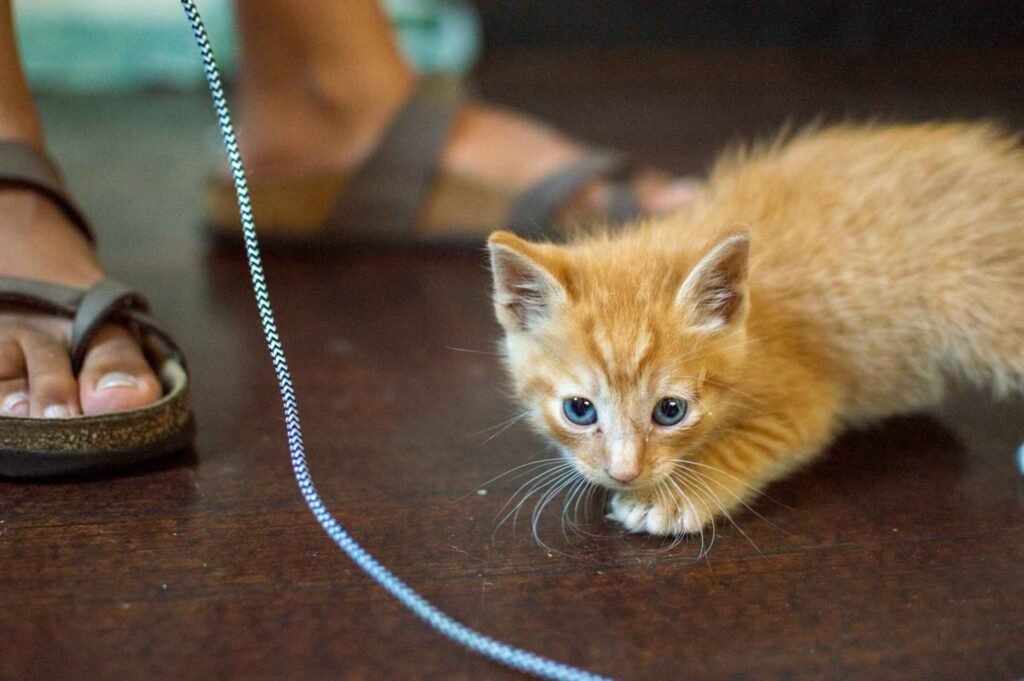
Play-motivated attacks tend to happen during your cat’s natural activity peaks. Most cats experience energy surges during dawn and dusk, remnants of their crepuscular hunting schedule. If your ankles become targets during these times, you’re likely dealing with a playful cat who needs appropriate outlets for their burst of energy.
The walking away scenario becomes particularly play-inducing because movement equals fun. Your departing feet become the ultimate interactive toy, unpredictable, always available, and guaranteed to provoke a reaction. From your cat’s perspective, this is the best game ever invented.
Distinguishing playful attacks from aggressive ones matters for addressing the behavior appropriately. Playful cats typically have relaxed body language, dilated pupils from excitement, and might emit chirping sounds. They’re inviting interaction, not defending territory or expressing distress.
Emotional Triggers: Stress, Anxiety, and Redirected Aggression
Sometimes foot attacks signal deeper emotional issues. Cats experiencing stress or anxiety often display behavioral changes, and unfortunately, your feet might bear the brunt of their distress. This type of attack typically feels different, more intense, less predictable, and often accompanied by other signs like hiding, changes in eating habits, or inappropriate elimination.
Changes in environment frequently trigger stress-related foot attacks. Did you recently move? Bring home a new pet? Have house guests? Even seemingly minor disruptions like rearranged furniture or a new cleaning product can unsettle sensitive cats. When cats feel their environment is unstable or threatening, they sometimes cope by attacking the nearest moving target.
Redirected aggression represents a particularly confusing scenario. Your cat becomes aroused or agitated by something they can’t reach, maybe they saw a neighborhood cat through the window or heard a strange noise. Unable to address the actual source of their frustration, they redirect that aggressive energy toward whatever’s available. Your innocent feet just happen to be in the wrong place at the wrong time. I have seen cats that appeared calm until a stray cat approached the window. Minutes later, the owner walked past and was attacked at the ankles. The timing often looks random unless you identify the original trigger.
Separation anxiety in cats is often overlooked but genuinely affects some felines. Cats with strong bonds to their owners might panic when left alone or when their person leaves the room. Attacking feet as you walk away could be their desperate attempt to prevent your departure. This behavior usually comes with other anxiety indicators like excessive vocalization, destructive behavior, or inappropriate elimination when you’re gone.
Medical issues can also manifest as aggressive behavior changes. Pain, hormonal imbalances, or neurological conditions might cause a normally gentle cat to suddenly attack feet. If your cat’s behavior changes dramatically or attacks become more frequent and intense without obvious environmental triggers, a veterinary checkup is essential.
Cat Attacking Feet at Night
Nighttime foot attacks deserve special attention because they’re both common and particularly annoying. You’re peacefully sleeping, feet tucked under cozy blankets, when suddenly you’re awakened by teeth and claws attacking through the covers. This specific scenario combines several factors that make your feet irresistible targets.
Domestic cats retain crepuscular activity patterns. Studies of free-ranging cats show peak locomotor activity around dawn and dusk, with secondary nighttime activity depending on prey availability. If your cat sleeps most of the day while you are at work, they may accumulate unspent predatory energy that surfaces at 2 or 3 AM.

Movement under blankets amplifies the prey-like qualities of your feet. The mysterious bulges, slight movements from shifting in sleep, and the cover’s muffling effect create perfect hunting conditions. Your cat literally can’t see what’s under there, which engages their hunting instincts even more intensely. It’s like wrapping prey in exciting packaging.
Boredom contributes significantly to nighttime attacks. During the day, there’s usually enough environmental stimulation, windows to watch, household activity, maybe some sunbeam napping. But at night, when everything quiets down and you’re unavailable for entertainment, your feet become the only game in town.
Some cats specifically attack feet at night as a learned behavior to wake their owners. If you’ve previously gotten up to feed your cat or give attention after a foot attack, you’ve taught them that attacking feet at night gets results. They’re not being spiteful; they’re being practical. Why wait for breakfast when you can wake the food dispenser early?
Establishing a pre-bedtime routine can dramatically reduce nighttime attacks. A vigorous play session before bed, followed by a small meal, mimics a natural hunting sequence and helps satisfy your cat’s nocturnal urges. Many cats will sleep through the night after this routine, leaving your feet blissfully unattacked.
Comparing Different Types of Foot Attacks
Here’s a breakdown of what different types of attacks typically look like:
| Attack Type | Body Language | Timing | Intensity | Sounds |
|---|---|---|---|---|
| Playful | Relaxed, tail up, ears forward | During active periods | Gentle to moderate | Chirps, trills, silence |
| Hunting | Crouched, focused stare, wiggling butt | When feet move | Moderate to firm | Usually silent |
| Attention-seeking | Alert, may vocalize first, direct eye contact | Before meals, after being ignored | Variable | Often meows or chirps before attack |
| Aggressive | Tense body, flattened ears, dilated pupils | Unpredictable or after triggers | Intense, may break skin | Growling, hissing |
| Anxiety-driven | Stressed posture, low body, tail tucked | During stressful events or departures | Variable but often intense | May vocalize distress |
| Nighttime | Alert in darkness, often hiding beforehand | During your sleep hours | Moderate, startling | Usually silent stalking |
This comparison reveals important patterns. Playful and hunting-motivated attacks rarely include aggressive vocalizations and typically show relaxed or excited body language. Attention-seeking attacks often come with prior communication attempts. Aggressive or anxiety-driven attacks show clear stress signals and require different interventions than playful behavior.
The intensity matters too. Light, playful pounces call for redirecting energy into appropriate outlets. Attacks that break skin or cause real injury need professional evaluation and intervention.
How to Stop Your Cat From Attacking Your Feet
Successfully ending foot attacks requires consistency, patience, and a multi-pronged approach. No single solution works for every cat, but combining several strategies typically yields results.
Redirect hunting energy toward appropriate targets. Implement structured predatory play, not random toy tossing. Use a wand toy that allows you to simulate the full predatory sequence. Start with slow lateral movement, transition to short retreating bursts, allow a final capture, and end the session with a small food reward. This sequence mimics hunt, catch, consume. Each session should last 10 to 15 minutes and occur at predictable times, ideally before high-risk periods such as bedtime or when you typically prepare meals.
Strategic environmental enrichment transforms boredom into engagement. Cat trees, window perches, puzzle feeders, and rotating toy selections keep your cat mentally and physically stimulated. Vertical space is particularly valuable because it satisfies climbing instincts and provides elevated observation posts. When cats have interesting environments to explore, your feet become less compelling.
Ignore the behavior you want to stop, reward what you want to continue. When your cat attacks your feet, resist the urge to engage, don’t pull away dramatically, don’t yell, don’t play back. Instead, stand still and wait for them to lose interest. Then, redirect to an appropriate toy. When your cat plays with toys instead of feet, provide treats or praise. This approach requires patience but effectively teaches boundaries.
Never use your hands or feet as toys, even when your cat is tiny and their attacks seem harmless. This creates confusion about what’s acceptable to attack. If you’ve been encouraging foot play, expect a transition period where your cat tests boundaries.
Prevention beats correction. Anticipate attacks and preemptively engage your cat with toys when you need to move around. If your cat typically attacks when you walk to the kitchen, toss a toy in the opposite direction first. Over time, this teaches them to look for toys during activity periods rather than targeting feet.
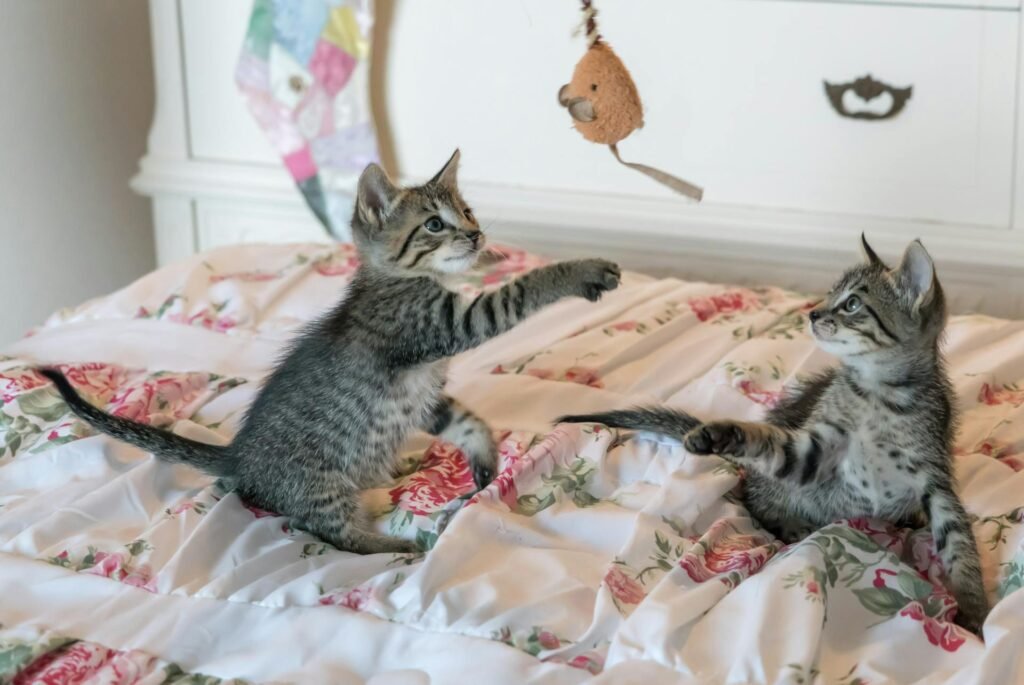
For nighttime attacks, invest in automated toys or timed feeders. Motion-activated toys can engage your cat during night hours without requiring your participation. A timed feeder delivering a small meal during typical attack hours satisfies both hunger and hunting needs.
Physical barriers sometimes help during transition periods. Closing your bedroom door or using motion-deterrent devices near your bed can break the nighttime attack habit. These aren’t permanent solutions but create space for better habits to form.
Consistency across household members is crucial. If one person ignores foot attacks while another plays along, you’ll confuse your cat and slow progress. Everyone must respond identically to create clear behavioral expectations.
When to Seek Professional Help
Most foot attacks resolve with consistent behavior modification, but some situations require expert intervention. Recognizing when you’re out of your depth prevents frustration and ensures your cat gets appropriate help.
Sudden behavioral changes warrant veterinary evaluation. If your previously gentle cat suddenly starts attacking feet aggressively, medical issues might be responsible. Pain, dental problems, thyroid imbalances, or neurological conditions can all manifest as behavior changes. Rule out physical causes before assuming it’s purely behavioral.
Attacks that cause injury need immediate attention. Breaking skin, causing bruising, or attacks so intense they frighten you signal serious aggression that exceeds normal play or hunting behavior. These situations benefit from certified animal behaviorist involvement.
When multiple intervention strategies fail, professional help provides fresh perspective. A certified cat behavior consultant or veterinary behaviorist can observe your cat, identify subtle triggers you’ve missed, and create customized behavior modification plans.
Signs of severe anxiety or stress like excessive hiding, appetite changes, inappropriate elimination, or constant vigilance suggest your cat needs more than basic environmental modifications. These cats might benefit from anti-anxiety supplements, pheromone diffusers, or even prescribed medications alongside behavioral work.
If foot attacks escalate despite intervention or expand to other aggressive behaviors like scratching furniture despite proper outlets or attacking other household members, professional evaluation becomes essential. These patterns suggest complex issues requiring expert diagnosis.
Living with children compounds foot attack concerns. Young children’s unpredictable movements and high-pitched voices can trigger intense prey drives. If your cat targets children’s feet aggressively, professional help ensures everyone’s safety while addressing the behavior.
Don’t wait until situations become unbearable. Early intervention with behavioral specialists prevents minor issues from becoming ingrained habits. Many veterinary practices now offer behavioral consultations, making professional help more accessible than ever.
FAQ
When you walk, your moving feet trigger your cat’s natural hunting instincts. The movement, sound, and rhythm of walking mimic prey behavior, activating their predatory drive. This is especially common in young, energetic cats who haven’t received adequate playtime or stimulation.
Consistent redirection works best for stopping ankle biting. When your cat targets your ankles, immediately stop moving and redirect their attention to an appropriate toy. Avoid any reaction that could reinforce the behavior, including yelling or rapid movement. Establish regular play sessions to address underlying energy or hunting needs.
Your cat might target your feet specifically because you move more frequently, spend more time interacting with them, or inadvertently reinforced the behavior in the past. Cats often pick favorite targets based on who provides the strongest reactions or most interesting movement patterns.
Yes, kitten attacks are typically less controlled and more frequent because kittens are still learning appropriate play boundaries and have excessive energy. They haven’t developed bite inhibition yet, so their attacks might feel sharper despite their smaller size. Most kittens naturally moderate this behavior as they mature, especially with consistent training.
Sometimes, yes. While many foot attacks stem from play or hunting instincts, persistent or increasingly aggressive attacks can signal stress, anxiety, or unmet needs. If attacks coincide with environmental changes, seem unusually intense, or include other behavioral changes like hiding, your cat might be communicating distress.
Blankets amplify the prey-like qualities of your feet. The hidden movement creates mystery and triggers stalking behavior. Additionally, the rustling sounds and unpredictable motion under covers mimic small animals moving through grass or leaves, which is irresistible to cats programmed for hunting.
No, punishment typically backfires with cats. It can increase anxiety, damage your relationship, and doesn’t teach appropriate alternative behaviors. Instead, focus on positive reinforcement of good behavior, environmental enrichment, and consistent redirection. Ignoring unwanted behavior while rewarding appropriate play proves far more effective.
Interactive toys that mimic prey behavior are most effective. Feather wands, motorized mice, toys that trigger natural hunting sequences, and puzzle feeders all provide appropriate outlets for predatory energy. Variety matters, rotate toys regularly to maintain interest and prevent boredom.
Sudden behavioral changes in adult cats warrant attention. Possible causes include medical issues causing pain or discomfort, environmental stressors like household changes, increased boredom from routine disruption, or even cognitive changes in senior cats. A veterinary checkup helps rule out physical causes before addressing behavioral factors.
Conclusion: Making Peace With Your Pouncing Pal
Foot attacks are rarely about defiance. They are usually predatory rehearsal reinforced by human response. When the target moves away, the chase reflex activates. When the human reacts, the behavior strengthens.
The solution is mechanical, not emotional. Increase structured predatory play. Remove reinforcement for ankle attacks. Identify stress triggers if aggression escalates.
Most cases improve within two to four weeks when intervention is consistent. If attacks intensify, break skin, or appear linked to environmental stressors, consult a veterinarian or a board-certified veterinary behaviorist. Early correction prevents rehearsal from becoming habit.
Looking for more? Visit our Blog for more fun and insightful reads, or browse our full Cat Category for everything feline-related, from care to comfort.
Disclaimer: This article is for informational purposes only and does not substitute for professional veterinary advice. Always consult your veterinarian for diagnosis and treatment tailored to your cat’s individual needs. Please verify current product information directly on the retailer’s site before purchasing.
References
- Cornell Feline Health Center (2016). Feline Behavior Problems: Aggression. https://www.vet.cornell.edu/departments-centers-and-institutes/cornell-feline-health-center/health-information/feline-health-topics/feline-behavior-problems-aggression
- Feline Veterinary Medical Association. 2004 AAFP Feline Behavior Guidelines. https://catvets.com/resource/feline-behavior-guidelines/
- Palacio J, León-Artozqui M, Pastor-Villalba E, Carrera-Martín F, García-Belenguer S. Incidence of and risk factors for cat bites: a first step in prevention and treatment of feline aggression. J Feline Med Surg. 2007 Jun;9(3):188-95. https://doi.org/10.1016/j.jfms.2006.11.001
- Parker M, Serra J, Deputte BL, Ract-Madoux B, Faustin M, Challet E. Comparison of Locomotor and Feeding Rhythms between Indoor and Outdoor Cats Living in Captivity. Animals (Basel). 2022 Sep 15;12(18):2440. https://doi.org/10.3390/ani12182440
Check out our most recent articles!
- Can Cats Eat Green Peas? Safe, Healthy, or Just a Skip?
 A pea rolling across the kitchen floor is basically a free cat toy and a snack in one. But before it becomes a habit, here’s what you should know about what those little green things actually do for (or to) your cat.
 - Are Spray Bottles Bad for Cats? Reasons & AlternativesA spray bottle might stop your cat’s counter-surfing today, but it’s teaching them something much more troubling: that you’re unpredictable and potentially dangerous. Discover what really happens when you spray your cat and the alternatives that actually create lasting change.
- How Are Cats so Flexible? Your Cat’s Anatomy ExplainedBetween their 53 vertebrae, muscular shoulders connected only by soft tissue, and elastic joints, cats possess anatomical superpowers that blur the line between solid and liquid, letting them navigate spaces you’d swear were too small.
- Do Cats Copy Their Owners Voice, Personality and Actions?The independent cat stereotype is crumbling. Science reveals that cats engage in intentional mimicry, learning from their owners and adapting their personalities to match the humans they live with.
- Are Newborn Cats Born With Teeth? Everything About Kitten Dental GrowthEver wondered what’s happening inside a newborn kitten’s mouth? The answer might surprise you. Discover the complete timeline of feline dental development and learn what to expect as your kitten grows from gummy grins to a full set of adult teeth.
- Keeping Your Indoor Cat Warm in Winter: The Complete GuideEven indoor cats feel the winter chill more than you might think. Cold floors, dry air, and sneaky drafts can leave your feline less comfortable than they should be. Discover the simple adjustments that make all the difference in helping your cat stay genuinely cozy through the coldest months.
- Should You Look Your Cat in the Eyes? Is Staring Really Aggressive?Your cat’s eyes tell a story you’ve been misreading. While prolonged staring means one thing in human communication, cats interpret it completely differently. Discover why that loving gaze might actually be stressing out your feline friend and what to do instead.
- Choosing the Best Blanket for Your Cat: A Blanket Buyer’s GuideFinding the best blanket for your cat means considering more than just softness. Temperature regulation, durability, washability, and even behavioral quirks all play a role in choosing the perfect cozy spot for your feline friend. Discover which blanket types match your cat’s lifestyle.
- How to Get Your Kitten to Eat More: Simple Solutions for Picky EatersWatching your tiny kitten turn up their nose at perfectly good food can be heart-wrenching. This comprehensive guide reveals why kittens become picky eaters and shares practical solutions that transform mealtime battles into successful feeding routines.
- Can Cats Eat Fried Rice? Why This Takeout Favorite Is a No-GoThat irresistible takeout aroma might have your cat begging, but fried rice contains ingredients that can harm felines. Discover why even small amounts aren’t worth the risk and what treats truly suit your cat’s carnivorous nature.
- Why Do Cats Vibrate Their Tail? From Happy to HuntingYour cat’s vibrating tail is like a mood ring with fur. Whether they’re thrilled to see you or preparing to mark territory, decoding these rapid shakes reveals what’s really going on in their mind.
- Is Asparagus Bad for Cats? Risks, Benefits, and AlternativesYour cat’s eyeing your asparagus dinner, but should they have any? While this green veggie isn’t toxic to cats, there are surprising reasons why it’s not the treat you might think it is.
- How Cats Express Sadness: Reading Your Feline’s Emotional LanguageCats don’t cry emotional tears or mope around like dogs, but they absolutely experience sadness. The trick is learning to read their subtle language, the withdrawn behavior, the changed routines, the slight shifts in body posture that reveal their inner emotional world.
- Can Cats and Rabbits Live Together? Multi-Species Harmony GuideCats are predators, rabbits are prey, but that doesn’t mean they can’t coexist peacefully. Success comes down to understanding each animal’s instincts, respecting their boundaries, and taking introductions at the right pace.
- Are Space Heaters Safe for Cats? Keeping Your Cat CozySpace heaters can provide cozy warmth for your cat, but only when chosen and positioned with feline safety in mind. Discover which features protect against burns, fires, and electrical hazards.















Written by Vesper Mayerson (Editorial Assistant)
Last reviewed and edited on 17.02.2026