
Asparagus is not toxic to cats, but that does not automatically make it appropriate. When evaluating any non-meat food for an obligate carnivore, the real questions are metabolic compatibility, urinary impact, and gastrointestinal tolerance. Safety and suitability are not the same.
In clinical nutrition, we assess new foods by asking three things:
- Does it contain compounds that are directly toxic?
- Does it alter urinary pH or mineral balance?
- Does it displace essential animal-based nutrients?
Asparagus passes the first test. It is non-toxic. The second and third require more nuance. Let’s explore everything you need to know about cats and asparagus, from safety concerns to nutritional considerations, so you can make informed decisions about what goes into your cat’s food bowl.
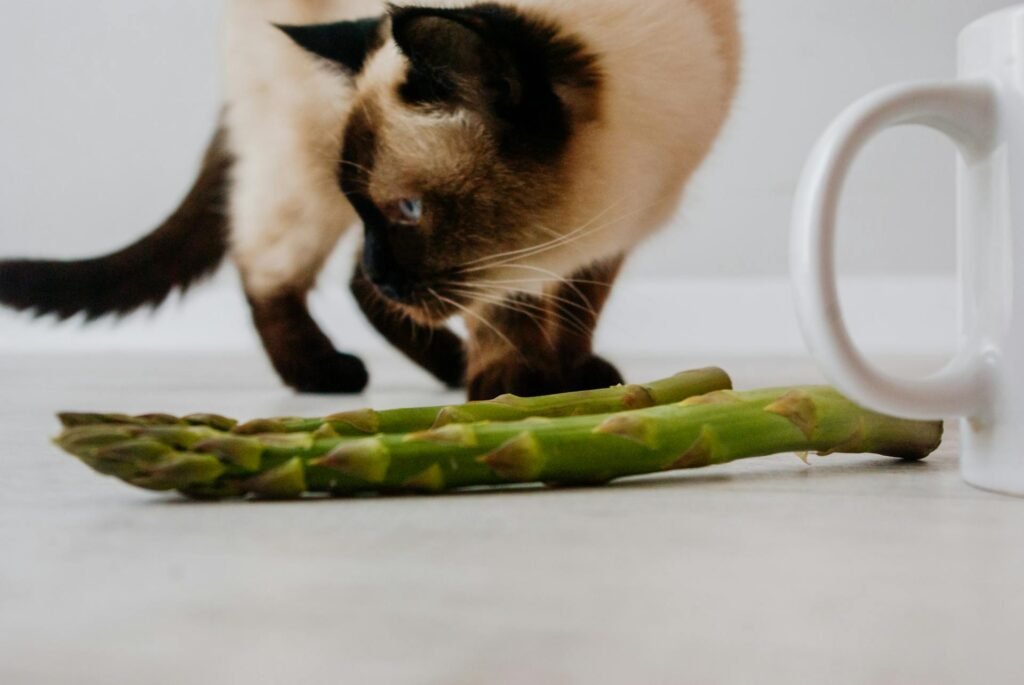
Is Asparagus Toxic for Cats?
The short answer? No, asparagus officinalis (the vegetable we eat) is not toxic to cats. It doesn’t appear on any major pet poison lists, and your cat won’t experience poisoning if they nibble on a cooked or raw spear. This makes it fundamentally different from genuinely dangerous foods like onions, garlic, or grapes.
But there’s an important caveat worth mentioning: asparagus fern, a common houseplant, is an entirely different story. Despite sharing a name, asparagus fern (Asparagus densiflorus) contains compounds called sapogenins that can cause stomach upset, vomiting, and skin irritation in cats. If you have asparagus ferns in your home or garden, keep them well out of paw’s reach. The actual vegetable asparagus that we cook and eat, though? That’s the safe one.
When we talk about whether cats can eat asparagus safely, we’re focusing on the edible garden variety. In moderation, this green vegetable poses no toxic threat to your feline friend.
The Truth About Cats and Vegetables
Before we dive deeper into asparagus specifically, it’s worth understanding why cats interact with vegetables the way they do. Cats are obligate carnivores, meaning they require preformed nutrients found only in animal tissue. They cannot synthesize taurine adequately, cannot convert beta-carotene into active vitamin A, and have limited ability to metabolize plant-based carbohydrates. These metabolic constraints are well documented in feline nutrition research.
Think about it: wild cats don’t wander around munching on salad bars. Their natural prey consists of small rodents, birds, and other animals that provide all the nutrients they need in one convenient (if slightly grim) package. Domestic cats retained this biology, which is why their dietary preferences lean heavily toward meat-based options.
So why do some cats show interest in vegetables like asparagus? Several theories exist. Some cats simply enjoy the texture, that satisfying crunch might feel good on their teeth and gums. Others might be following their instincts to occasionally consume plant matter as a digestive aid, similar to how cats eat grass. And sometimes, they’re just nosy creatures who want to investigate whatever their humans are eating. If you’ve noticed your cat exhibiting unusual eating behaviors, it might be worth checking if behavioral issues are at play.

While cats can technically digest small amounts of vegetables without harm, they derive minimal nutritional benefit from them. Their bodies simply aren’t built for it.
Can Cats Eat Asparagus Raw or Cooked?
Now that we’ve established asparagus is safe for cats, let’s talk preparation. Both raw and cooked asparagus are non-toxic, but there are practical differences worth considering.
Raw Asparagus: Some cats will happily munch on a raw asparagus spear, particularly the tender tip. The crunchy texture can be appealing, and raw vegetables retain more of their natural vitamins. However, older, tougher stalks can be fibrous and difficult to chew, potentially creating a choking hazard. If you’re offering raw asparagus, always chop it into small, manageable pieces, think bite-sized at most. This reduces the risk of your cat trying to swallow large chunks whole, which cats are notorious for doing since they’re not particularly thorough chewers.
Cooked Asparagus: Steaming or boiling asparagus makes it softer and easier for cats to eat safely. The cooking process breaks down the tough fibers, reducing choking risk and making it gentler on your cat’s digestive system. However, here’s where things get critical: never give your cat seasoned asparagus. No salt, no butter, no garlic, no onions. These additions, particularly garlic and onions, are toxic to cats and will do far more harm than the asparagus could ever do good. Plain, steamed asparagus is the only way to go if you’re sharing with your feline.
A food-safe mat can make mealtime cleaner when introducing new treats like vegetables into your cat’s diet.
Nutritional Value: Is Asparagus Good for Cats?
Asparagus contains fiber, folate, vitamin K, potassium, and antioxidants. For humans, this profile is beneficial. For cats, most of these nutrients are either irrelevant or poorly utilized.
The vitamin A in asparagus exists as beta-carotene. Cats cannot convert beta-carotene into retinol, the biologically active form of vitamin A. They must obtain preformed vitamin A from animal liver and tissues. This is a defining characteristic of obligate carnivores.
While asparagus contains fiber, excessive fiber in feline diets can dilute caloric density and alter stool consistency. In my experience evaluating commercial feline diets, fiber inclusion above approximately 5 to 7 percent on a dry matter basis often correlates with softer stools in sensitive cats.
That said, asparagus does offer a bit of dietary fiber, which could theoretically help with digestion or hairball management in very small amounts. The low calorie content means it won’t pack on pounds if your cat is watching their weight. But realistically, your cat would get far more nutritional benefit from a small piece of cooked chicken than from any amount of asparagus.

If you’re concerned about your cat’s nutrition, the best approach is to focus on high-quality, meat-based cat food that’s formulated to meet all their dietary needs, and consult your vet before adding anything unusual to their diet.
Potential Risks: When Asparagus Becomes a Problem
While asparagus isn’t toxic, it’s not entirely risk-free either. There are several situations where offering asparagus to your cat could cause problems.
Urinary Tract Concerns: Feline lower urinary tract disease is one of the most common medical issues in domestic cats. Urinary pH plays a measurable role in crystal formation. Struvite crystals form more readily in alkaline urine, while calcium oxalate crystals form in more acidic environments.
Asparagus has an alkalinizing effect on urine in many species. In cats predisposed to struvite crystalluria or idiopathic cystitis, repeated dietary alkalinization can increase risk.
In cats with a history of urinary obstruction, I advise avoiding unnecessary plant additions altogether. There is no upside that justifies even a small theoretical risk.
Digestive Upset: Too much fiber can overwhelm a cat’s short digestive tract, leading to gas, diarrhea, or stomach discomfort. Remember, cats aren’t equipped to handle large amounts of plant material. A few small pieces might be fine, but overdo it and you’ll likely end up dealing with a very uncomfortable (and possibly messy) situation.
Allergies: Though rare, cats can develop allergies or sensitivities to any food, including asparagus. Watch for signs like excessive scratching, skin irritation, vomiting, or diarrhea after introducing asparagus. If any of these occur, stop offering it immediately and consult your veterinarian.
Related article: Can Cats Be Allergic to Wool?
Choking Hazard: As mentioned earlier, cats tend to gulp rather than chew thoroughly. Long, stringy pieces of asparagus can get lodged in the throat or create blockages. Always cut asparagus into very small pieces if you’re offering it to your cat.
How Much Asparagus Can Cats Eat?
If offered at all, asparagus should remain an infrequent exposure, not a dietary component. A practical upper limit is approximately 5-10 percent or less of total daily caloric intake, which aligns with treat guidelines recommended by veterinary nutritionists. For a typical 10 pound cat consuming roughly 200 kcal per day, that equates to no more than 10 kcal from non-balanced extras. For perspective, one cooked asparagus spear contains roughly three calories. The vast majority should come from nutritionally complete cat food.

Start with an even smaller amount the first time, maybe just a few tiny pieces. Observe how your cat reacts over the next 24 hours. Do they seem interested? Any digestive upset? No adverse reactions? If everything looks good and your cat actually enjoys it, you can occasionally offer it again in similarly small amounts.
Most cats will probably sniff it, give you a disdainful look, and walk away. Cats are notoriously picky, and many simply aren’t interested in vegetables. Don’t take it personally if your asparagus offering gets rejected.
Asparagus vs. Other Vegetables: A Quick Comparison
Wondering how asparagus stacks up against other vegetables in terms of cat safety? Here’s a handy breakdown:
| Vegetable | Safe for Cats? | Notes |
|---|---|---|
| Asparagus | Yes, in moderation | Can affect urinary pH; avoid if cat has UTI history |
| Carrots | Yes, cooked | Hard when raw; better cooked and chopped |
| Green Beans | Yes | Good low-calorie option, steamed |
| Broccoli | Yes, small amounts | Can cause gas in larger quantities |
| Peas | Yes | Decent fiber source, but still unnecessary |
| Spinach | Caution | High in calcium oxalates; avoid for cats with kidney issues |
| Onions | Never | Highly toxic to cats |
| Garlic | Never | Toxic, even in small amounts |
As you can see, several vegetables are technically safe for cats, but none are necessary. The pattern holds: plain, unseasoned, and in tiny amounts. And always prioritize meat-based nutrition over plant-based additions.
What to Do If Your Cat Eats Too Much Asparagus
Cats have a talent for getting into things they shouldn’t when we’re not looking. Maybe they knocked over your dinner plate, or perhaps they’re more ambitious about vegetable theft than you realized. If your cat has eaten a significant amount of asparagus, here’s what to watch for and do.
- Estimate quantity consumed. One bite differs from multiple full spears.
- Confirm preparation. Plain versus seasoned matters more than the vegetable itself.
- Monitor for 24 hours for gastrointestinal signs or urinary straining.
Escalate to veterinary care immediately if you observe repeated vomiting, persistent diarrhea, dysuria, vocalization in the litter box, or lethargy.
If garlic or onion seasoning was involved, contact your veterinarian regardless of symptom presence. Allium toxicity can cause oxidative damage to red blood cells in cats and symptoms may be delayed.
Mild digestive upset, maybe one episode of vomiting or slightly soft stool, usually resolves on its own. Make sure your cat has access to plenty of fresh water. If symptoms persist beyond 24 hours, worsen, or if your cat seems genuinely distressed, contact your veterinarian.
Alternatives: Better Treat Options for Your Cat
There are far better treat options for your cat than asparagus. If you’re looking for ways to add variety to your cat’s diet or offer special rewards, consider these alternatives:
Meat-Based Treats: Small pieces of cooked, unseasoned chicken, turkey, or fish are perfect. These align with your cat’s carnivorous nature and actually provide nutritional value. Look for high-quality treat options designed specifically for feline nutrition.

Commercial Cat Treats: Modern cat treats come in amazing varieties, from crunchy dental treats that promote oral health to soft, meaty chews. Some even claim to help with hairball control or joint health. When shopping, look for treats with meat as the first ingredient and minimal fillers.
Catnip or Cat Grass: If your cat seems drawn to plants, consider offering cat grass or catnip instead. Cat grass is safe, easy to grow, and provides that plant-chewing experience some cats crave without any nutritional complications.
Interactive Feeding Toys: Sometimes what cats really want isn’t a specific food, but the engagement that comes with eating. Puzzle feeders and treat-dispensing toys can make regular cat food more exciting and keep your cat mentally stimulated while you’re away from home.
The bottom line? You’re not depriving your cat by skipping the asparagus. They’ll be happier and healthier with treats that match their biological needs.
FAQ
It’s best to avoid giving asparagus to kittens. Their digestive systems are even more sensitive than adult cats, and they have specific nutritional requirements for growth that asparagus can’t meet. Stick to kitten-formulated food and skip the vegetables until they’re fully grown, and even then, it’s unnecessary.
Cats are curious creatures, and sometimes they’re attracted to the texture, smell, or simply the fact that you’re eating it. Some cats also have quirky food preferences that don’t quite make sense. If your cat shows interest, a tiny taste won’t hurt, but don’t assume they actually need or want it long-term.
It might! Asparagus contains asparagusic acid, which can create that distinctive odor in urine, yes, the same one humans experience. So if you notice a stronger smell in the litter box after your cat eats asparagus, that’s why. It’s harmless, just a bit aromatic. Regularly cleaning your cat’s litter area can help manage odors.
While asparagus contains fiber that could theoretically help with digestion, it’s not the best solution for feline constipation. The risks (particularly urinary pH changes) outweigh the minimal benefits. If your cat is constipated, talk to your vet about better, safer options like canned pumpkin in tiny amounts or specially formulated fiber supplements for cats.
Asparagus fern is toxic and different from edible asparagus. If your cat has eaten asparagus fern, contact your veterinarian immediately. Watch for symptoms like vomiting, diarrhea, excessive drooling, or skin irritation, and seek professional care. Don’t wait for symptoms to appear, early intervention is always better.
Start with a tiny amount, think one or two small pieces of plain, cooked asparagus. Offer it separately from their regular meal so you can monitor their reaction. Wait 24 hours to see if any digestive upset occurs. If all goes well and your cat actually enjoys it, you can offer it occasionally as a rare treat. Never make it a regular part of their diet.
Conclusion: Should You Share Asparagus with Your Cat?
Asparagus is non-toxic to cats, but nutritional irrelevance and potential urinary impact make it unnecessary. Obligate carnivores thrive on animal-based protein, controlled mineral balance, and moisture-rich diets. Vegetables offer novelty, not advantage.
For healthy cats with no urinary history, a rare, plain, finely chopped piece is unlikely to cause harm. For cats with prior urinary disease, gastrointestinal sensitivity, or tightly managed therapeutic diets, there is no clinical reason to introduce asparagus at all.
When evaluating human foods for cats, the standard should not be “Is it poisonous?” but “Does it support feline physiology?” In the case of asparagus, the answer is simple. It is safe. It is optional. It is not beneficial.
Looking for more? Explore our Cat Food section for more posts like this, visit the Blog for fun and insightful reads, or browse our full Cat Category for everything feline-related, from care to comfort.
Disclaimer: This article is for informational purposes only and does not substitute for professional veterinary advice. Always consult your veterinarian for diagnosis and treatment tailored to your cat’s individual needs. Please verify current product information directly on the retailer’s site before purchasing.
References
- American Animal Hospital Association (2021). Lower Urinary Tract Disease. https://www.aaha.org/resources/2021-aaha-aafp-feline-life-stage-guidelines/lower-urinary-tract-disease/
- MacDonald ML, Rogers QR, Morris JG. Nutrition of the domestic cat, a mammalian carnivore. Annu Rev Nutr. 1984;4:521-62. https://doi.org/10.1146/annurev.nu.04.070184.002513
- National Research Council. 2006. Nutrient Requirements of Dogs and Cats. Washington, DC: The National Academies Press. https://doi.org/10.17226/10668
- RSPCA Australia (2024). Do cats have special nutritional requirements? https://kb.rspca.org.au/categories/companion-animals/cats/caring-for-my-cat/do-cats-have-special-nutritional-requirements
- Taylor S, Boysen S, Buffington T, et al. 2025 iCatCare consensus guidelines on the diagnosis and management of lower urinary tract diseases in cats. Journal of Feline Medicine and Surgery. 2025;27(2). https://doi.org/10.1177/1098612X241309176
- Toxic and Non-Toxic Plant List — Cats. https://www.aspca.org/pet-care/animal-poison-control/cats-plant-list
- VCA Animal Hospitals (2024). Cat Treats. https://vcahospitals.com/know-your-pet/cat-treats
Check out our most recent articles!
- How Are Cats so Flexible? Your Cat’s Anatomy Explained
 Between their 53 vertebrae, muscular shoulders connected only by soft tissue, and elastic joints, cats possess anatomical superpowers that blur the line between solid and liquid, letting them navigate spaces you’d swear were too small.
 - Do Cats Copy Their Owners Voice, Personality and Actions?The independent cat stereotype is crumbling. Science reveals that cats engage in intentional mimicry, learning from their owners and adapting their personalities to match the humans they live with.
- Are Newborn Cats Born With Teeth? Everything About Kitten Dental GrowthEver wondered what’s happening inside a newborn kitten’s mouth? The answer might surprise you. Discover the complete timeline of feline dental development and learn what to expect as your kitten grows from gummy grins to a full set of adult teeth.
- Keeping Your Indoor Cat Warm in Winter: The Complete GuideEven indoor cats feel the winter chill more than you might think. Cold floors, dry air, and sneaky drafts can leave your feline less comfortable than they should be. Discover the simple adjustments that make all the difference in helping your cat stay genuinely cozy through the coldest months.
- Should You Look Your Cat in the Eyes? Is Staring Really Aggressive?Your cat’s eyes tell a story you’ve been misreading. While prolonged staring means one thing in human communication, cats interpret it completely differently. Discover why that loving gaze might actually be stressing out your feline friend and what to do instead.
- Choosing the Best Blanket for Your Cat: A Blanket Buyer’s GuideFinding the best blanket for your cat means considering more than just softness. Temperature regulation, durability, washability, and even behavioral quirks all play a role in choosing the perfect cozy spot for your feline friend. Discover which blanket types match your cat’s lifestyle.
- How to Get Your Kitten to Eat More: Simple Solutions for Picky EatersWatching your tiny kitten turn up their nose at perfectly good food can be heart-wrenching. This comprehensive guide reveals why kittens become picky eaters and shares practical solutions that transform mealtime battles into successful feeding routines.
- Can Cats Eat Fried Rice? Why This Takeout Favorite Is a No-GoThat irresistible takeout aroma might have your cat begging, but fried rice contains ingredients that can harm felines. Discover why even small amounts aren’t worth the risk and what treats truly suit your cat’s carnivorous nature.
- Why Do Cats Vibrate Their Tail? From Happy to HuntingYour cat’s vibrating tail is like a mood ring with fur. Whether they’re thrilled to see you or preparing to mark territory, decoding these rapid shakes reveals what’s really going on in their mind.
- Is Asparagus Bad for Cats? Risks, Benefits, and AlternativesYour cat’s eyeing your asparagus dinner, but should they have any? While this green veggie isn’t toxic to cats, there are surprising reasons why it’s not the treat you might think it is.
- How Cats Express Sadness: Reading Your Feline’s Emotional LanguageCats don’t cry emotional tears or mope around like dogs, but they absolutely experience sadness. The trick is learning to read their subtle language, the withdrawn behavior, the changed routines, the slight shifts in body posture that reveal their inner emotional world.
- Can Cats and Rabbits Live Together? Multi-Species Harmony GuideCats are predators, rabbits are prey, but that doesn’t mean they can’t coexist peacefully. Success comes down to understanding each animal’s instincts, respecting their boundaries, and taking introductions at the right pace.
- Are Space Heaters Safe for Cats? Keeping Your Cat CozySpace heaters can provide cozy warmth for your cat, but only when chosen and positioned with feline safety in mind. Discover which features protect against burns, fires, and electrical hazards.
- Cat Bed Placement 101: Finding the Perfect Spot Your Cat Will Actually UseCats spend up to 16 hours sleeping daily, yet many reject their designated beds completely. The problem isn’t pickiness, it’s placement. Learn where cats naturally feel safe and comfortable, and how to position beds they’ll genuinely use.
- Can a Kitten Be Left Alone at Night? What You Need to KnowThose first nights with a new kitten rarely match the peaceful scene you imagined. Learn why most kittens can sleep alone once they reach a certain age, and discover the setup secrets that make nighttime independence work for everyone.















Written by Fenton Harberson (Scientific Writer and Digital Asset Planner)
Last reviewed and edited on 15.02.2026