
You’re sitting on the couch, minding your business, when your cat approaches with their tail standing straight up like a flagpole. But instead of staying still, the tail starts quivering, almost like it’s got its own little motor running.
Cats communicate through an incredibly nuanced system of physical cues, and their tails are basically their billboard for broadcasting emotions and intentions. A vibrating or quivering tail is a neuromuscular signal closely tied to arousal states in cats, ranging from affiliative greeting behavior to territorial marking and predatory focus. The same motion can mean very different things depending on tail carriage, body posture, and environmental context. To interpret it correctly, you have to look at the full motor pattern, not just the tail.
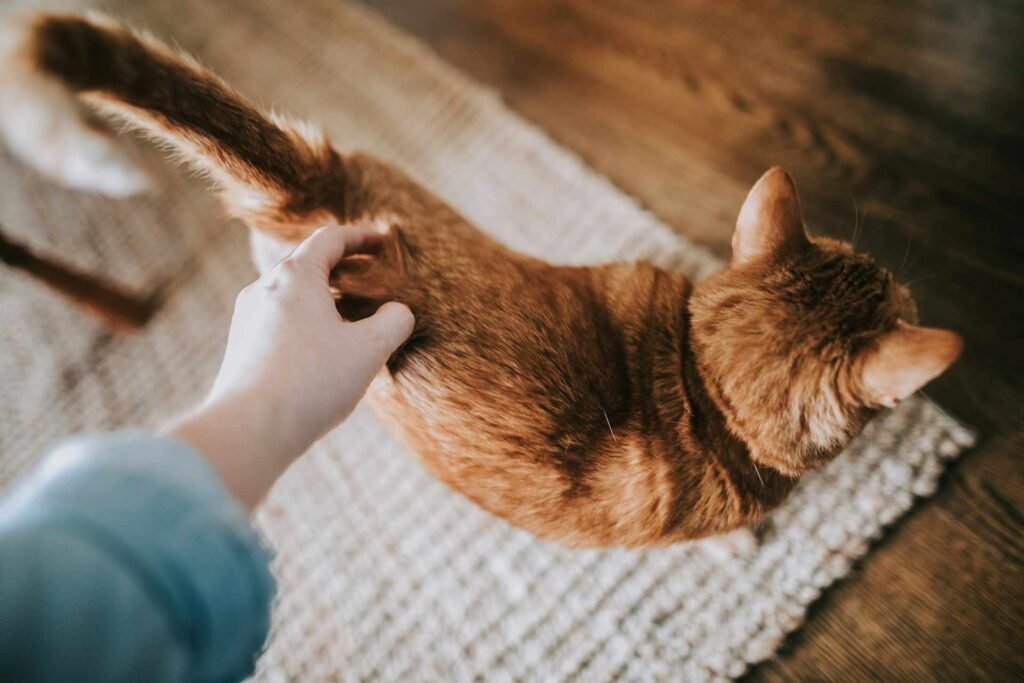
The Happy Vibration: Excitement and Affection
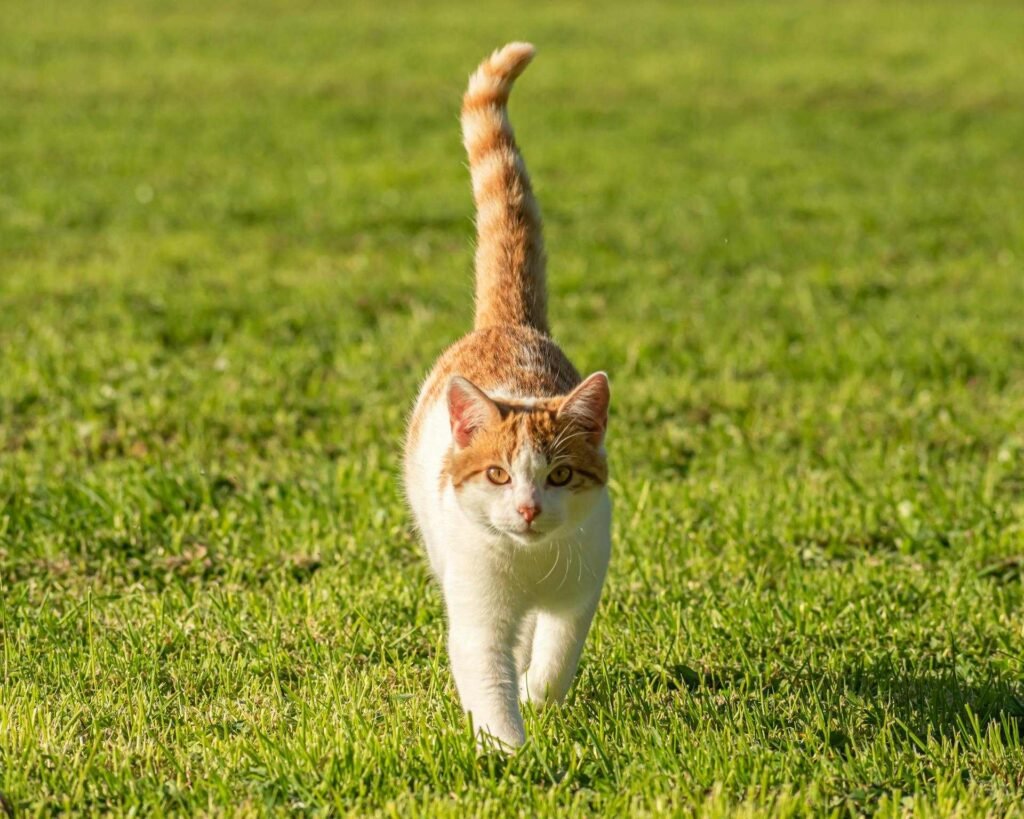
When your cat approaches you with their tail held high and vibrating, there’s a good chance they’re absolutely thrilled to see you. This is one of the most delightful reasons cats shake their tails rapidly. The motion typically starts at the base and ripples all the way to the tip, creating that characteristic quiver.
In behavioral consultations, I often see this tail quiver during reunion greetings after even brief separations. The pattern is consistent: vertical tail, slight dorsal curve at the tip, rapid low amplitude tremor beginning at the caudal vertebrae and traveling distally. This motor pattern is associated with affiliative intent. Studies on feline greeting behavior show that an upright tail is one of the clearest social signals between cats and toward humans.
This excitement vibration often happens during greeting rituals. Maybe you’ve just come home from work, or perhaps you’re about to serve dinner. They’re so excited that their body can’t quite contain the enthusiasm, and it manifests as this endearing little tail tremor. You might also notice them rubbing against your legs, purring loudly, or even doing that adorable headbutt thing that cats do when they’re feeling particularly affectionate.
Female cats, in particular, seem prone to this behavior during positive interactions. Many cat owners notice their female companions displaying this tail vibration more frequently than males, though individual personality plays a huge role. Some cats are just more expressive than others, regardless of gender.
The key identifier here is the overall body language. If your cat’s ears are forward, their body is relaxed, and they’re making those sweet chirping sounds, that vibrating tail is definitely a good sign. They’re comfortable, happy, and probably hoping for some attention or treats. Speaking of which, knowing how much affection to give can strengthen this positive association even further.
Territory Marking: The Spray Stance Signal
Now, here’s where things get a bit less adorable. When a cat vibrates their tail while standing with their rear end pointed at a vertical surface, they might be preparing to spray. This is a territory-marking behavior that both male and female cats can exhibit, though unneutered males tend to do it more frequently.
The tail position during this behavior is distinctively different from the happy greeting vibration. The tail will be held straight up, often with the tip pointing slightly downward, and the quivering is more intense and focused. The cat’s back legs might be doing a little stepping motion, and their whole rear end might elevate slightly. If you see this stance near furniture, walls, or doorframes, intervention might be necessary.
Urine spraying is primarily a chemical communication strategy, not a dominance display. The quivering tail during spraying accompanies contraction of the anal and urethral sphincters while the cat directs a small volume of urine onto a vertical surface. Intact males are most likely to spray, but approximately 10 percent of neutered males and 5 percent of spayed females may continue the behavior depending on environmental stressors.
Fortunately, spaying or neutering significantly reduces spraying behavior in most cats. Proper preventive care and regular vet checkups can help identify any underlying medical issues that might contribute to inappropriate elimination behaviors. Additionally, enzymatic cleaners designed specifically for pet urine can help eliminate the scent markers that encourage repeat spraying in the same spots.
When evaluating spraying in multi-cat households, we map resource distribution first. Each cat should have one litter box plus one extra, placed in separate locations, along with multiple feeding and resting zones. Resource clustering is a common trigger that owners overlook.
Hunting Mode: The Predatory Shake
Ever watched your cat stalking a toy mouse or staring intensely at a bird through the window? That tail vibration you might notice is part of their predatory behavior. When cats are in hunting mode, their bodies become incredibly focused, and every muscle primes for action. The tail often participates in this preparation with a low, rapid vibration.
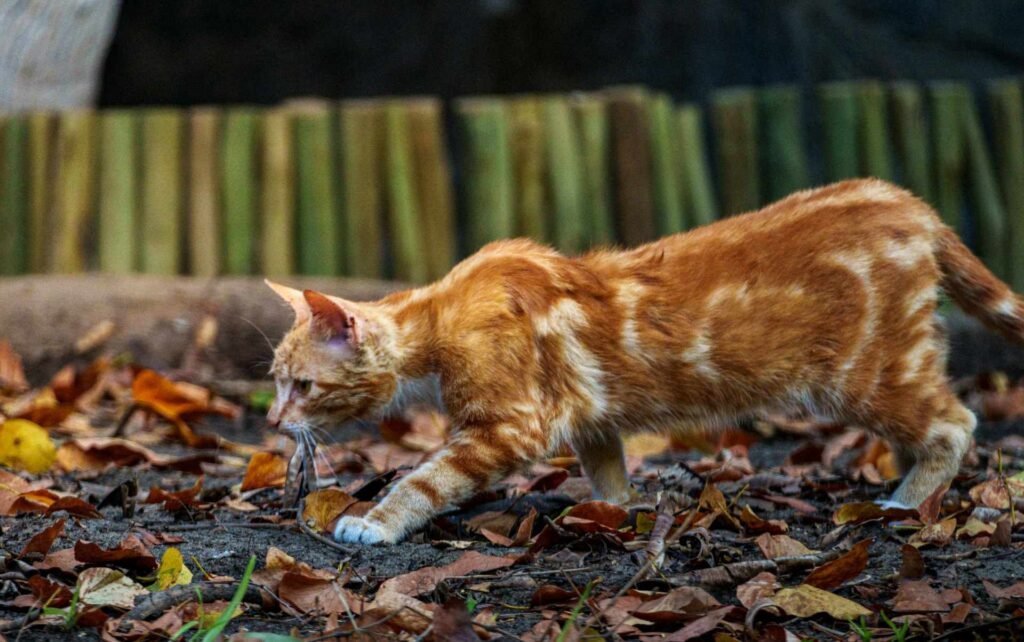
This tail tremor during stalking reflects heightened sympathetic nervous system activation. The cat is entering the final motor planning phase before pouncing. In slow motion video analysis, you can see micro-adjustments of the tail that help counterbalance shifts in body weight just before launch. The tremor is not emotional expression in this context. It is biomechanical preparation.
This hunting-related tail shake looks different from the happy greeting version. The tail is usually held lower, sometimes with just the tip twitching or quivering. The cat’s pupils will be dilated, their whiskers forward, and their entire body will have that coiled spring quality, ready to pounce at any moment. Keeping them mentally engaged with appropriate toys can channel this natural hunting instinct productively.
Interestingly, some cats display this behavior even when there’s no actual prey in sight. They might be watching shadows, tracking invisible dust particles, or reacting to sounds we can’t even hear. Their predatory instincts are so finely tuned that even the smallest movement can trigger this focused state. Interactive toys that mimic prey movements, like feather wands or electronic mice, can satisfy this instinctual need and provide excellent exercise.
The predatory tail vibration serves multiple purposes. It helps the cat maintain balance during those final moments before the pounce, communicates intense focus, and potentially confuses prey animals with the rapid motion.
Frustration and Conflict: The Agitated Quiver
Not all tail vibrations come from happy places. When cats feel frustrated, conflicted, or overstimulated, they might shake their tail in a more aggressive, thrashing manner. This isn’t the gentle quiver of excitement, this is a more dramatic, whip-like motion that signals irritation.
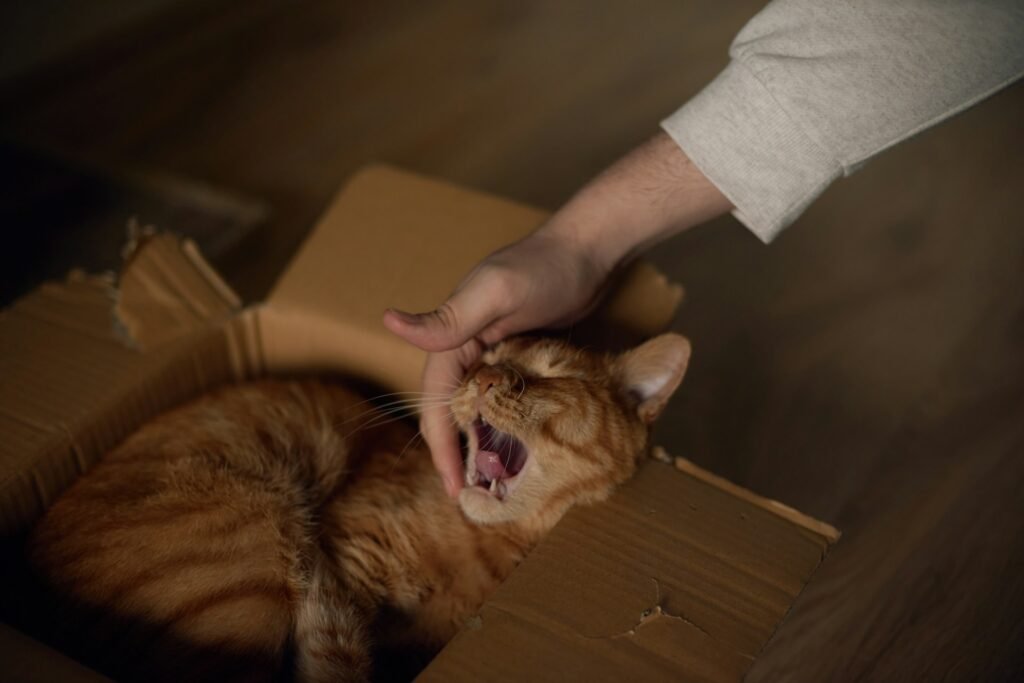
This type of tail shake often appears during petting sessions gone wrong. You know the scenario: you’re giving your cat some lovely scritches, and everything seems fine until suddenly it isn’t. The tail starts lashing back and forth, the purring stops, and those ears flatten against the head. This is your warning that playtime is about to turn into bite time if you don’t back off.
Related article: Where Do Cats Like to Be Petted Most?
What owners call petting aggression is more accurately described as overstimulation-induced defensive behavior. Cats have a tactile threshold. Once repetitive stroking exceeds that threshold, sensory input shifts from pleasant to aversive. The tail lashing you see is an early warning signal before escalation. In practice, limiting petting sessions to 5 to 10 seconds followed by a pause reduces overstimulation in sensitive cats. Watch for the first tail twitch rather than waiting for ear flattening or skin rippling.
Environmental stressors can also trigger this frustrated tail motion. Maybe there’s a neighborhood cat visible through the window, or perhaps multiple cats in the household are having territorial disputes. Creating proper space and resources for each cat can reduce conflict-related stress. When cats can’t access what they want or feel threatened in their territory, that tail becomes a visible barometer of their emotional state.
Medical Concerns: When to Worry
While tail vibrations are usually behavioral, occasionally they can indicate medical issues. If your cat’s tail is shaking uncontrollably and they seem unable to stop it, or if the movement is accompanied by other symptoms like lethargy, loss of appetite, or unusual hiding behavior, it’s time for a vet visit.
Neurological issues, injuries, or pain can sometimes manifest as involuntary tail movements. Older cats might develop arthritis in their tail vertebrae, causing discomfort that triggers shaking. Nerve damage from accidents or fights can also result in abnormal tail movements that look similar to the behavioral vibrations we’ve discussed.
Pay attention to any sudden changes in your cat’s tail behavior. If a cat who never vibrated their tail suddenly starts doing it constantly, or if a usually expressive cat stops all tail communication, these changes warrant investigation. Cats are masters at hiding pain and illness, so even subtle shifts in body language can be significant.
Feline hyperesthesia syndrome presents with episodic skin rippling over the lumbosacral region, sudden tail thrashing, pupil dilation, and sometimes vocalization or self-directed biting. Episodes may last seconds to minutes. The condition is thought to involve abnormal sensory processing. It requires veterinary evaluation because differential diagnoses include dermatologic pain, spinal disease, and seizure disorders.
Reading the Full Picture: Context Is Everything
Tails don’t communicate in isolation, they’re part of a whole-body language system that includes ear position, vocalization, pupil dilation, and overall posture.
| Tail Vibration Type | Tail Position | Other Body Signals | Likely Meaning |
|---|---|---|---|
| Rapid quiver, tip to base | Straight up, slightly curved | Ears forward, purring, rubbing | Excitement, affection, greeting |
| Intense vibration | Straight up, rear elevated | Backing up to surface, treading | Territory marking/spraying |
| Low, focused shake | Low or mid-height, body crouched | Dilated pupils, whiskers forward | Hunting/stalking mode |
| Thrashing whip motion | Low and lashing side to side | Flattened ears, tense body | Frustration, agitation |
| Uncontrolled shaking | Variable | Lethargy, hiding, other symptoms | Potential medical issue |
Context matters enormously. A tail vibration while greeting you at the door means something completely different from the same motion while your cat stares at their food bowl or confronts another pet. Environmental factors, recent events, and your cat’s general temperament all play into interpreting these signals correctly.
Tail vibration must be interpreted alongside three primary variables: tail height relative to the spine, muscle tension across the lumbar region, and concurrent facial signals such as ear rotation and pupil diameter. A vertical relaxed tail with soft eyes signals affiliation. A vertical rigid tail with pelvic elevation signals marking. A low tail with crouched posture signals predatory focus. These distinctions are consistent across individuals.
How to Respond to Different Tail Vibrations
Once you’ve identified what type of tail vibration your cat is displaying, your response should match their emotional state. For the happy, excited quiver when they greet you, feel free to reciprocate with affection, conversation, or playtime. This positive reinforcement strengthens your bond and lets them know their communication is understood.
If you notice the spray stance with tail vibration, gently redirect your cat away from the target surface. Don’t punish them, as this can increase stress and make the behavior worse. Instead, ensure they have clean litter boxes, consider pheromone diffusers to reduce anxiety, and evaluate any environmental stressors that might be triggering territorial behavior.
When your cat is in hunting mode with that focused tail shake, engage them with appropriate toys rather than trying to interrupt the behavior. This instinct is hardwired and healthy when directed at toys rather than your ankles. Rotating different toys can keep them engaged and prevent boredom-related behavior issues.
For the frustrated, agitated tail thrashing, the best response is to give space immediately. Stop whatever interaction was happening, and allow your cat to calm down on their own terms. Never force attention on a cat displaying these warning signs. They’re telling you very clearly that they need a break, and respecting that boundary prevents negative associations and potential scratches.
Common Myths About Cat Tail Vibrations
There are several misconceptions floating around about why cats vibrate their tails. One persistent myth suggests that only female cats vibrate their tails, particularly when in heat. While female cats do sometimes display this behavior during their heat cycle, male cats vibrate their tails just as frequently for various reasons. Gender isn’t the determining factor, individual personality and specific situations matter much more.
Another common misunderstanding is that tail vibrating always indicates happiness. As we’ve explored, the motion can signal everything from excitement to frustration to territorial marking. Without considering the full context, you might completely misread what your cat is trying to communicate.
Some people believe that cats consciously control every tail movement, but that’s not entirely accurate. While cats do use their tails intentionally for communication and balance, many tail reactions are semi-involuntary responses to emotional states. It’s similar to how humans might unconsciously tap their foot when nervous or smile when genuinely happy, the body responds naturally to internal feelings.
FAQ
If your cat’s tail shakes gently while you’re petting them and they seem relaxed and happy, it’s usually a sign of contentment and pleasure. However, if the shaking becomes more intense or turns into thrashing, they’re likely becoming overstimulated and need you to stop. Watch for other signals like ear position and whether they’re still purring to gauge their comfort level.
Not at all. Just like humans have different communication styles, cats vary widely in how expressively they use their tails. Some cats are very animated with dramatic tail movements, while others are more subtle. Breed, personality, and individual temperament all influence how a particular cat uses their tail to communicate.
This often happens when your cat spots something interesting outside, birds, squirrels, other cats, or moving objects. The tail vibration in this context usually indicates excitement mixed with hunting instincts. They’re essentially getting worked up over potential prey they can see but can’t reach. Some cats also make those distinctive chattering sounds during these moments, which is another part of their predatory response.
Yes, kittens can and do vibrate their tails, though the behavior becomes more pronounced as they mature. Young kittens are still learning their communication repertoire, so their tail signals might not be as refined or consistent as adult cats. As they grow and their personalities develop, you’ll notice their tail language becomes more distinctive and easier to interpret.
Absolutely. Cats experience different emotional states throughout the day just like we do. A cat might vibrate their tail excitedly in the morning when you wake up, show that hunting-mode quiver during afternoon playtime, and display the frustrated thrash in the evening if they’ve had enough interaction. Their sleeping patterns and daily rhythms definitely influence when and how they communicate through tail movements.
Sudden changes in behavior always deserve attention. If your cat starts vibrating their tail significantly more than usual, consider what else might have changed in their environment. New pets, moved furniture, different schedules, or health issues could all be factors. If the behavior seems excessive or is accompanied by other unusual symptoms, a veterinary checkup is a good idea to rule out medical causes.
Conclusion
Tail vibration is a high-arousal signal. The meaning depends entirely on posture and context. Upright and relaxed during greeting means social bonding. Upright and rigid with rear elevation means marking. Low and trembling during stalking means motor preparation. Violent lashing means stop interaction immediately. If the movement appears involuntary or is paired with behavioral changes, investigate medical causes. Once you learn to separate these patterns, tail quivering stops being mysterious and becomes a reliable diagnostic cue in everyday life with your cat.
Looking for more? Explore our Cat Health section for more posts like this, visit the Blog for fun and insightful reads, or browse our full Cat Category for everything feline-related, from care to comfort.
Disclaimer: This article is for informational purposes only and does not substitute for professional veterinary advice. Always consult your veterinarian for diagnosis and treatment tailored to your cat’s individual needs. Please verify current product information directly on the retailer’s site before purchasing.
References
- Cafazzo S, Natoli E. The social function of tail up in the domestic cat (Felis silvestris catus). Behav Processes. 2009 Jan;80(1):60-6. https://doi.org/10.1016/j.beproc.2008.09.008
- Horwitz DF. Common feline problem behaviors: Urine spraying. J Feline Med Surg. 2019 Mar;21(3):209-219. doi: 10.1177/1098612X19831203. Erratum in: J Feline Med Surg. 2019 Oct;21(10):NP5. https://doi.org/10.1177/1098612X19831203
- Hyperesthesia Syndrome (2021). https://www.vet.cornell.edu/departments-centers-and-institutes/cornell-feline-health-center/health-information/feline-health-topics/hyperesthesia-syndrome
- What is your cat’s tail telling you? (2023). https://www.bluecross.org.uk/advice/cat/behaviour-and-training/what-is-your-cats-tail-telling-you
Check out our most recent articles!
- How Are Cats so Flexible? Your Cat’s Anatomy Explained
 Between their 53 vertebrae, muscular shoulders connected only by soft tissue, and elastic joints, cats possess anatomical superpowers that blur the line between solid and liquid, letting them navigate spaces you’d swear were too small.
 - Do Cats Copy Their Owners Voice, Personality and Actions?The independent cat stereotype is crumbling. Science reveals that cats engage in intentional mimicry, learning from their owners and adapting their personalities to match the humans they live with.
- Are Newborn Cats Born With Teeth? Everything About Kitten Dental GrowthEver wondered what’s happening inside a newborn kitten’s mouth? The answer might surprise you. Discover the complete timeline of feline dental development and learn what to expect as your kitten grows from gummy grins to a full set of adult teeth.
- Keeping Your Indoor Cat Warm in Winter: The Complete GuideEven indoor cats feel the winter chill more than you might think. Cold floors, dry air, and sneaky drafts can leave your feline less comfortable than they should be. Discover the simple adjustments that make all the difference in helping your cat stay genuinely cozy through the coldest months.
- Should You Look Your Cat in the Eyes? Is Staring Really Aggressive?Your cat’s eyes tell a story you’ve been misreading. While prolonged staring means one thing in human communication, cats interpret it completely differently. Discover why that loving gaze might actually be stressing out your feline friend and what to do instead.
- Choosing the Best Blanket for Your Cat: A Blanket Buyer’s GuideFinding the best blanket for your cat means considering more than just softness. Temperature regulation, durability, washability, and even behavioral quirks all play a role in choosing the perfect cozy spot for your feline friend. Discover which blanket types match your cat’s lifestyle.
- How to Get Your Kitten to Eat More: Simple Solutions for Picky EatersWatching your tiny kitten turn up their nose at perfectly good food can be heart-wrenching. This comprehensive guide reveals why kittens become picky eaters and shares practical solutions that transform mealtime battles into successful feeding routines.
- Can Cats Eat Fried Rice? Why This Takeout Favorite Is a No-GoThat irresistible takeout aroma might have your cat begging, but fried rice contains ingredients that can harm felines. Discover why even small amounts aren’t worth the risk and what treats truly suit your cat’s carnivorous nature.
- Why Do Cats Vibrate Their Tail? From Happy to HuntingYour cat’s vibrating tail is like a mood ring with fur. Whether they’re thrilled to see you or preparing to mark territory, decoding these rapid shakes reveals what’s really going on in their mind.
- Is Asparagus Bad for Cats? Risks, Benefits, and AlternativesYour cat’s eyeing your asparagus dinner, but should they have any? While this green veggie isn’t toxic to cats, there are surprising reasons why it’s not the treat you might think it is.
- How Cats Express Sadness: Reading Your Feline’s Emotional LanguageCats don’t cry emotional tears or mope around like dogs, but they absolutely experience sadness. The trick is learning to read their subtle language, the withdrawn behavior, the changed routines, the slight shifts in body posture that reveal their inner emotional world.
- Can Cats and Rabbits Live Together? Multi-Species Harmony GuideCats are predators, rabbits are prey, but that doesn’t mean they can’t coexist peacefully. Success comes down to understanding each animal’s instincts, respecting their boundaries, and taking introductions at the right pace.
- Are Space Heaters Safe for Cats? Keeping Your Cat CozySpace heaters can provide cozy warmth for your cat, but only when chosen and positioned with feline safety in mind. Discover which features protect against burns, fires, and electrical hazards.
- Cat Bed Placement 101: Finding the Perfect Spot Your Cat Will Actually UseCats spend up to 16 hours sleeping daily, yet many reject their designated beds completely. The problem isn’t pickiness, it’s placement. Learn where cats naturally feel safe and comfortable, and how to position beds they’ll genuinely use.
- Can a Kitten Be Left Alone at Night? What You Need to KnowThose first nights with a new kitten rarely match the peaceful scene you imagined. Learn why most kittens can sleep alone once they reach a certain age, and discover the setup secrets that make nighttime independence work for everyone.















Written by Solara Bergmeier (Technical Writer and Content Manger)
Last reviewed and edited on 12.02.2026