
A spray bottle by the sink has become standard equipment in many cat households. The logic seems straightforward. Cat jumps on the counter, quick spray of water, cat jumps down. Problem handled. The issue is not whether water hurts your cat. It does not. The real question is what your cat learns from that moment and whether the lesson is the one you intended to teach.
Owners reach for the spray bottle because they want a fast solution. But fast interruption is not the same as effective training. If you want behavior to change and not just pause until you leave the room, you need to understand how cats form associations and what motivates them to repeat or avoid behaviors in the first place.
This article walks through what spray bottle use teaches, how cats process consequences, and what works better if your goal is long-term change without damaging trust.
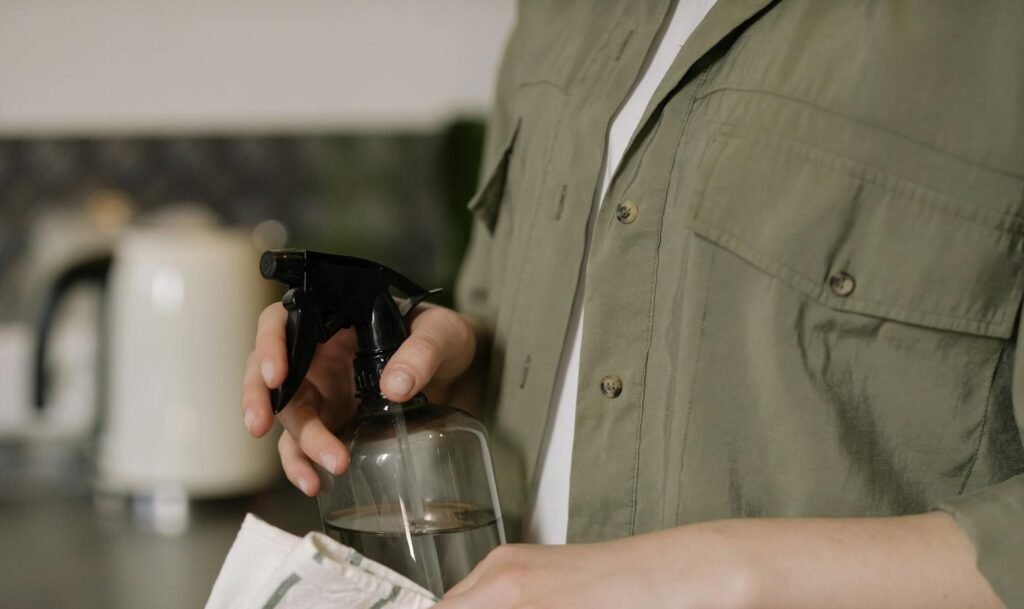
How the Spray Bottle Became Popular
The spray bottle method gained traction because it appears effective on the surface. Your cat jumps on the counter, you spray them, they jump down. Mission accomplished, right? This immediate response feels like training success, which explains why the technique spread so quickly among cat owners.
But there’s a massive gap between stopping a behavior in the moment and teaching your cat anything useful. The spray bottle became popular precisely because it produces an instant reaction, not because it creates lasting behavioral change. You’ve delayed the problem, but you haven’t solved it.
The method also appealed to owners because water seems completely harmless compared to other aversive training techniques. No one wants to yell at or physically punish their cat, so a gentle spray felt like a middle ground. Water evaporates, leaving no marks or lasting physical effects. Or so we thought.
What Happens When You Spray Your Cat
When you spray your cat with water, you’re teaching them that you are unpredictable and potentially dangerous, not the counter.
Cats don’t process cause and effect the way humans do. They live in the immediate moment, connecting consequences to actions within a tiny window of only a few seconds. When water hits them, they think “Something bad happened while I was near this person.” The counter isn’t the problem in their mind, you are.
This creates a negative association. Your cat starts linking your presence with unpleasant experiences. Over time, this erodes trust. You might notice your cat becoming more skittish around you, hiding when you enter rooms, or only misbehaving when you’re not home. That last one is particularly telling, if your cat waits until you leave to jump on counters, they haven’t learned not to counter-surf. They’ve only learned not to counter-surf when you’re watching.
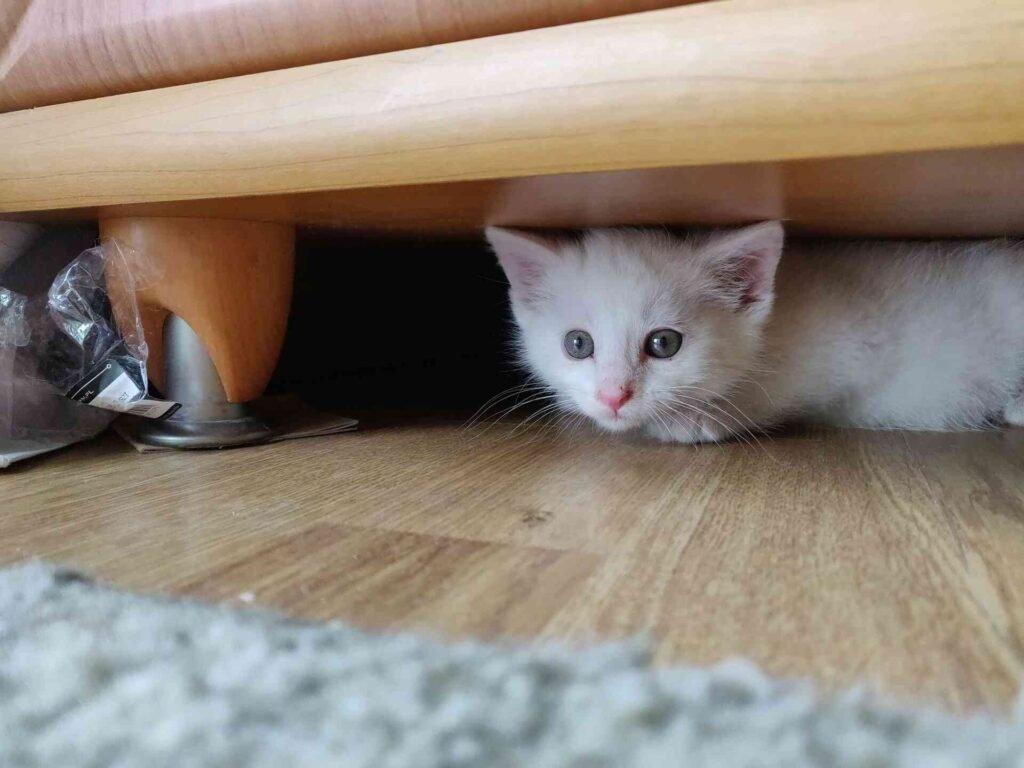
The stress response triggered by being sprayed also releases cortisol, a hormone that can affect everything from immune function to digestive health when chronically elevated. While one spray won’t traumatize your cat, making it a regular correction method creates an environment of constant low-level anxiety. Many behavioral issues in cats stem from stress rather than deliberate misbehavior.
Related article: My Cat Won’t Let Me Sleep at Night
How Cat Learning Works
Cats learn through classical conditioning and operant conditioning, just like dogs and humans. The difference lies in how they prioritize information and what motivates them.
Classical conditioning pairs a neutral stimulus with something meaningful. Pavlov’s dogs heard a bell before getting food, so they started salivating at the bell alone. For cats, this works differently. They’re hyper-aware of their environment and constantly scanning for threats. When you spray them, you’re conditioning them to see you as a potential threat rather than a safe companion.
Operant conditioning involves consequences shaping future behavior. Behaviors followed by rewards increase in frequency; behaviors followed by punishment decrease. Sounds simple, except cats respond dramatically better to positive reinforcement than negative punishment. The spray bottle falls squarely in the punishment category, and punishment only works if your cat connects the consequence to their action, understands the alternative behavior you want, and finds the punishment severe enough to deter them but not so severe it causes lasting stress.
That’s a lot of conditions that rarely align in real-world cat ownership.
Research on feline cognition shows cats form strong procedural memories, they remember how to do things based on whether those actions led to good or bad outcomes. But they struggle with understanding human intentions. Your cat doesn’t grasp that you’re trying to teach them. They just know that sometimes their favorite tall human becomes a source of sudden, unexplained wetness.
How Spray Bottles Damage the Human-Cat Bond
This might be the most important section of this article. The trust between you and your cat is the foundation of their security in your home.
Cats are simultaneously predators and prey animals. This dual nature means they’re constantly evaluating their environment for safety. When you become an unpredictable source of discomfort, even momentarily, your cat’s entire perception of home changes.
Owners who consistently use spray bottles often report that their cats become more distant. The cat who used to greet them at the door now watches from a distance. The cat who slept in their bed now chooses a separate room. These changes happen gradually, making them easy to miss or attribute to other causes. Behavioral consultants frequently work with cats who developed patterns after extended exposure to negative reinforcement.
The bond damage extends beyond direct interaction. Cats are brilliant at pattern recognition. If you spray them when they jump on the counter, they might start avoiding the kitchen entirely when you’re home. If you spray them when they scratch furniture, they might suppress their natural scratching instinct altogether, leading to other problems like excessive grooming or redirected aggression.
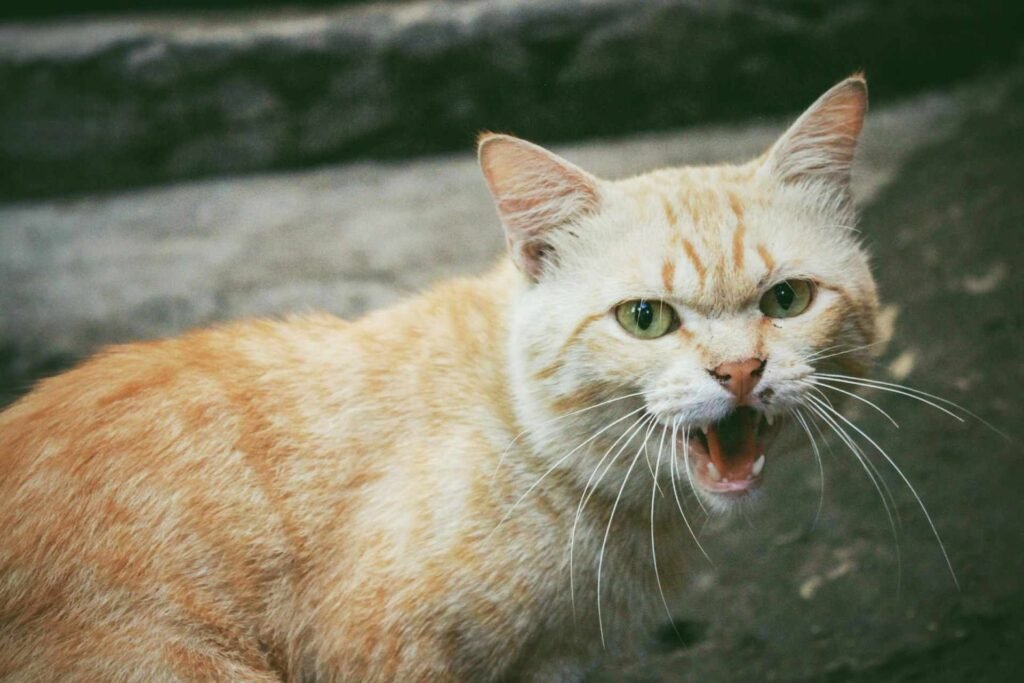
Perhaps most troubling, spray bottle training can make future veterinary care more difficult. Cats who associate human hands with unpredictable negative experiences become harder to examine, medicate, or handle during emergencies. The trust deficit you create doesn’t stay confined to the living room.
Better Alternatives to the Spray Bottle
Environmental Management
The single most effective training tool is making unwanted behaviors physically impossible or unrewarding. Cats counter-surf? Keep counters clear of food and interesting objects. Use motion-activated deterrents that respond to your cat’s presence without involving you. These devices blow a puff of air or emit a sound when triggered, teaching your cat that the counter itself is unpleasant, not that you’re unpleasant.
Double-sided tape strips work wonders for cats who scratch inappropriate surfaces. Cats hate the sensation on their paws, and unlike the spray bottle, the tape provides an immediate, consistent consequence that doesn’t require your presence. Also, the tape doesn’t know or care if you’re home, so your cat receives consistent feedback every single time.
Redirecting Natural Behaviors
Most “misbehaviors” are just normal cat behaviors happening in a bad place. Your cat scratches furniture because scratching is normal and necessary. Rather than punishing the scratching, you should provide better scratching options through tall, sturdy scratching posts placed near the furniture they’re targeting.
Strategic furniture placement makes redirection easier. Put a cat tree near the window your cat tries to climb curtains to reach. Place a scratching post at the corner of the couch they prefer. Give them what they want, just in a form you can live with.
Positive Reinforcement Training
Instead of punishing behaviors you don’t want, you reward behaviors you do want. Catch your cat sitting on their designated perch instead of the counter? Treat time. See them scratching their post instead of the carpet? More treats.
Related article: How Often Should You Give Your Cat Treats?
Cats are food-motivated, play-motivated, and attention-motivated. Figure out what your individual cat values most and use that as your training currency. But try to be quick, reward within seconds of the desired behavior. A clicker training device can bridge the gap between behavior and treat delivery, marking the exact moment your cat does something right.
Enrichment and Exercise
Sometimes the behavior you’re trying to stop is just boredom in disguise. Cats need mental stimulation and physical activity. Provide interactive puzzle feeders that make meals into hunting games. Rotate toys to keep them interesting. Schedule dedicated play sessions using wand toys that mimic prey movements.
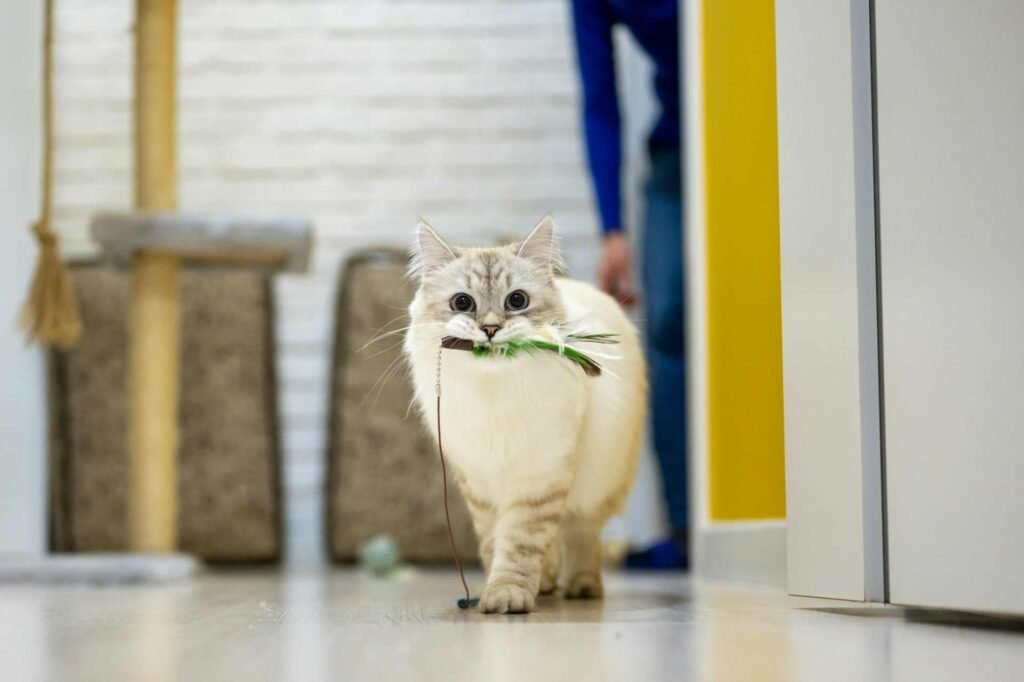
A tired cat is usually a well-behaved cat. If your cat is zooming around at 3 AM knocking things over, they probably need more activity during the day. Address the root cause rather than repeatedly punishing the symptoms.
When Training is Necessary
Sometimes cats do things we find annoying that are completely normal from their perspective. The question becomes: Is this behavior problematic, or just inconvenient?
Counter-surfing is unsanitary and potentially dangerous if your cat knocks something over or eats something toxic. Scratching furniture damages your belongings. Such behaviors warrant consistent management and training.
But what about the cat who meows for attention? The cat who knocks your pencil off the desk during video calls? The cat who keeps knocking over the water bowl? These might be annoying, but they are often communication attempts or play behaviors that don’t require correction.
Training should focus on behaviors that:
- Put your cat’s safety at risk
- Cause significant property damage
- Interfere with essential care like veterinary visits or medication
- Create genuine household hazards
Everything else? Consider whether you can adjust your expectations or environment instead of trying to change your cat’s nature.
Training Methods Side by Side
| Method | Immediate Effect | Long-term Success | Bond Impact | Requires Owner Presence |
|---|---|---|---|---|
| Spray Bottle | Stops behavior temporarily | Low – behavior returns when unmonitored | Negative – erodes trust | Yes |
| Motion-Activated Deterrents | Stops behavior immediately | High – consistent consequence | Neutral – cat doesn’t connect to owner | No |
| Positive Reinforcement | Gradual behavior shift | Very High – creates lasting change | Positive – strengthens bond | Initially, then no |
| Environmental Management | Prevents behavior entirely | Very High – removes opportunity | Neutral – no training needed | No |
| Redirecting | Moderate – requires alternatives | High – satisfies natural instincts | Positive – provides outlets | Initially, then no |
Special Considerations for Kittens
Spray bottles are particularly unsuitable to train kittens, and here’s why.
Kittens are in their critical socialization period until about 7-9 weeks old. Every experience during this window shapes their adult personality and stress responses. Using aversive training methods during socialization can create lifelong anxiety and fear responses.
Young kittens also have less impulse control than adult cats. They learn about their world through exploration, play, and testing boundaries. What might look like deliberate misbehavior is usually just normal kitten development.
Kittens respond incredibly well to positive reinforcement because their brains are wired for rapid learning during this developmental stage. Every treat-rewarded behavior creates strong neural pathways. You’re shaping their brain architecture with your training choices.
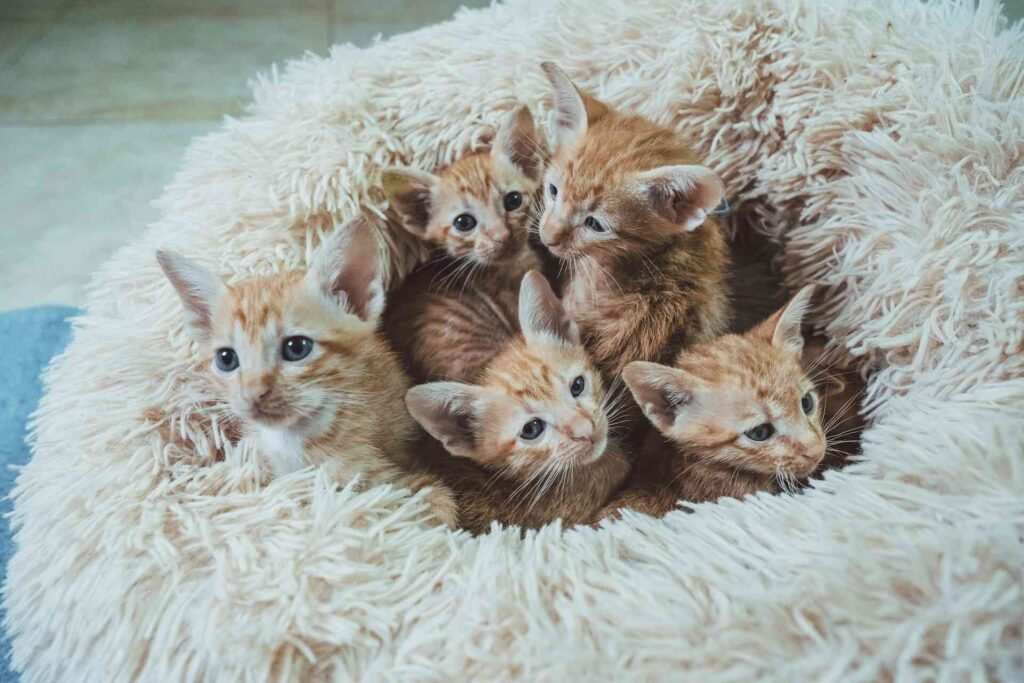
The better approach with kittens involves proactive management. Kitten-proof your home the same way you’d baby-proof for a toddler. Remove temptations, provide appropriate outlets, and set up kitten-safe play areas that contain their chaos while they learn household rules.
What About Emergency Spray Bottle Use?
Maybe you only spray when your cat does something truly dangerous, like trying to chew electrical cords. Does context matter?
The problem with “just this one time” thinking is that consistency is fundamental to how cats learn. Intermittent reinforcement, sometimes spraying, sometimes not, tends to strengthen behaviors rather than eliminating them. It’s the same principle that makes gambling addictive. Unpredictable outcomes can make the behavior more persistent.
Even occasional use carries risks. One traumatic experience can create lasting fear responses, especially if it catches your cat during a particularly sensitive moment. Cats have individual temperaments and stress thresholds. What seems minor to you might be terrifying to your cat.
For dangerous behaviors like cord chewing, better solutions exist. Cord protectors deter chewing without involving you. Cable management boxes make cords physically inaccessible. These solutions work 24/7 and don’t require you to catch your cat in the act.
Every time you reach for the spray bottle, pause and ask: Is there an environmental solution here? Could I redirect this energy? Am I addressing a symptom rather than the cause?
FAQ
Physically, no. Water itself doesn’t cause injury. But psychologically, spray bottles create stress responses and damage trust between you and your cat. The emotional impact outweighs the physical harmlessness. Cats experience the unpredictable spray as a threat, triggering their fight-or-flight response and elevating stress hormones that affect overall health when repeatedly activated.
Spray bottles don’t teach cats which behaviors are acceptable. They only teach cats to avoid certain behaviors when you’re present and watching. Your cat continues misbehaving because they haven’t learned why the behavior is wrong or what they should do instead. The underlying motivation (hunger, boredom, natural instinct) remains unaddressed.
Yes. Some cats respond to spray bottle punishment by developing fear-based aggression, defensive behaviors, or redirected aggression toward other pets or family members. The unpredictability of being sprayed can make anxious cats more reactive and trigger defensive responses in cats who feel cornered or threatened by their owner’s behavior.
Even if your cat seems to respond to spray training, you’re likely only seeing surface-level behavior change without addressing the underlying cause. What looks like success is often just your cat learning to misbehave when you’re not watching. The method might appear to work temporarily, but it doesn’t create lasting behavioral improvement or teach your cat appropriate alternatives.
The question assumes you need a deterrent at all. Instead of thinking about what substance to spray, focus on environmental management and positive reinforcement. Motion-activated air deterrents, double-sided tape, aluminum foil, or citrus-scented sprays (applied to surfaces, not cats) can make specific areas less appealing without damaging your relationship with your cat.
Positive reinforcement training typically shows results within 2-4 weeks of consistent practice, but complex behaviors may take longer. The timeline depends on your cat’s age, the behavior you’re addressing, and how consistently you apply training principles. Patience matters more than speed, rushing the process or mixing punishment with positive methods undermines your progress and confuses your cat.
No. Cats don’t process punishment the way humans do. They don’t understand cause-and-effect relationships beyond a few second window, and they don’t grasp human concepts of rules or wrongdoing. When punished, cats simply learn that their environment or their owner is unpredictable and potentially threatening. They experience the consequence without understanding its connection to their behavior, which makes punishment both ineffective and harmful.
If multiple training approaches have failed, consult a certified cat behaviorist who can identify the root issue. Medical problems, environmental stressors, and unmet needs can masquerade as behavioral issues. A professional evaluation provides targeted solutions that address your specific situation rather than applying generic corrections that may worsen underlying problems.
Conclusion
Spray bottles feel effective because they interrupt behavior instantly. But interruption is not education. If your cat only avoids the counter when you are standing there, nothing has been solved.
Training that lasts relies on consistency, environmental design, and clear reinforcement of the behaviors you want repeated. Once you shift from reacting to preventing and rewarding, most “stubborn” behaviors start to look predictable and manageable.
Your cat is just responding to what works in their environment. When you change what works, their behavior changes with it. That approach protects your counters and your relationship at the same time.
Looking for more? Explore our Cat Health section for more posts like this, visit the Blog for fun and insightful reads, or browse our full Cat Category for everything feline-related, from care to comfort.
Disclaimer: This article is for informational purposes only and does not substitute for professional veterinary advice. Always consult your veterinarian for diagnosis and treatment tailored to your cat’s individual needs. Please verify current product information directly on the retailer’s site before purchasing.
References
- Adamec RE. Individual differences in temporal lobe sensory processing of threatening stimuli in the cat. Physiol Behav. 1991 Mar;49(3):455-64. https://doi.org/10.1016/0031-9384(91)90264-o
- Dodwell PC, Wilkinson FE, von Grünau MW. Pattern recognition in kittens: performance on Lie patterns. Perception. 1983;12(4):393-410. https://doi.org/10.1068/p120393
- Gruen ME, Thomson AE, Clary GP, Hamilton AK, Hudson LC, Meeker RB, Sherman BL. Conditioning laboratory cats to handling and transport. Lab Anim (NY). 2013 Oct;42(10):385-9. https://doi.org/10.1038/laban.361
- McGrath AP, Horschler DJ, Hancock L. Feline Cognition and the Role of Nutrition: An Evolutionary Perspective and Historical Review. Animals (Basel). 2024 Jul 3;14(13):1967. https://doi.org/10.3390/ani14131967
- McVea DA, Taylor AJ, Pearson KG. Long-lasting working memories of obstacles established by foreleg stepping in walking cats require area 5 of the posterior parietal cortex. J Neurosci. 2009 Jul 22;29(29):9396-404. https://doi.org/10.1523/JNEUROSCI.0746-09.2009
- Norman RJ, Buchwald JS, Villablanca JR. Classical conditioning with auditory discrimination of the eye blink in decerebrate cats. Science. 1977 Apr 29;196(4289):551-3. https://doi.org/10.1126/science.850800
- States, C. (2026). Early socialisation and habituation in kittens – implications for behaviour into adulthood. https://improveinternational.com/uk/clinical-library/early-socialisation-and-habituation-in-kittens-implications-for-behaviour-into-adulthood
- Vitale Shreve, K. R., & Udell, M. A. R.. (2015). What’s inside your cat’s head? A review of cat (Felis silvestris catus) cognition research past, present and future. [Article in Press]. Animal Cognition. https://doi.org/10.1007/s10071-015-0897-6
- Wojtaś J. Hair cortisol levels in cats with and without behavioural problems. J Feline Med Surg. 2023 Feb;25(2):1098612X221150624. https://doi.org/10.1177/1098612X221150624
Check out our most recent articles!
- Are Spray Bottles Bad for Cats? Reasons & Alternatives
 A spray bottle might stop your cat’s counter-surfing today, but it’s teaching them something much more troubling: that you’re unpredictable and potentially dangerous. Discover what really happens when you spray your cat and the alternatives that actually create lasting change.
 - How Are Cats so Flexible? Your Cat’s Anatomy ExplainedBetween their 53 vertebrae, muscular shoulders connected only by soft tissue, and elastic joints, cats possess anatomical superpowers that blur the line between solid and liquid, letting them navigate spaces you’d swear were too small.
- Do Cats Copy Their Owners Voice, Personality and Actions?The independent cat stereotype is crumbling. Science reveals that cats engage in intentional mimicry, learning from their owners and adapting their personalities to match the humans they live with.
- Are Newborn Cats Born With Teeth? Everything About Kitten Dental GrowthEver wondered what’s happening inside a newborn kitten’s mouth? The answer might surprise you. Discover the complete timeline of feline dental development and learn what to expect as your kitten grows from gummy grins to a full set of adult teeth.
- Keeping Your Indoor Cat Warm in Winter: The Complete GuideEven indoor cats feel the winter chill more than you might think. Cold floors, dry air, and sneaky drafts can leave your feline less comfortable than they should be. Discover the simple adjustments that make all the difference in helping your cat stay genuinely cozy through the coldest months.
- Should You Look Your Cat in the Eyes? Is Staring Really Aggressive?Your cat’s eyes tell a story you’ve been misreading. While prolonged staring means one thing in human communication, cats interpret it completely differently. Discover why that loving gaze might actually be stressing out your feline friend and what to do instead.
- Choosing the Best Blanket for Your Cat: A Blanket Buyer’s GuideFinding the best blanket for your cat means considering more than just softness. Temperature regulation, durability, washability, and even behavioral quirks all play a role in choosing the perfect cozy spot for your feline friend. Discover which blanket types match your cat’s lifestyle.
- How to Get Your Kitten to Eat More: Simple Solutions for Picky EatersWatching your tiny kitten turn up their nose at perfectly good food can be heart-wrenching. This comprehensive guide reveals why kittens become picky eaters and shares practical solutions that transform mealtime battles into successful feeding routines.
- Can Cats Eat Fried Rice? Why This Takeout Favorite Is a No-GoThat irresistible takeout aroma might have your cat begging, but fried rice contains ingredients that can harm felines. Discover why even small amounts aren’t worth the risk and what treats truly suit your cat’s carnivorous nature.
- Why Do Cats Vibrate Their Tail? From Happy to HuntingYour cat’s vibrating tail is like a mood ring with fur. Whether they’re thrilled to see you or preparing to mark territory, decoding these rapid shakes reveals what’s really going on in their mind.
- Is Asparagus Bad for Cats? Risks, Benefits, and AlternativesYour cat’s eyeing your asparagus dinner, but should they have any? While this green veggie isn’t toxic to cats, there are surprising reasons why it’s not the treat you might think it is.
- How Cats Express Sadness: Reading Your Feline’s Emotional LanguageCats don’t cry emotional tears or mope around like dogs, but they absolutely experience sadness. The trick is learning to read their subtle language, the withdrawn behavior, the changed routines, the slight shifts in body posture that reveal their inner emotional world.
- Can Cats and Rabbits Live Together? Multi-Species Harmony GuideCats are predators, rabbits are prey, but that doesn’t mean they can’t coexist peacefully. Success comes down to understanding each animal’s instincts, respecting their boundaries, and taking introductions at the right pace.
- Are Space Heaters Safe for Cats? Keeping Your Cat CozySpace heaters can provide cozy warmth for your cat, but only when chosen and positioned with feline safety in mind. Discover which features protect against burns, fires, and electrical hazards.
- Cat Bed Placement 101: Finding the Perfect Spot Your Cat Will Actually UseCats spend up to 16 hours sleeping daily, yet many reject their designated beds completely. The problem isn’t pickiness, it’s placement. Learn where cats naturally feel safe and comfortable, and how to position beds they’ll genuinely use.














Written by Solara Bergmeier (Technical Writer and Content Manger)
Last reviewed and edited on 16.03.2026