
Whether a kitten can be left alone at night depends primarily on developmental stage, thermoregulation capacity, feeding frequency, and environmental safety. The question is not emotional. It is physiological and behavioral.
Healthy, weaned kittens over eight weeks old can typically tolerate 6 to 8 hours of overnight independence if their environment is controlled and their needs are met before bedtime. Younger kittens cannot. The distinction matters because improper nighttime management contributes to stress vocalization, inappropriate elimination, and reinforcement of attention-seeking behavior.
The Reality of Kitten Sleep Patterns
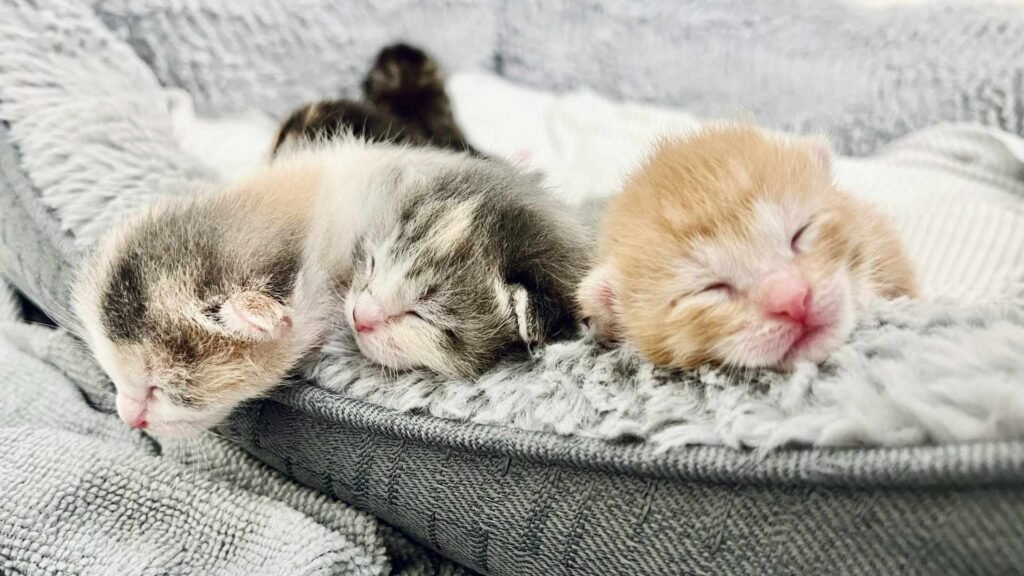
Kittens between 2 and 12 weeks of age sleep approximately 18 to 20 hours per 24-hour cycle, distributed across short polyphasic sleep bouts rather than consolidated nighttime sleep. This fragmented sleep architecture explains why some kittens appear restless at night. They are not nocturnal. They are crepuscular, meaning peak activity occurs at dawn and dusk. Expect early morning activity bursts unless energy has been appropriately discharged before bedtime.
The real question isn’t whether kittens physically can sleep alone at night, but whether they should during those critical early weeks, and how to make the experience positive for everyone involved.
Why Age Matters
A three-week-old kitten and a three-month-old kitten are worlds apart in terms of independence. Very young kittens under eight weeks old shouldn’t be separated from their mothers at all, they’re still nursing, learning vital social skills, and require round-the-clock warmth and care. If you’ve somehow ended up with a kitten this young (perhaps through rescue circumstances), overnight supervision becomes necessary, and you’ll need to consult a veterinarian about proper bottle-feeding schedules.
Neonatal kittens under four weeks cannot thermoregulate effectively and depend on maternal warmth to maintain a body temperature between 99 and 102°F. Orphaned kittens require external heat support to prevent hypothermia, which is a leading cause of neonatal mortality in rescue settings. In rescue cases, overnight supervision is not optional. Feeding intervals for bottle-fed neonates range from every 2 to 4 hours depending on age and weight.
Once kittens hit the 8-12 week mark, they’re typically ready to join new homes and handle longer stretches without direct supervision. At this stage, leaving a kitten alone at night becomes far more feasible. They’ve been weaned, they’re using the litter box reliably, and their coordination has improved enough that they’re less likely to get into dangerous predicaments.
By four months old, most kittens have settled into more predictable routines and can comfortably spend entire nights on their own. Their independence grows alongside their confidence, though individual personalities vary wildly. Some kittens will curl up and sleep soundly from day one, while others might vocalize their displeasure at being separated from their new favorite human.
Setting Up for Nighttime Success
Overnight setup should follow a four-point containment protocol:
- Confinement zone of at least 16 to 21 square feet with no vertical access to unstable shelving.
- Separate resource placement: litter tray at least 3 feet from food and water.
- Temperature stability between 70 and 75°F for weaned kittens.
- Hazard elimination including cord covers, sealed recliner mechanisms, and removal of ingestible objects under 1 inch in diameter.
In behavior consultations, most nighttime accidents occur due to environmental access rather than separation itself. The goal is controlled independence, not unrestricted freedom.
Within this space, position the essentials strategically. Where cats choose to rest impacts their comfort levels significantly. The litter box should be easily accessible but not right next to their food and water, cats instinctively avoid eliminating near their feeding areas. Using proper feeding equipment keeps meal areas tidy and appealing.
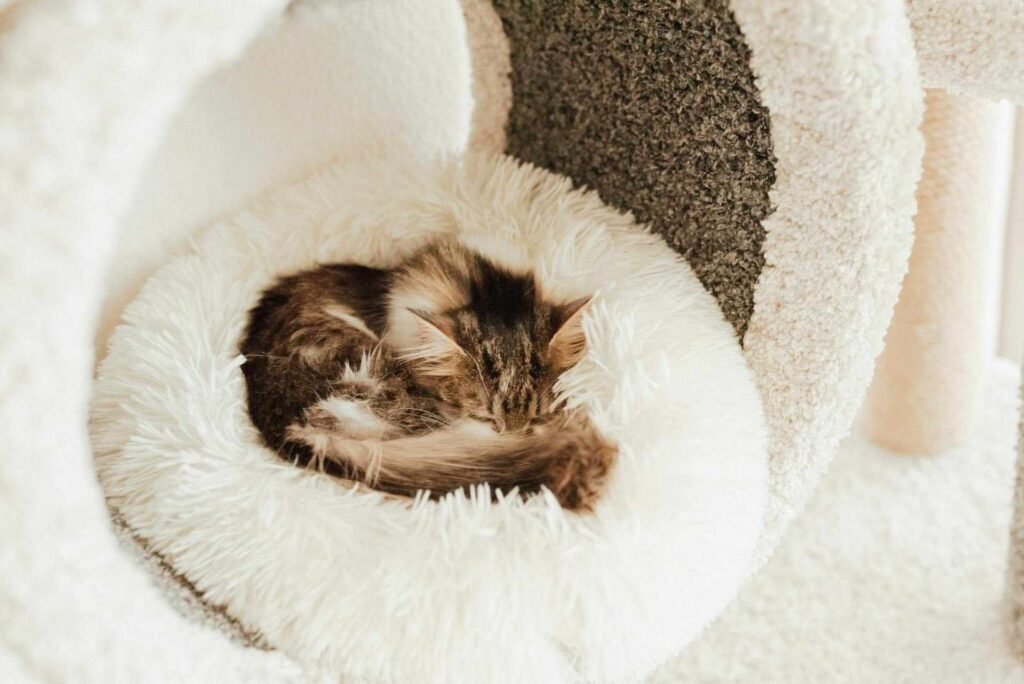
A comfortable sleeping spot matters tremendously. While some kittens will happily snooze in a simple cardboard box lined with blankets, others prefer more structured sleeping arrangements that provide security and warmth. Consider placing the bed slightly elevated or in a corner where your kitten can see the room’s entrance, this satisfies their instinct to monitor their surroundings while resting.
The First Night Reality Check
That inaugural night with a new kitten rarely resembles the peaceful scene you imagined. Your kitten has just been uprooted from everything familiar, their mother, siblings, and the only home they’ve known. The sounds, smells, and layout of your space are completely foreign. Some crying, meowing, and restlessness is absolutely normal and doesn’t mean you’re doing anything wrong.
Responding immediately to every vocalization conditions operant reinforcement. If a kitten learns that meowing produces human appearance, the behavior increases in frequency and duration. Instead, assess vocal intensity. Intermittent calling typically extinguishes within several nights if not reinforced. Sustained distress vocalization exceeding 20 minutes warrants environmental check without prolonged engagement.
In practice, consistent non-reinforcement resolves most adjustment vocalization within 5 to 10 days.
Prolonged, intense crying that doesn’t subside after 15-20 minutes might warrant a quick check to ensure nothing’s wrong, perhaps they’ve tipped over their water bowl, gotten stuck somewhere, or genuinely need reassurance. A soft voice can work wonders without establishing a pattern where they learn that crying equals immediate company.
Some kitten owners swear by leaving a ticking clock or a piece of clothing with their scent near the sleeping area. The rhythmic sound mimics a mother cat’s heartbeat, while familiar scents provide comfort. A covered heating pad on low (with proper safety precautions) or a microwavable heat disc can replicate the warmth of snuggling with littermates.
The Room Sharing Debate
Many people wonder if they should keep their kitten in the bedroom versus a separate room. Both approaches work, but they lead to different outcomes and routines.
Keeping your kitten in your bedroom allows for easier monitoring during those first nights and provides the social connection many kittens crave. You’ll hear immediately if something’s wrong, and your presence alone might reduce anxiety-related behaviors. However, this choice comes with trade-offs. Kittens are naturally active during twilight hours, and a 4 AM zoomies session across your face isn’t everyone’s idea of ideal sleep. If nighttime disruptions become a pattern, you might need to adjust your approach.
Confining your kitten to a separate room teaches independence from the start and protects your sleep quality. The kitten learns to self-soothe and entertain themselves, building confidence that benefits them long-term. The downside? You won’t know immediately if they’re struggling, and some kittens take longer to adjust to this arrangement.
There’s no universally correct answer, consider your own sleep needs, your kitten’s personality, and your long-term goals. Some people start with room sharing and gradually transition the kitten to sleeping elsewhere once everyone’s adjusted. Others maintain separate sleeping arrangements from day one and find it works beautifully.
Preventing Boredom and Destructive Behavior
A well-exercised, mentally stimulated kitten sleeps more soundly than one who’s been napping all day with nothing interesting to do. The hour or two before your bedtime should include vigorous play sessions that tire out those little legs and satisfy hunting instincts.
Interactive toys that mimic prey movements, feather wands, laser pointers (always ending with a physical toy they can “catch”), or toy mice, engage your kitten’s natural hunting sequence. Following this active play with a small meal or treats creates a satisfying “hunt, catch, eat, groom, sleep” cycle that aligns with their biological programming.
Signs your kitten isn’t getting enough stimulation during the day can manifest as nighttime chaos. Providing puzzle feeders, cat trees with multiple levels, or rotating toys keeps their environment interesting. Even simple cardboard boxes or paper bags (with handles removed) become adventure zones for curious kittens.
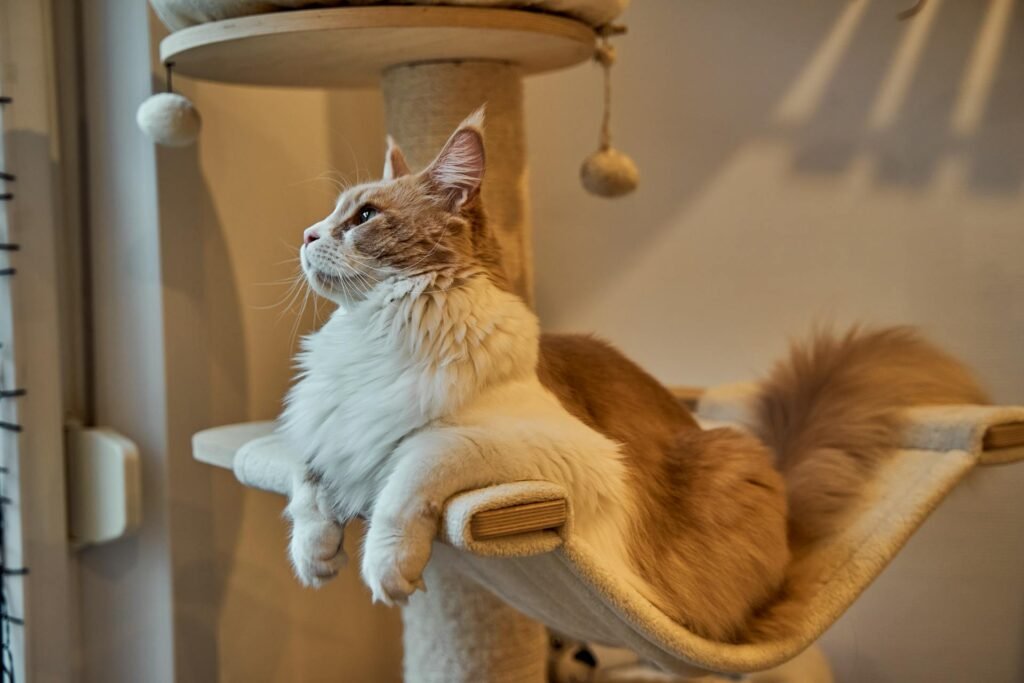
Kittens under six months old have bursts of energy that need appropriate outlets. Without them, that energy gets redirected into climbing curtains, scratching furniture, or racing around at 3 AM. Maintaining good scratching habits saves your belongings and provides necessary physical activity.
Feeding Schedules and Nighttime Hunger
Kittens between 8 and 16 weeks require approximately 2 to 2.5 times the caloric intake per pound of body weight compared to adult cats due to rapid growth demands.
Three to four evenly spaced meals per day are sufficient for most healthy kittens. The final meal should occur 30 to 60 minutes after a structured play session to complete the predatory sequence of stalk, chase, capture, consume, groom, rest. This sequencing significantly reduces post-midnight activity spikes.
Automatic feeders can be lifesavers for people whose kittens wake them demanding breakfast at increasingly earlier times. These devices dispense pre-measured portions at scheduled times, breaking the association between you waking up and food appearing. Your kitten learns to wait for the feeder rather than pestering you. Keeping that food fresh matters for both palatability and safety.
Water should always be available, though you might notice your kitten doesn’t drink much overnight. Kittens are surprisingly efficient at conserving water during sleep periods. Some cats prefer certain water presentations, so experiment with bowl styles if your kitten seems reluctant to drink.
Safety Considerations You Can’t Ignore
Kitten-proofing rivals baby-proofing in terms of necessary thoroughness. These tiny furballs combine fearlessness with terrible judgment, creating a perfect storm of potential accidents.
Electrical cords should be covered or made inaccessible, kittens love to chew, and a shock hazard isn’t worth the risk. Cord protectors or bitter-tasting deterrent sprays help, but physical barriers work best. Secure any items that could fall and trap or injure a kitten, from unstable shelves to heavy picture frames.
Small objects represent choking hazards. Hair ties, rubber bands, buttons, coins, and jewelry all look like fascinating toys to a kitten but can cause serious harm if swallowed. Many household plants are toxic to cats, including popular varieties like lilies, pothos, and philodendrons. Remove these entirely or place them completely out of reach (which is harder than it sounds given kittens’ climbing abilities).
Window screens should be secured properly, as kittens can and will try to climb them or push through weak spots. Open windows pose fall risks, even from first-floor apartments. Toilet lids should stay closed (kittens can drown), and any cleaning products, medications, or chemicals must be securely stored in cabinets with childproof latches.
Check for spaces where a kitten could become trapped, behind appliances, inside reclining furniture, or within walls where vents or ducts have openings. The adage “if their head fits, their body fits” doesn’t quite apply to kittens, who regularly overestimate their abilities and underestimate physics.
When Separation Anxiety Becomes a Problem
Adjustment vocalization must be differentiated from pathological separation distress. True separation anxiety in kittens is uncommon but presents with persistent vocalization, self-injury, inappropriate elimination near exits, and anorexia when isolated.
Gradual desensitization involves staged absence exposure starting at 1 to 3 minutes, paired with positive reinforcement on return. Duration increases incrementally only when the kitten remains calm at the current threshold.
Kittens separated too early from their mothers, those from stressful backgrounds, or naturally anxious individuals may struggle more than typical kittens. If your kitten seems genuinely fearful rather than just lonesome, gradual desensitization helps. Start with just a few minutes of separation while you’re in an adjacent room, slowly increasing the duration as your kitten’s confidence builds.
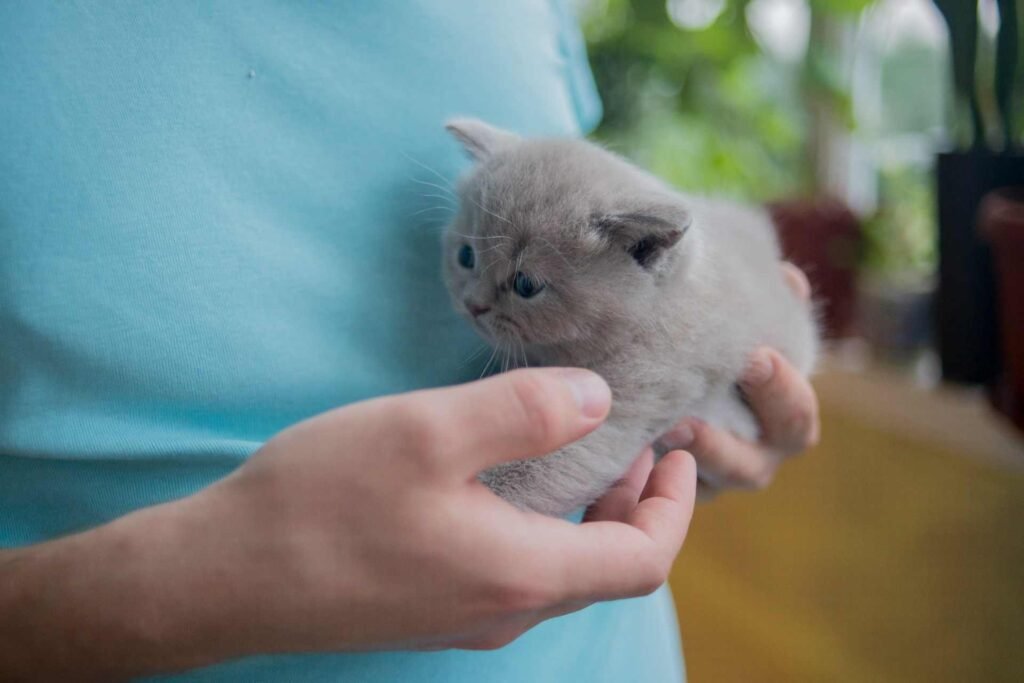
Pheromone diffusers designed for cats can reduce anxiety by mimicking the calming facial pheromones cats naturally produce. These plug-in devices won’t solve severe behavioral issues alone, but they create a more relaxing environment that supports other training efforts.
In cases where anxiety seems severe or doesn’t improve with time and training, consulting a veterinarian is wise. Sometimes underlying health issues contribute to nighttime restlessness, and a professional can rule out medical causes while providing behavioral guidance.
The Multi-Kitten Advantage
Adopting two kittens instead of one might seem like doubling the work, but it actually solves many nighttime challenges. Kittens with a playmate entertain each other, provide mutual comfort, and burn off energy through wrestling matches and chase games. They’re less likely to wake you seeking interaction because they have a built-in companion.
Siblings or kittens close in age typically bond quickly and sleep curled together, recreating that littermate experience they lost when separated from their birth families. The transition to sleeping alone (from their perspective, they’re not alone, they have each other) becomes nearly seamless.
Of course, two kittens means double the mischief potential, so kitten-proofing becomes even more critical. What one kitten might not think to attempt, two will inspire each other to try. However, the trade-off in improved adjustment and reduced attention-seeking behavior usually outweighs the chaos.
Age-Specific Guidelines Worth Following
| Kitten Age | Recommended Nighttime Approach | Special Considerations |
|---|---|---|
| 0-8 weeks | Should not be separated from mother | Requires round-the-clock care if orphaned |
| 8-12 weeks | Can sleep alone in kitten-proofed space | May vocalize more; benefits from comfort items |
| 3-6 months | Generally sleeps well independently | Increased energy requires pre-bedtime play |
| 6+ months | Fully capable of sleeping alone | Transitioning to adult routines and feeding schedules |
These timelines represent general guidelines, not absolute rules. Individual kittens mature at different rates, and factors like breed, health status, and previous experiences all influence their readiness for independent sleeping.
Larger breeds like Maine Coons take longer to fully mature than smaller breeds. A four-month-old Maine Coon kitten might still act more like a two-month-old typical domestic shorthair. Health issues can also delay development, making veterinary guidance valuable when establishing routines.
Common Mistakes to Avoid
Giving in too quickly to nighttime demands teaches your kitten that crying equals company. Those first few nights test your resolve, but rushing in every time they make a sound establishes a pattern that’s difficult to break later. Unless you hear genuine distress or signs of a problem, allowing them to self-soothe builds resilience.
Skipping pre-bedtime play is another frequent error. A kitten who hasn’t burned off their energy will redirect it into nighttime chaos. Even fifteen minutes of active play makes a substantial difference in how quickly they settle down.
Inconsistency in routines confuses kittens. If they sleep in your room one night and a separate space the next, they never quite adjust to either arrangement. Pick an approach and stick with it for at least a week before deciding it’s not working.
Overcorrecting is tempting but counterproductive. Yelling at or punishing a kitten for nighttime vocalizing or activity creates fear and damages your relationship without addressing the underlying cause. Cats don’t understand punishment the way dogs might, and negative responses often worsen anxiety rather than resolve it.
FAQ
Kittens over 8-12 weeks old can typically be left alone for 8-10 hours overnight without problems, provided their basic needs are met with accessible food, water, litter, and a safe environment. Younger kittens require more frequent check-ins and shouldn’t be left completely alone for extended periods.
A small nightlight can help kittens navigate their space safely, especially in the first few weeks when they’re still learning the layout of your home. Cats see well in low light but not complete darkness, so a dim light positioned away from their sleeping area prevents accidents without disrupting sleep.
Absolutely not. Cats form bonds through quality interactions, not constant proximity. Independent sleep actually promotes healthy emotional development and confidence. Your daytime interactions, play sessions, and care routines build attachment far more effectively than sleeping arrangements.
Some initial vocalizing during the adjustment period is normal and typically decreases within a week or two. Persistent crying that doesn’t improve might indicate anxiety, health issues, or that you’re responding in ways that reinforce the behavior. Consider whether underlying factors might be affecting their comfort and confidence if the issue persists.
While some calming products exist for cats, using them for a young, healthy kitten isn’t typically necessary or recommended without veterinary guidance. Focus first on environmental adjustments, routine establishment, and adequate exercise. If anxiety seems severe despite these efforts, consult your vet before introducing any supplements.
Most cats can safely roam the house overnight by 6-8 months old, once they’re fully litter trained, less prone to chewing inappropriate items, and familiar with their environment. Start by gradually expanding their nighttime territory, ensuring each area is thoroughly kitten-proofed before allowing access.
Sweet Dreams and Peaceful Nights
Leaving a kitten alone at night is appropriate once developmental, nutritional, and environmental criteria are satisfied. Most healthy kittens over eight weeks adapt quickly when containment is structured, pre-sleep energy is discharged, and reinforcement errors are avoided.
Early consistency determines long-term sleep behavior. Establish a clear routine, avoid unintentional reinforcement of vocalization, and adjust the environment rather than reacting emotionally. Within weeks, nighttime independence becomes routine rather than stressful. The process is developmental, not dramatic.
Looking for more? Explore our Cat Health section for more posts like this, visit the Blog for fun and insightful reads, or browse our full Cat Category for everything feline-related, from care to comfort.
Disclaimer: This article is for informational purposes only and does not substitute for professional veterinary advice. Always consult your veterinarian for diagnosis and treatment tailored to your cat’s individual needs. Please verify current product information directly on the retailer’s site before purchasing.
References
- Freeman NC, Rosenblatt JS. The interrelationship between thermal and olfactory stimulation in the development of home orientation in newborn kittens. Dev Psychobiol. 1978 Sep;11(5):437-57. https://doi.org/10.1002/dev.420110508
- McGinty DJ, Stevenson M, Hoppenbrouwers T, Harper RM, Sterman MB, Hodgman J. Polygraphic studies of kitten development: sleep state patterns. Dev Psychobiol. 1977 Sep;10(5):455-69. https://doi.org/10.1002/dev.420100506
- National Research Council. 2006. Nutrient Requirements of Dogs and Cats. Washington, DC: The National Academies Press. https://doi.org/10.17226/10668
- Veronesi MC, Fusi J. Feline neonatology: From birth to commencement of weaning – what to know for successful management. J Feline Med Surg. 2022 Mar;24(3):232-242. https://doi.org/10.1177/1098612X221079709
Check out our most recent articles!
- Are Newborn Cats Born With Teeth? Everything About Kitten Dental Growth
 Ever wondered what’s happening inside a newborn kitten’s mouth? The answer might surprise you. Discover the complete timeline of feline dental development and learn what to expect as your kitten grows from gummy grins to a full set of adult teeth.
 - Keeping Your Indoor Cat Warm in Winter: The Complete GuideEven indoor cats feel the winter chill more than you might think. Cold floors, dry air, and sneaky drafts can leave your feline less comfortable than they should be. Discover the simple adjustments that make all the difference in helping your cat stay genuinely cozy through the coldest months.
- Should You Look Your Cat in the Eyes? Is Staring Really Aggressive?Your cat’s eyes tell a story you’ve been misreading. While prolonged staring means one thing in human communication, cats interpret it completely differently. Discover why that loving gaze might actually be stressing out your feline friend and what to do instead.
- Choosing the Best Blanket for Your Cat: A Blanket Buyer’s GuideFinding the best blanket for your cat means considering more than just softness. Temperature regulation, durability, washability, and even behavioral quirks all play a role in choosing the perfect cozy spot for your feline friend. Discover which blanket types match your cat’s lifestyle.
- How to Get Your Kitten to Eat More: Simple Solutions for Picky EatersWatching your tiny kitten turn up their nose at perfectly good food can be heart-wrenching. This comprehensive guide reveals why kittens become picky eaters and shares practical solutions that transform mealtime battles into successful feeding routines.
- Can Cats Eat Fried Rice? Why This Takeout Favorite Is a No-GoThat irresistible takeout aroma might have your cat begging, but fried rice contains ingredients that can harm felines. Discover why even small amounts aren’t worth the risk and what treats truly suit your cat’s carnivorous nature.
- Why Do Cats Vibrate Their Tail? From Happy to HuntingYour cat’s vibrating tail is like a mood ring with fur. Whether they’re thrilled to see you or preparing to mark territory, decoding these rapid shakes reveals what’s really going on in their mind.
- Is Asparagus Bad for Cats? Risks, Benefits, and AlternativesYour cat’s eyeing your asparagus dinner, but should they have any? While this green veggie isn’t toxic to cats, there are surprising reasons why it’s not the treat you might think it is.
- How Cats Express Sadness: Reading Your Feline’s Emotional LanguageCats don’t cry emotional tears or mope around like dogs, but they absolutely experience sadness. The trick is learning to read their subtle language, the withdrawn behavior, the changed routines, the slight shifts in body posture that reveal their inner emotional world.
- Can Cats and Rabbits Live Together? Multi-Species Harmony GuideCats are predators, rabbits are prey, but that doesn’t mean they can’t coexist peacefully. Success comes down to understanding each animal’s instincts, respecting their boundaries, and taking introductions at the right pace.
- Are Space Heaters Safe for Cats? Keeping Your Cat CozySpace heaters can provide cozy warmth for your cat, but only when chosen and positioned with feline safety in mind. Discover which features protect against burns, fires, and electrical hazards.
- Cat Bed Placement 101: Finding the Perfect Spot Your Cat Will Actually UseCats spend up to 16 hours sleeping daily, yet many reject their designated beds completely. The problem isn’t pickiness, it’s placement. Learn where cats naturally feel safe and comfortable, and how to position beds they’ll genuinely use.
- Can a Kitten Be Left Alone at Night? What You Need to KnowThose first nights with a new kitten rarely match the peaceful scene you imagined. Learn why most kittens can sleep alone once they reach a certain age, and discover the setup secrets that make nighttime independence work for everyone.
- A Cat’s New Year’s Resolutions: What Your Cat Would Promise (If They Could Write)Cats worldwide are drafting their own new year’s resolutions, and they’re refreshingly honest. From mastering the art of selective hearing to expanding their forbidden food sampling program, discover what your feline friend would promise if they could hold a pen (before knocking it off the desk).
- Cats and Snow: Why Some Love It and Others Don’tSnow isn’t just uncomfortable for many cats, it’s a complete sensory overload. From cold paw pads to wet fur and changed landscapes, winter challenges feline comfort in unexpected ways. Learn how to recognize stress signals and create cozy alternatives for snow-averse cats.















Written by Fenton Harberson (Scientific Writer and Digital Asset Planner)
Last reviewed and edited on 16.02.2026